Wow and Flutter: Technical Analysis of Speed Fluctuations and Their Impact on Audio Fidelity
Understand speed variations in audio, their quantification, mitigation in restoration, and creative emulation in modern productions.
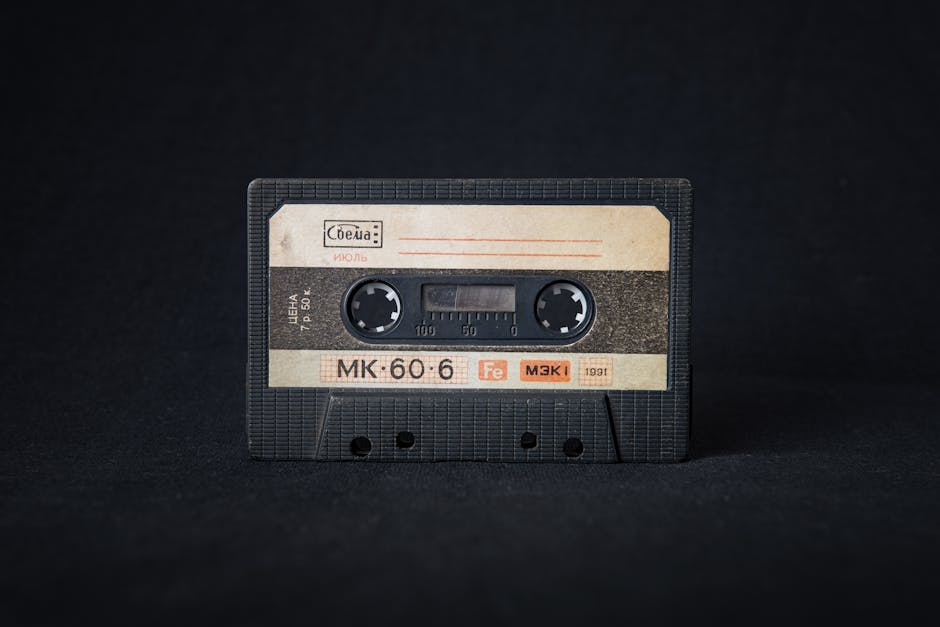
Wow and Flutter: Foundations of Stability in Audio Playback
Speed stability in audio playback is a fundamental pillar of sonic fidelity, a characteristic that, while often assumed in the digital age, has historically presented a technical challenge. Deviations in this speed, known as wow and flutter, represent undesirable fluctuations that affect tonal perception and musical integrity. Although their origin lies in the mechanisms of analog media like magnetic tapes and vinyl records, understanding and managing these phenomena remain vital for engineers and producers, particularly in audio restoration and the emulation of vintage sonic aesthetics.
Wow is defined as a low-frequency cyclical variation in the speed of a playback system, generally perceptible between 0.1 and 10 Hz. Its auditory manifestation is a slow, oscillatory change in pitch, akin to a gradual “wobble” or detuning. On the other hand, flutter refers to higher-frequency speed fluctuations, typically between 10 Hz and 200 Hz or even higher. The latter is perceived as harshness, a graininess in the sound, or a more rapid tonal instability, which can degrade clarity, stereo imaging, and transient definition. Both phenomena are rooted in mechanical imperfections: irregularities in drive motors, worn drive belts, off-center spindle mounts, or non-uniformities in the recording medium itself. During the golden age of analog audio, a low wow and flutter rate was a key indicator of a recorder’s or player’s quality, a hallmark of high-fidelity equipment.
Mechanisms and Auditory Perception of Speed Fluctuations
The quantification of these deviations requires specific methodologies and adherence to international standards. To measure wow and flutter, a constant frequency test tone, usually 3 kHz or 3.15 kHz, previously recorded on the medium under evaluation, is played back. During playback, an analyzer detects and measures the frequency variations of this carrier signal. The results are commonly expressed as a percentage (%), representing the maximum deviation from the nominal frequency. This value can be weighted using RMS (Root Mean Square) or Peak-to-Peak methods, depending on the applied standard. Organizations such as DIN (Deutsches Institut für Normung), JIS (Japanese Industrial Standards), and NAB (National Association of Broadcasters) have established detailed standards, like IEC 386, which dictate measurement procedures and acceptable limits for different equipment types. In the professional realm, specialized oscilloscopes and dedicated wow and flutter meters, along with advanced audio analysis software, are employed to obtain precise readings.
In the current context of music production, the relevance of wow and flutter extends beyond purely analog systems. While digital audio, once converted, is inherently immune to these fluctuations thanks to the precision of its master clock, the digitization of historical or heritage analog sources can introduce these inconsistencies. In audio restoration, identifying and mitigating wow and flutter is a critical step in preserving the integrity of old recordings. Software tools like iZotope RX (https://www.izotope.com/en/products/rx.html) or Cedar Audio systems (https://www.cedaraudio.com/) incorporate sophisticated algorithms that can analyze and correct these temporal anomalies, restoring tonal stability to invaluable musical pieces.
Quantification Methodologies and Measurement Standards
Concurrently, a creative trend has emerged where these sonic imperfections are intentionally recreated. Numerous contemporary plugins and hardware devices simulate wow and flutter to impart a “vintage” or “lo-fi” character to digital productions, emulating the warmth and sonic particularities of tape recorders or old turntables. This practice aligns with the pursuit of distinctive sonic textures that add depth and nostalgia to modern music, a direction resonating in genres that value retro aesthetics. Furthermore, immersive or spatial audio, with formats like Dolby Atmos, demands impeccable tonal stability; any wow or flutter fluctuation, however subtle, could disorient the listener’s spatial perception, making playback accuracy more crucial than ever. Advances in artificial intelligence, for example, are opening new avenues for more precise identification and correction of these temporal inconsistencies in audio, optimizing restoration processes and enabling more authentic emulation.
In summary, understanding and managing wow and flutter is essential for any audio professional. These phenomena, far from being mere relics of a past era, continue to influence the perceived quality of contemporary audio. Whether in the meticulous work of preserving historical recordings, in the pursuit of a particular sonic character through emulation, or in the demand for tonal stability in advanced audio formats, the ability to analyze and address these speed variations remains a valuable skill. The evolution of technology, from analog meters to AI-assisted software solutions, underscores the persistent importance of these fundamentals for excellence in music production.
Related Posts

Capturing and Processing Small Percussion: Miking, Acoustics, and Mixing Techniques
A technical exploration of miking, acoustic environments, and processing for recording small percussion instruments in music production.

Vector Synthesis: Dynamic Timbre Navigation and Advanced Modulation Architectures
Explore sound source interpolation and modulation architecture in vector synthesis for evolving textures.

Augmented Reality in Instrumental Recording: Visualization, Simulation, and Remote Collaboration
Analyzes how AR redefines music production, enabling parameter visualization, acoustic environment simulation, and global collaboration.

Audio Affective Resonance: Psychoacoustics, Biometrics, and Machine Learning in Emotional Connection
Research on how the human brain processes audio to evoke emotions, integrating psychoacoustics, biometrics, and machine learning.