The Evolution of Pro Tools: From Sound Tools to Immersive and Collaborative Audio Production
A historical analysis of Pro Tools, highlighting its impact on digital audio production and its adaptation to contemporary technologies.
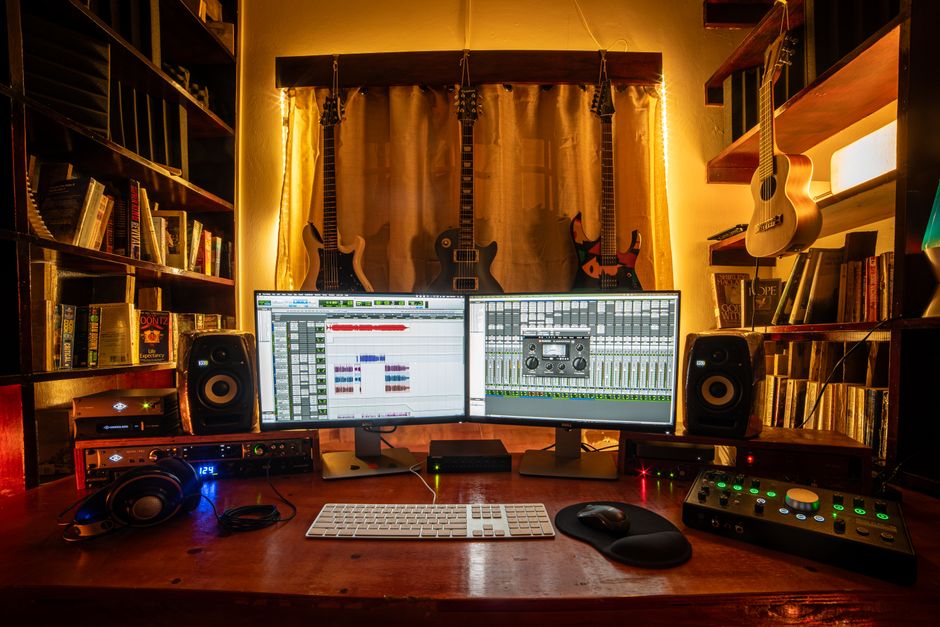
Genesis of Pro Tools: Digitalization and DSP Architecture
From its inception, Pro Tools has been a fundamental pillar in the music production and audio post-production industry. Its trajectory, marked by constant innovation and deep adaptation to technological demands, positions it as a central tool for engineers, producers, and artists globally. Analyzing its evolution allows us to understand not only the development of a software but also the transformation of workflows in the modern studio.
The genesis of Pro Tools dates back to the late 1980s with Digidesign, a company pioneering in audio digitalization. Initially, its flagship product was Sound Designer, a sample editor for samplers. However, the true turning point arrived with Sound Tools in 1989, a direct-to-disk audio recording and editing system that operated on Macintosh computers. This breakthrough represented a revolution, freeing professionals from the limitations of analog tape and laying the groundwork for the non-linear workflow we consider standard today. Digidesign’s early systems were distinguished by their reliance on dedicated DSP (Digital Signal Processing) hardware architecture, which managed most audio operations, alleviating the load on the computer’s central processor. This approach guaranteed stable performance and minimal latency, essential characteristics for demanding production environments. The graphical interface, though rudimentary by current standards, offered unprecedented control over sound manipulation.
Industrial Consolidation: TDM Architecture and Accessibility
The 1990s marked the consolidation of Pro Tools as the industry standard. The introduction of the TDM (Time Division Multiplexing) architecture in 1994, with systems like Pro Tools III and later Pro Tools HD, enabled significant expansion in track count, processing power, and the integration of third-party plugins. The world’s most prestigious recording studios quickly adopted this platform due to its reliability, sonic quality, and the flexibility it offered for complex mixing and editing. Evolution continued with the emergence of more accessible versions, such as Pro Tools LE and M-Powered, which operated with lower-cost hardware and native processing (based on the computer’s CPU), democratizing access to the software’s capabilities for a broader audience, including home studios and small independent projects. This market strategy was crucial for its expansion and for solidifying its dominant position in the industry.
In the new millennium, the audio production landscape has undergone constant transformation, and Pro Tools has adapted to maintain its relevance. The transition towards subscription models and the integration of cloud collaboration features, such as Avid Cloud Collaboration, respond to the needs of a globalized market and distributed work teams. The platform has refined its support for immersive audio formats, such as Dolby Atmos, a growing trend in cinema, television, and contemporary music distribution via streaming services. This allows engineers to create complex three-dimensional auditory experiences, expanding creative possibilities. Likewise, the increasing integration of artificial intelligence tools into professional audio workflows, while not native to Pro Tools, finds its place through advanced plugins that optimize tasks like audio restoration, adaptive mastering, or effect generation. These advancements demonstrate a continuous capability to incorporate and respond to technological innovations in the sector.
21st Century Adaptation: Collaboration and Immersive Audio
Pro Tools’ journey, from a pioneering editing system to a comprehensive production platform, underscores its undeniable impact on how audio is created and consumed. Its ability to evolve, maintaining a balance between processing power, stability, and adaptability to new technologies and production trends, ensures its persistent relevance in an ever-changing sonic landscape. The platform continues to be a benchmark for excellence in digital audio processing, influencing generations of producers and technicians.
Related Posts

The Evolution of Sampling: From Analog Breaks to AI in Music Production
Explore the historical and technological development of sampling, its impact on hip-hop and contemporary music, and current trends.
Advanced Vocal Tuning: Precision, Musicality, and Sound Design in Modern Production
Exploring vocal tuning techniques, from granular editing to AI, to optimize performances and adapt to immersive formats.

AIR Studios London: A Legacy of Excellence in Audio Engineering and Music Production
An analysis of AIR Studios' impact on music and film production, from analog to immersive audio.

FL Studio: Historical Evolution and Global Music Production Democratization
An analysis of FL Studio's development from FruityLoops to its status as a comprehensive DAW and its impact on music creation.