Amplitude Modulation Synthesis: Fundamentals, Applications, and Timbral Optimization
Detailed exploration of AM synthesis, its operational principles, complex spectrum generation, and practical sound design applications.
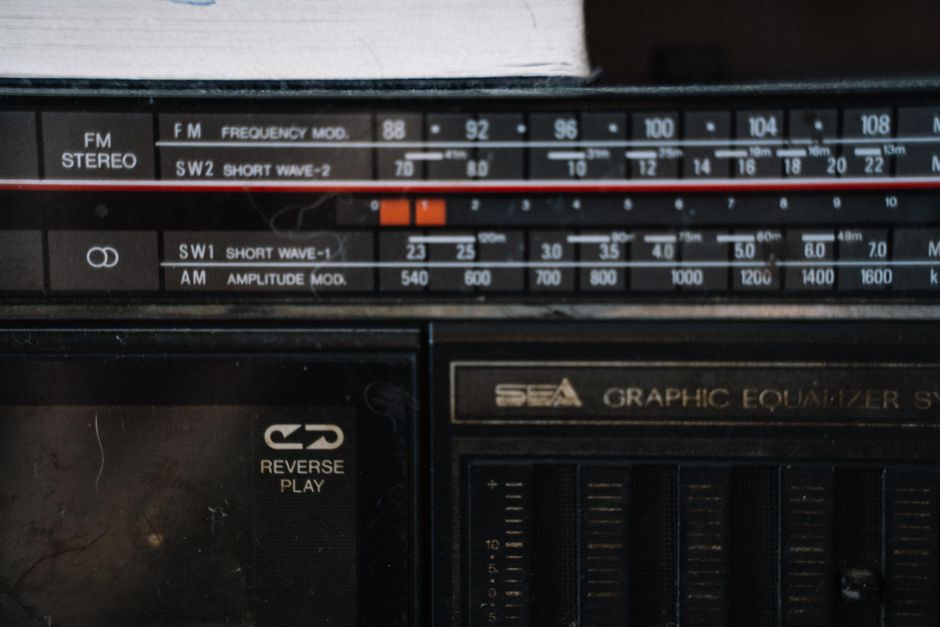
Fundamentals of Amplitude Modulation Synthesis
Amplitude Modulation (AM) synthesis represents a foundational technique in the vast universe of sound design. This method, often underestimated compared to the popularity of subtractive or Frequency Modulation (FM) synthesis, possesses a unique capability to generate complex timbres, metallic textures, and vibrant effects that enrich any musical production. Its operational mechanism, based on varying the intensity of a carrier signal using another modulating signal, opens a spectrum of creative possibilities, from classic tremolo to the creation of percussive sonorities or evolving drones. Understanding its principles is essential for producers and sound designers looking to expand their sonic palette and forge distinctive auditory identities in the contemporary scene.
The foundation of AM synthesis lies in the interaction of two primary oscillators: the carrier signal and the modulator signal. The carrier is the base sound whose amplitude will be altered, while the modulator dictates how and how much that amplitude changes. The result of this interaction is the generation of new frequencies, known as sidebands, which are added to and subtracted from the carrier frequency. Specifically, if the carrier has a frequency fc and the modulator fm, the resulting sound will contain fc, fc + fm, and fc - fm. Unlike ring modulation, AM retains the original carrier frequency in the output signal, giving it a more musical and less dissonant sound in many contexts. When the modulator’s frequency is very low (sub-audio), the perceived effect is tremolo, a rhythmic oscillation in volume. However, when the modulator’s frequency is raised to audible ranges, new harmonic or inharmonic partials are produced, radically transforming the original timbre. This ability to generate a complex harmonic spectrum from simple components positions it as an invaluable tool for creating innovative and characterful electronic sounds.
Oscillator Interaction and Sideband Generation
The versatility of AM synthesis is evident in its application across various musical genres and sound design contexts. From creating bell-like sounds and “plucked” sounds with rapid attacks and complex decays, to crafting rich textures and atmospheric drones, AM offers detailed control over sound character. To achieve metallic and percussive textures, waveforms with rich harmonics are often employed for both the carrier and the modulator, and envelopes are adjusted for precise attack. A classic example is using a sine wave modulated by another sine wave at a specific frequency ratio, which can emulate bell or xylophone sounds. In today’s production landscape, various virtual instruments like Arturia Pigments or Native Instruments FM8 integrate AM modules that allow for deep manipulation of these parameters, providing producers with sophisticated tools for sonic experimentation. The trend towards immersive music and formats like Dolby Atmos drives designers to seek textures with greater spatiality and movement, where AM, by generating complex partials, can contribute to the sensation of a “living,” three-dimensional sound. Furthermore, the rise of AI-powered plugins, such as those from iZotope or neural network-based synthesizers, often incorporate advanced modulation algorithms that can learn and replicate the subtleties of AM to generate new timbres with unprecedented efficiency. The integration of AM in virtual modular environments, like VCV Rack, allows users worldwide to build custom synthesis chains, exploring unique combinations of oscillators and modulators to achieve truly original results.
To optimize the performance of AM synthesis, several technical aspects are crucial. The choice of waveforms for the carrier and modulator is determinant; a sine wave will generate a cleaner and more predictable spectrum, while a square or sawtooth wave will introduce a greater number of partials and, consequently, a denser and more complex timbre. The ADSR (Attack, Decay, Sustain, Release) envelope applied to both the carrier and the modulator is fundamental for sculpting the temporal character of the sound. For instance, a fast attack envelope on the modulator can create a distinctive initial “hit,” while a prolonged sustain on the carrier will maintain the body of the sound. The frequency ratio between the carrier and the modulator is also critical: integer ratios will produce musical harmonics, while non-integer ratios will generate inharmonic sounds, often used for sci-fi effects or industrial textures. Within modern DAWs, such as Ableton Live or Logic Pro X, synthesis operators allow precise manipulation of these parameters, offering granular control over every aspect of modulation. It is also important to pay attention to the relative phase between signals, as it can subtly influence the resulting timbre. For integration into a mix, sounds generated by AM often benefit from careful equalization to adjust new partials and avoid frequency clashes, as well as compression to control extreme dynamics that may arise. Some producers employ sidechain techniques with modulation to create interesting rhythmic interactions, or use reverb and delay effects to expand the spatiality of these unique timbres.
Versatile Applications and Complex Sonic Textures
In summary, amplitude modulation is much more than a simple volume technique; it is a powerful method for sculpting new sonorities and enriching the auditory landscape. Its understanding and application allow producers and sound designers to go beyond presets, generating unique timbres that can define a track’s personality. From creating sound effects to crafting melodic or rhythmic elements, AM remains a fundamental pillar in synthesis, constantly evolving with new tools and trends in digital audio. By applying these principles, any music creator can significantly expand their sonic vocabulary and contribute innovations to the rich tradition of music production worldwide.
Related Posts

Vocal Harmonizers: Algorithm Analysis, Creative Applications, and Future Trends
Explore how vocal harmonizers work, their production applications, and the influence of AI and immersive audio.

The Hardware Sampler: Technological Evolution and Its Fundamental Impact on Musical Composition
A historical journey of the hardware sampler, from its analog origins to its influence on contemporary music production.

The Evolution of the Sampler: From Musique Concrète to AI in Sound Production
An analysis of the sampler's technological and creative development, its impact on musical genres, and its future in audio production.

Tape Saturation: Acoustic Principles, Creative Applications, and Digital Emulation
Explore the fundamentals, creative applications, and digital evolution of tape saturation to enrich your mixes with warmth and cohesion.