Analog-Digital Convergence: Technical Analysis of the Contemporary Soundscape
Explore the features, benefits, and challenges of analog, digital, and hybrid mixing in modern music production.
Fundamentals of Analog Mixing: Continuous Electrical Signal Processing
The debate over the superiority of analog versus digital mixing constitutes a central pillar in contemporary music production. As technology evolves, the boundaries between these two paradigms blur, presenting engineers and producers with an unprecedented range of possibilities. This technical analysis examines the inherent characteristics of each methodology, their advantages and challenges, and how the convergence of these techniques shapes today’s sound. The choice between a purely analog, digital, or hybrid approach is not merely technical; it directly impacts the final sonic aesthetic of a work, influencing the listener’s perception and the artistic imprint.
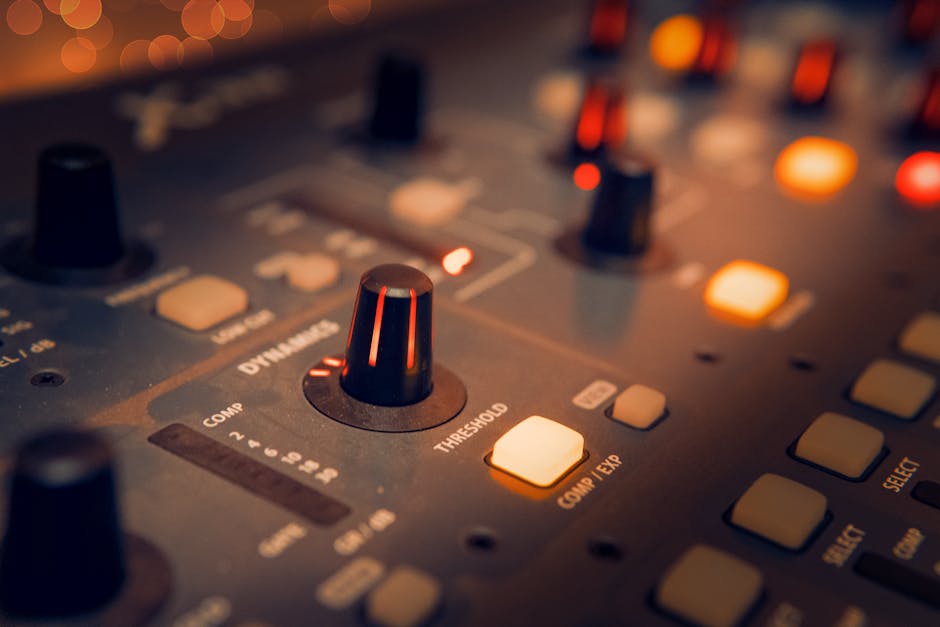
Analog mixing, rooted in the golden age of recording, relies on the processing of continuous electrical signals. Large-format consoles from legendary manufacturers like Solid State Logic (SSL) or AMS Neve are the heart of these environments, known for their generous headroom and the harmonic coloration they impart to audio. Electronic components such as transformers, tube circuits, and Class A amplifiers introduce subtle harmonic distortions and natural compression that many industry professionals value for their “warmth,” “density,” and “depth.” Summing multiple tracks through an analog bus, for example, can generate a distinctive tonal cohesion, a phenomenon some engineers describe as the “glue” that binds the elements of a mix together, providing a sense of three-dimensionality that can be difficult to replicate digitally. Hardware equalizers and compressors, each with its own unique response curve and sonic character, require physical manipulation that fosters more deliberate decision-making and a tactile connection with the sound. This approach, however, comes with significant challenges: the cost of acquiring and maintaining specialized equipment is high, the physical space required for a large-format console and peripheral gear is considerable, energy consumption is greater, and the difficulty in exact recall of settings for future revisions or for working on multiple projects simultaneously can slow down the workflow. Meticulous gain staging management is crucial to optimize the signal-to-noise ratio and avoid unwanted saturation, demanding considerable expertise and a deep understanding of analog circuit behavior.
Digital Audio Processing: Flexibility and Precision in DAWs
In contrast, digital mixing operates in the realm of discrete data, utilizing Digital Audio Workstations (DAWs) such as Pro Tools, Logic Pro, Ableton Live, or Cubase. Surgical precision, instant recall capability, and flexibility are fundamental attributes that have revolutionized music production. Processing plugins, which emulate or surpass the capabilities of their analog counterparts, offer a virtually limitless sonic palette. Companies like Universal Audio (UAD) have perfected emulations of classic hardware with astonishing levels of detail and authenticity, while developers like FabFilter or Waves innovate with native digital tools offering high transparency, advanced functionality, and processing efficiency that allows for stacking multiple instances without overloading the system. Detailed automation of almost any parameter—volume, panning, equalization, effects sends—enables an expressiveness and dynamic complexity that would be unfeasible or extremely laborious in the analog domain. Mixing “in-the-box” is economically accessible, requires no large physical space, and facilitates remote collaboration, a growing trend in global production, particularly relevant for artists and producers in regions like Argentina and Latin America. However, some critics point out that a purely digital environment can lack the “life” or harmonic “character” that analog hardware naturally brings, sometimes resulting in mixes perceived as sterile, overly clean, or two-dimensional if not handled skillfully. Overprocessing with low-quality plugins or excessive reliance on presets can also limit sonic originality and the learning curve for achieving a distinctive sound.
The predominant trend in today’s industry lies not in an exclusive choice, but in hybridization. Numerous studios in Buenos Aires, Córdoba, and throughout the Latin American region integrate the best of both worlds: they use the precision, flexibility, and automation capabilities of a DAW for organization and editing, while routing key tracks or the final stereo bus through external analog summing units, equalizers, and hardware compressors to impart that characteristic color, punch, and depth. This synergy allows for benefiting from analog character without sacrificing digital efficiency and convenience. Furthermore, technological innovation continues to redefine the landscape at a dizzying pace. Artificial intelligence (AI) is gaining ground, with plugins like iZotope Neutron or Soundtheory Gullfoss intelligently analyzing and adjusting dynamics and frequency spectra, streamlining workflows and offering creative solutions for complex mixing problems. Immersive audio production, such as Dolby Atmos Music, represents a significant advancement, allowing engineers to place sounds in three-dimensional space and opening new avenues for audience auditory experience, whether in film, video games, or through compatible streaming platforms. Streaming platforms like Spotify and Bandcamp drive demand for high-quality content and mixes that translate well across diverse playback systems. Cloud collaboration tools like Splice or Audiomovers facilitate joint production among geographically dispersed artists and producers, transforming how music is created. Advances in high-resolution audio interfaces and AD/DA converters also narrow the gap between capture and playback, offering unprecedented fidelity and transparency, enabling engineers to more accurately hear the subtleties of their mixes, regardless of the chosen domain.
Hybrid Convergence and Future Trends in Music Production
Ultimately, the choice of mixing techniques—analog, digital, or hybrid—aligns with the producer’s artistic vision and the specific requirements of the project. Each approach presents a unique set of tools and challenges. A deep understanding of the properties and sonic impact of each domain empowers engineers to make informed decisions that enhance the emotion and message of the music. The current era celebrates the diversity of methods and continuous technological evolution, encouraging professionals to experiment and forge their own sonic path, always with a critical ear and musical sensitivity as primary guides.
Related Posts

The Evolving Artistry of Juan Carlos Baglietto: A Sonic Tapestry Unveiled
Explore the profound sonic evolution of Juan Carlos Baglietto, from his roots in La Trova Rosarina to his contemporary soundscapes, offering insights for artists.

Minimalist Music Production: Sonic Sculpting Through Essence, Texture, and Space
In-depth analysis of minimalist production: sonic selection, silence management, and mixing techniques for clarity and depth.

Audio Mastering for Streaming: LUFS Standards, Dynamic Processing, and Codec Optimization
Explore the technical fundamentals of audio mastering for streaming platforms, covering LUFS, dynamic processing, and codec selection.

Acoustic Dulcimer and Zither Capture: Miking and Processing for Faithful Sound Reproduction
Technical analysis of miking and processing to preserve the warmth and detail of dulcimers and zithers in music productions.