Acoustic Guitar Miking and Processing for Fingerpicking vs. Strumming
Acoustic guitar recording fundamentals, miking, and processing techniques for fingerpicking and strumming.

Sonic Characteristics: Fingerpicking vs. Strumming
The acoustic guitar, a foundational pillar in countless musical genres, presents a unique challenge in the realm of recording. Its sound, deeply rooted in the interaction between the player and the instrument, manifests in radically different ways depending on the technique employed. Capturing the intrinsic delicacy of fingerpicking is not the same as capturing the percussive energy of strumming. Each modality demands a particular technical approach, from microphone selection to final processing, to preserve the integrity of the performance and project the artistic intention. This analysis delves into the essential considerations for achieving optimal results in both approaches, contemplating both acoustic fundamentals and current technological innovations.
Distinct Sonic Characteristics: Fingerpicking and Strumming
The fundamental distinction between fingerpicking and strumming lies in their inherent acoustic properties. Fingerpicking generates a sound characterized by precise articulation, a wide dynamic range, and a noticeable separation between individual notes. Here, the resonance of the strings and the instrument’s wood are perceived in great detail, often with a focus on the mid and high frequencies that define clarity. Successfully capturing this technique requires fidelity that preserves every nuance and the subtle interaction of the fingers with the strings. On the other hand, strumming produces a denser, more cohesive timbre, with an emphasis on harmonic body and rhythm. The energy is distributed across a broader spectrum, where low and mid frequencies become relevant to provide warmth and fullness. The objective in this case is to record the entirety of the chord with power and coherence, avoiding a muddy or excessively percussive sound. Understanding these differences is the first step toward effective recording.
Microphone Methodologies for Acoustic Techniques
Specific Miking Methodologies for Each Technique
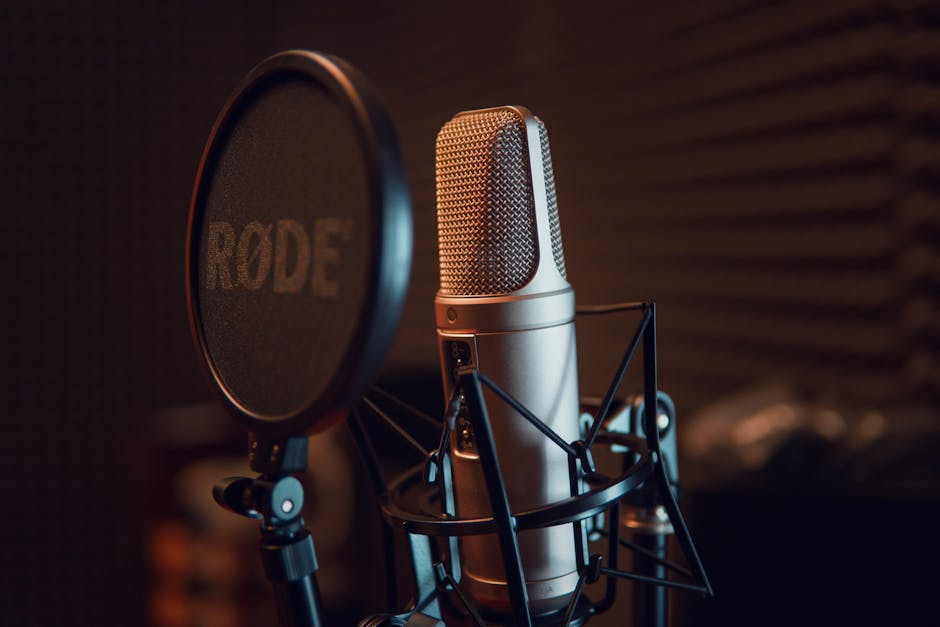
The choice and placement of microphones are crucial. For fingerpicking, capturing detail and transients is prioritized. A small-diaphragm condenser microphone (SDC), such as a Neumann KM 184 (https://www.neumann.com/en-us/products/microphones/km-184/) or a Shure KSM137 (https://www.shure.com/en-US/products/microphones/ksm137), positioned about 15-30 cm from the 12th fret or the bridge, typically delivers superior definition. A stereo configuration with two SDCs in an X/Y or spaced technique can expand the sonic image and add depth, essential for the spatiality of the performance. For example, two Rode NT5 (https://rode.com/en/microphones/condenser/nt5) microphones arranged in A/B usually provide an enveloping stereo scene. For strumming, the priority shifts to capturing the entirety of the instrument and its resonance. A large-diaphragm condenser microphone (LDC), such as an Audio-Technica AT2020 (https://www.audio-technica.com/en-us/at2020) or an sE Electronics X1 S (https://www.seelectronics.com/microphones/sE-X1S-Condenser-Microphone), positioned 30-60 cm from the guitar’s body, slightly towards the soundhole or the bridge, can offer a balanced response. Combining an LDC for the body and an SDC for string detail, carefully mixed in phase, is a robust strategy for both techniques. Experimentation with distance and angle is critical to finding the “sweet spot” for each instrument and performance.
Post-Production Processing: Adjustments for Clarity and Power
Once the signal is recorded, processing in a digital audio workstation (DAW) allows for sound refinement. For fingerpicking, equalization aims to enhance clarity without introducing harshness. A slight cut in the low frequencies (80-150 Hz) can eliminate unwanted “boominess,” while a subtle boost in the 2-5 kHz range can accentuate string definition. Compression should be light and transparent, with low ratios (1.5:1 to 2:1) and attack and release times adjusted to level dynamics without crushing expressiveness. Plugins like the Universal Audio Teletronix LA-2A (https://www.uaudio.com/uad-plugins/compressors-limiters/teletronix-la-2a.html) or the FabFilter Pro-C 2 (https://www.fabfilter.com/products/pro-c-2-compressor-plugin) are excellent choices. Adding a reverb with a short decay time (1-2 seconds) and moderate pre-delay can provide a natural ambiance. In contrast, strumming often requires equalization to reinforce body and presence. A boost in the 200-400 Hz range can add fullness, while a cut in the 800-1.5 kHz range can mitigate nasality. Compression can be more aggressive (3:1 to 4:1) to control peaks and maintain consistent volume, using compressors like the Waves SSL G-Master Buss Compressor (https://www.waves.com/plugins/ssl-g-master-bus-compressor) for cohesion. Harmonic saturation, via plugins like Soundtoys Decapitator (https://www.soundtoys.com/product/decapitator/), can add warmth and character.
Technological Advancements and Contemporary Practices in Acoustic Recording
The current landscape of music production incorporates innovative tools that optimize acoustic guitar recording. Artificial intelligence plugins, such as those from iZotope (https://www.izotope.com/en/products/neutron.html) or Sonible, offer assistance in equalization and spectral balancing, intelligently identifying problematic resonances or enhancing harmonics. Remote collaboration platforms, like Splice (https://splice.com/) or Avid Cloud Collaboration (https://www.avid.com/pro-tools/cloud-collaboration) for Pro Tools, make it easier for musicians from different locations to contribute their acoustic guitar parts to a common project, an increasingly relevant workflow in the digital age. The integration of virtual amp and cabinet modelers, such as those from Neural DSP (https://neuraldsp.com/) or Line 6, while traditionally associated with electric guitars, now offer options for processing acoustic guitars with pickups, extending sonic possibilities without the need to mic a physical amplifier. Furthermore, the trend towards immersive music, with formats like Dolby Atmos (https://www.dolby.com/technologies/dolby-atmos/), drives engineers to think about the spatiality of the acoustic guitar from the recording phase, using multi-channel miking techniques or advanced spatialization plugins. These developments allow producers to achieve more polished sounds adaptable to the demands of modern streaming platforms.
Recording acoustic guitar, whether fingerpicking or strumming, transcends mere sound capture; it represents the documentation of artistic expression. By discerning the distinct acoustic properties of each technique, selecting appropriate miking methodologies, and applying conscious post-production processing, sound engineers can enhance the quality and emotional impact of the performance. Incorporating the latest technological innovations not only simplifies certain aspects of the process but also expands creative frontiers. Mastery in this area lies in combining a critical ear, solid technical knowledge, and a constant openness to the tools and approaches that contemporary technology offers.
Related Posts
Microphone Techniques and Acoustics in Metal Recording: Achieving Definition and Sonic Power
Explore microphone selection and acoustic management for capturing metal's energy, integrating production innovations.

DAW Automation: Dynamic Soundscape Sculpting and Advanced Audio Processing
Explore precise modulation of audio parameters and effects, from volume to AI, for expressive, high-fidelity music mixes.

Fundamentals of Subtractive Synthesis: Oscillators, Filters, and Envelopes in Modern Sound Design
Technical analysis of oscillators, ADSR filters, and LFOs. Discover the evolution of subtractive synthesis in contemporary music production.

Intermodulation Distortion in Audio: Fundamentals, Measurement, and Auditory Perception
Technical analysis of intermodulation distortion (IMD), its causes, measurement methods, and impact on sound fidelity.