REAPER Architecture and Workflow: Optimizing Digital Music Production
Analyzing REAPER's capabilities for recording, editing, mixing, and mastering, highlighting its customization and efficiency.

Configuring and Customizing Workflows in Reaper
Reaper has established itself as a benchmark Digital Audio Workstation (DAW), valued for its flexibility, operational efficiency, and exceptional cost-effectiveness. In today’s dynamic music production landscape, where adaptability to diverse workflows is crucial, this platform offers robust tools for engineers and producers, from initial composition to final mastering. Its customizable architecture allows users to shape the environment according to their specific preferences, thereby facilitating a seamless and highly productive creative process.
A meticulous initial setup in Reaper is fundamental to laying the groundwork for an efficient workflow. Users can tailor the user interface, from visual themes to panel layouts, to optimize ergonomics and visibility. The creation and assignment of “Custom Actions” represent a significant advantage, enabling the automation of script sequences or repetitive tasks. This translates into a notable reduction in time spent on routine operations, freeing up cognitive resources for creative decisions. Furthermore, intelligent project management using predefined templates accelerates the initiation of new sessions, ensuring each project begins with a logical and organized structure. Advanced management of audio routing, including sends, returns, and subgroups, allows for the construction of complex mixing and processing structures essential for contemporary productions. In a context where remote production and long-distance collaboration are increasingly common, the efficiency Reaper brings to project and task management is a determining factor in maintaining team agility.
Audio and MIDI Recording and Editing Techniques
For the recording and editing phase, Reaper provides a set of functionalities that enable precise audio capture and detailed manipulation of sonic material. Multitrack recording techniques are enhanced by features such as “take lanes,” which facilitate capturing multiple versions of a performance and subsequently selecting the best sections (comping) in a non-destructive manner. Audio editing benefits from tools for slicing, automatic and manual crossfades, as well as high-quality time-stretching and pitch-shifting capabilities that preserve sonic integrity. Engineers can implement pitch and timing corrections using both native tools and through seamless integration of specialized VST/AU plugins. Regarding MIDI manipulation, Reaper offers a comprehensive editor that allows for quantization, the creation of complex patterns, and detailed performance articulation, vital aspects for genres heavily reliant on programming. These editing methods not only improve the technical quality of recordings but also streamline the refinement process, a crucial aspect when working under tight deadlines or on collaborative online projects.
Audio processing in Reaper, for both mixing and mastering, benefits from its powerful engine and extensive plugin compatibility. The suite of native effects, such as ReaEQ, ReaComp, ReaDelay, and ReaVerb, though visually minimalist, offers precise parametric control and professional sound quality. The platform allows for seamless integration of a vast library of third-party VST and AU plugins, opening up an unlimited range of sonic possibilities. For advanced mixing, techniques like sidechaining, parallel compression, and multiband processing can be applied with great ease, achieving exceptional articulation and clarity in mixes. In the mastering stage, Reaper facilitates the application of limiters, dithering, and spectral analysis tools to prepare tracks for distribution across various platforms. It is relevant to consider current trends in audio, such as the growing presence of artificial intelligence-based plugins that assist in mixing and mastering tasks, or the need to optimize LUFS levels for streaming, aspects that Reaper handles effectively. Additionally, its capability to work with immersive audio formats, albeit with manual configuration, allows producers to explore new sonic frontiers and adapt to emerging consumption demands.
Audio Processing for Mixing and Mastering
In summary, Reaper stands out as an exceptionally powerful and adaptable tool for music production. Its open and customizable architecture, combined with a comprehensive set of features for recording, editing, mixing, and mastering, makes it a preferred choice for professionals and enthusiasts alike. The platform not only meets the technical demands of modern production but also offers a pathway to integrate industry innovations, from efficiency in remote workflows to exploring new audio processing technologies, solidifying its relevance in the global music industry.
Related Posts

Abbey Road Studios Innovations: Recording Techniques Defining Modern Music Production
Technical analysis of The Beatles' pioneering Abbey Road techniques and their lasting impact on contemporary audio engineering.

Evolution of Sound Sampling: From Early Hardware Samplers to Digital Convergence
Technical analysis of hardware sampler development, its impact on music production, and its legacy in current digital tools.
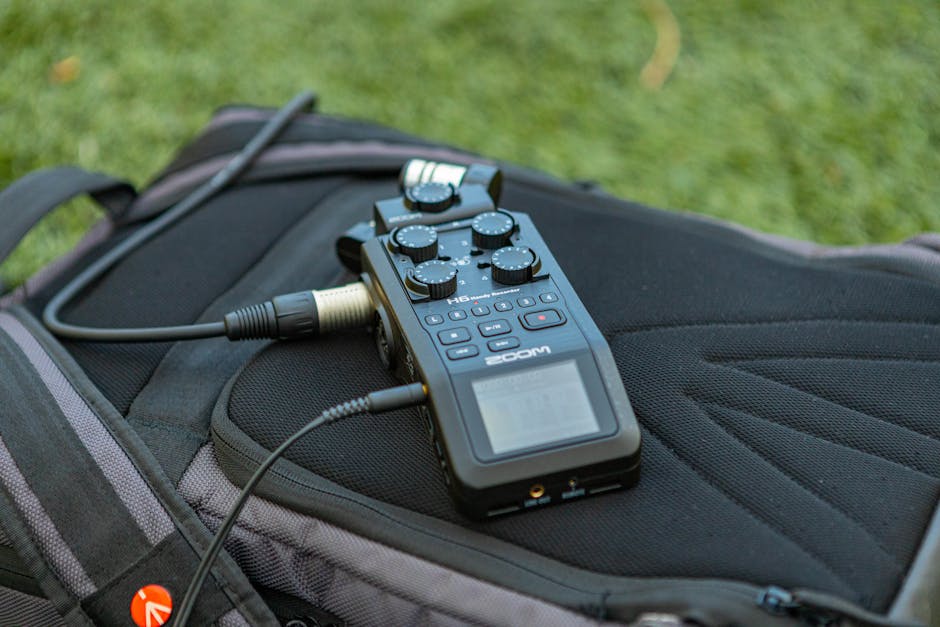
Field Recording for Music: Principles of Capture, Processing, and Technological Innovation
Integrating ambient sounds into music: recording techniques, processing, and technological advances for innovative compositions.

Granular Synthesis: Fundamental Principles and Spatial Manipulation in Digital Audio
Deep exploration of sonic deconstruction and reconstruction using grains, optimizing textures and immersive soundscapes.