Drum Processing: Dynamics, Spacing, and Cohesion in Modern Mixing
Optimizing drum sound with EQ, compression, and effects for clarity, depth, and unity in contemporary productions.
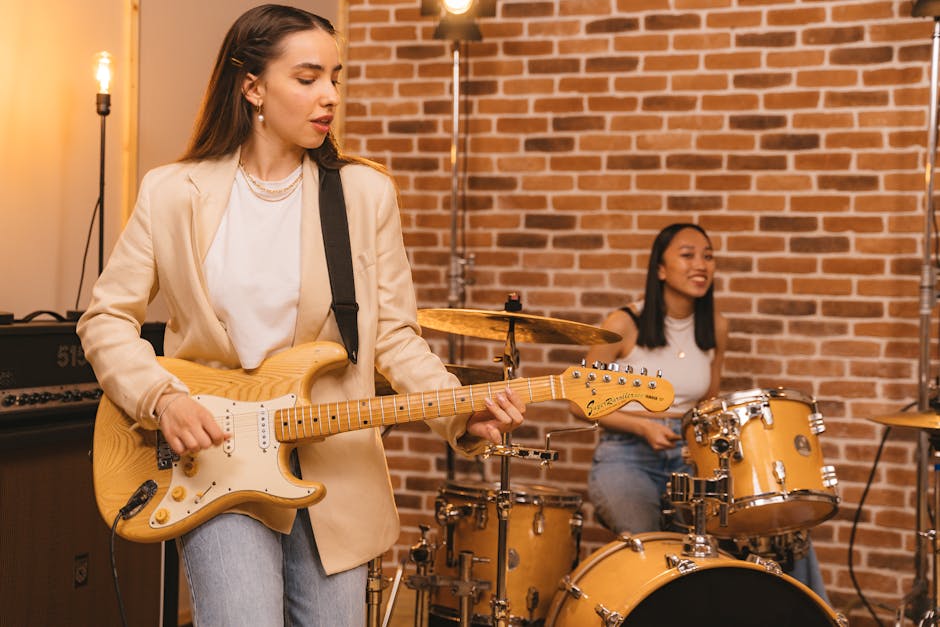
Dynamic and Spectral Processing: Sculpting the Drum Sound
The drum kit, as the rhythmic backbone of countless musical genres, demands meticulous treatment during the mixing stage to achieve impact, clarity, and cohesion. The interplay between its individual components and the overall kit presents a constant challenge for audio engineers and producers, who strive to balance power with spatial definition. Addressing drum processing involves a deep understanding of dynamics, the frequency spectrum, and available tools, always with an eye towards innovations that redefine the current sonic landscape.
Dynamic and spectral processing form the foundation for sculpting the sound of each drum kit element. Equalization (EQ) allows for the enhancement or attenuation of specific frequencies, granting each drum and cymbal its own space within the spectrum. For instance, a kick drum might benefit from a boost in the low frequencies (between 40-80 Hz for the ‘sub’ and 80-120 Hz for the ‘punch’) and a cut in the low-mids to prevent muddiness. Conversely, a snare drum often requires attention in the 200-400 Hz range for body and in the 3-5 kHz range for snare wire articulation. Compression, on the other hand, manages the dynamic range, adding sustain, attack, or more consistent punch. Advanced techniques like multiband compression allow for targeted action on specific frequency ranges, controlling problematic resonances or emphasizing cymbal sustain without affecting the body of the toms. Tools such as FabFilter Pro-Q 3 or Waves F6 offer surgical precision for these tasks, enabling dynamic adjustments that react to the audio material in real-time.
Creating Spaciality and Depth in Drum Mixing
Establishing spaciality and depth in drum mixing is crucial for an immersive listening experience. Strategic panning of individual elements, from a centered kick drum to cymbals placed at the extremes, creates a wide stereo image. Reverb and delay effects add atmosphere and dimension. For a snare drum, a ‘room’ or ‘plate’ reverb with a short pre-delay can simulate a natural space without sacrificing attack clarity. In contemporary mixing, parallel processing with reverbs and delays is employed to add density without overwhelming the original sound. Advances in spatial audio, such as mixes for Dolby Atmos, open new possibilities for positioning drum elements in a three-dimensional environment, giving engineers the ability to place a hi-hat floating above the listener’s head or a tom that sweeps from left to right. Plugins like Valhalla VintageVerb or Eventide Blackhole are examples of tools that assist in constructing these complex soundscapes.
The cohesion of the drum kit as a whole is a primary objective, often achieved through bus compression on the drum group. This technique, known as ‘glue compression,’ amalgamates individual elements, making them sound like a more powerful and unified unit. Bus compressors inspired by classic analog units, such as the SSL G-Series Bus Compressor or the Neve 33609, are highly valued for their ability to add punch and character. Another essential strategy is parallel compression, where a heavily compressed drum signal is blended with the original unprocessed signal. This allows for increased drum density and sustain without crushing transients or sacrificing natural dynamics, a technique frequently used in genres demanding a powerful drum sound. Harmonic saturation, subtly applied through tape or tube emulation plugins, can add warmth and a perceived increase in loudness, helping the drums cut through the overall mix more effectively.
Drum Kit Cohesion: Integration and Saturation Techniques
Integrating the drum kit into the overall mix requires consideration of its interaction with other instruments, especially the bass. Sidechain compression is an effective technique to ensure the kick drum has adequate space in the mix, ducking the bass or a synthesizer whenever the kick drum hits. This creates a rhythmic ‘pumping’ effect that enhances the kick’s impact and improves bass intelligibility. In the context of current trends, artificial intelligence (AI) is beginning to offer innovative solutions for tasks such as phase alignment between drum microphones, or suggesting EQ and compression adjustments that optimize the relationship between the drums and other elements. Tools like iZotope Neutron or Soundtheory Gullfoss exemplify how technology assists engineers in refining their mixes more efficiently. Staying abreast of these technological developments and their practical applications, as seen in production forums or specialized blogs like Sound on Sound, is essential for any audio professional seeking to hone their percussion mixing skills, adapting classic techniques to the demands of contemporary productions.
Drum mixing is an iterative process that demands patience, experimentation, and a critical ear. From managing each individual piece to achieving overall kit cohesion and its integration into the broader mix, every decision significantly impacts the final result. Understanding fundamental principles, combined with adopting new technologies and creative approaches, will enable producers and engineers to forge a powerful and professional rhythmic foundation for any musical production.
Related Posts

Sampling in Hip-Hop: Technical Evolution and Sonic Recontextualization
A technical analysis of the evolution of sampling in hip-hop, from its analog origins to contemporary digital techniques.
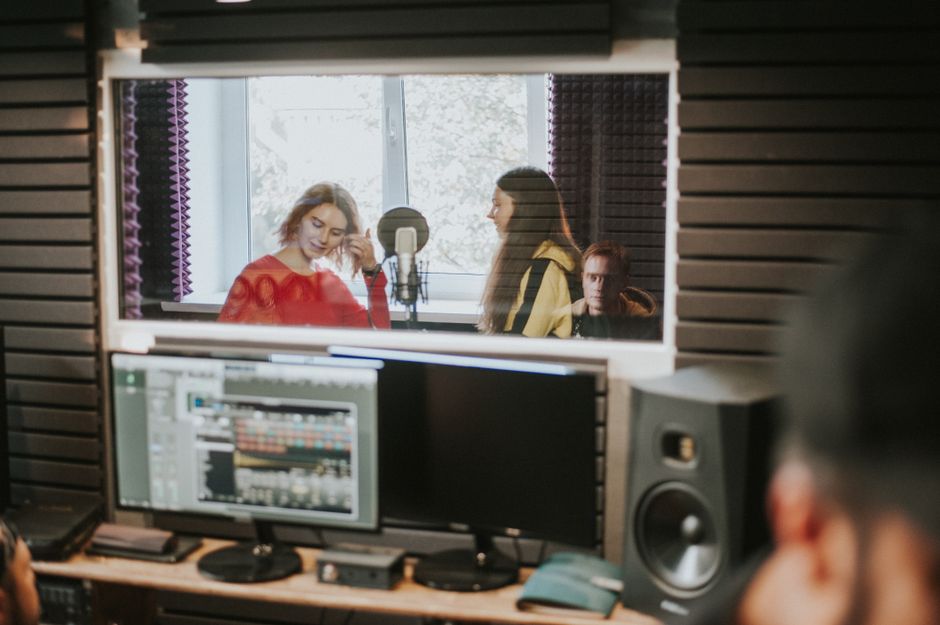
Organic Vocal Tuning Management: Integrating Technology and Artistic Expression
Preserving vocal emotional nuance with natural pitch correction. Software techniques and acoustic principles for authentic performance.
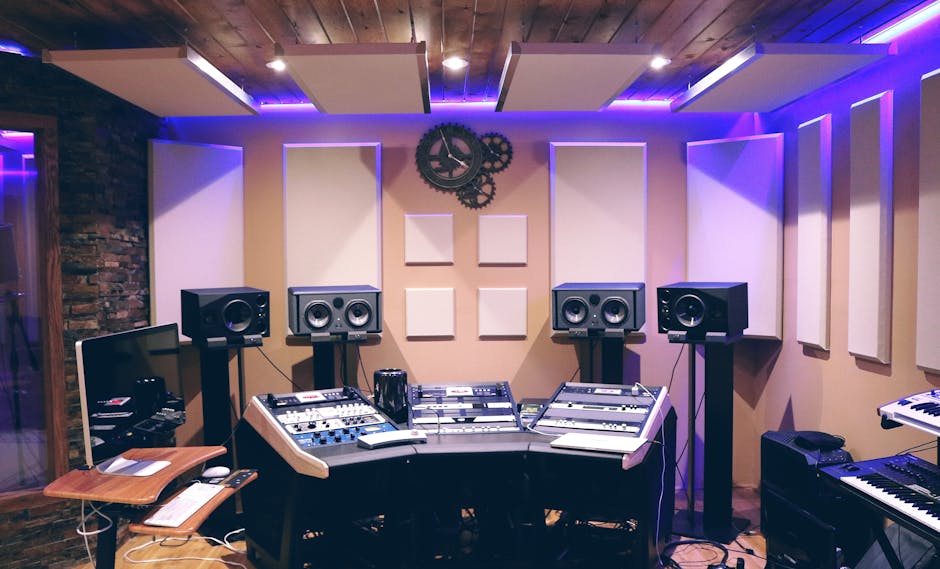
REAPER: Customization Architecture and Efficiency in Modern Music Production
An analysis of REAPER's architecture, advanced customization, and workflow optimization for contemporary music production.
Perceptual Transparency in Audio: Measurement Principles and Production Applications
Research on measuring perceptual audio transparency, its impact on production and mastering, and evaluation methodologies.