Cubase: Architecture and Key Features for Contemporary Music Production
Evaluating Cubase's capabilities in workflow, advanced audio processing, and virtual instrumentation for sound creation.
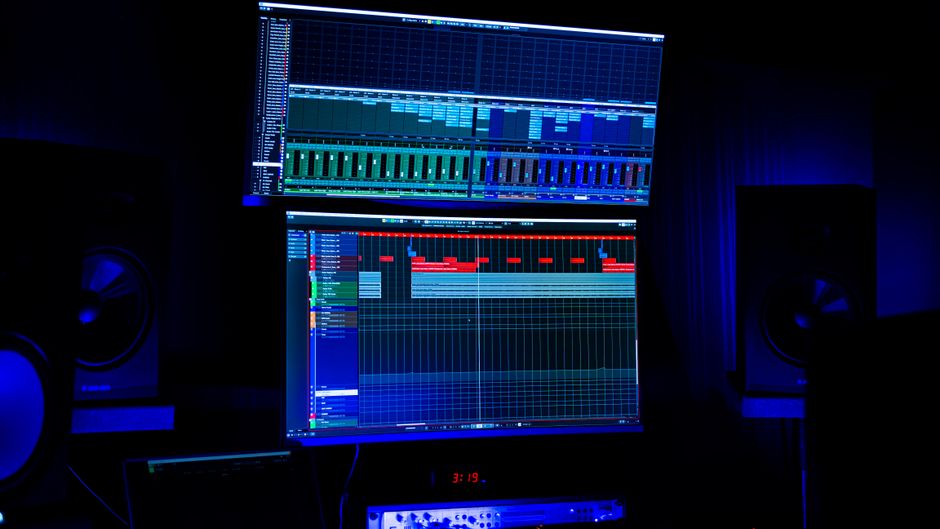
Workflow Optimization and Project Management
Cubase, a Digital Audio Workstation (DAW) with a well-established history, stands as an essential platform for contemporary music creation. Its robust architecture and integrated toolset empower producers, composers, and sound designers to realize highly complex audio projects. From the initial conceptualization of an idea to final mixing and mastering, this software is a preferred choice for professionals seeking precision and flexibility in their workflow, continuously adapting to industry innovations. Its versatility makes it suitable for diverse genres, from electronic music to orchestral productions, serving as a fundamental tool in studios worldwide. This structured management is vital for complex productions, such as those undertaken in modern studios handling multiple sessions concurrently.
Streamlining Workflow and Effective Project Management
Workflow optimization is a central pillar in Cubase, engineered to maximize efficiency at every production stage. The intuitive organization of projects through audio, MIDI, and group tracks, coupled with its powerful recording engine, allows for efficient, high-fidelity capture of musical performances. Advanced editing functions, such as VariAudio for vocal pitch correction and AudioWarp for artifact-free temporal audio manipulation, are crucial for a professional finish. The implementation of ‘Chord Tracks’ not only simplifies harmonization and arrangement but also provides a clear visual representation of melodic structure, streamlining compositional processes. For larger-scale projects, Cubase offers customizable project templates and track presets, enabling new productions to start with pre-configured settings, saving significant time. For additional information on these features, visit the official website of Steinberg, the developer of Cubase: https://www.steinberg.net/cubase/.
Advanced Audio Processing and Immersive Mixing
Advanced Audio Processing and the Convergence Towards Immersive Mixing
Cubase’s audio processing capabilities reach considerable levels of sophistication, equipping engineers with a vast suite of native VST effects. These include high-precision parametric equalizers like Frequency, versatile compressors such as the Channel Strip, and convolution reverbs that simulate realistic acoustic spaces. Flexible configuration of mix buses and groups allows for logical sound structuring, essential for clarity and balance in dense mixes. Detailed automation of effect parameters and volume over time is fundamental to adding dynamism and life to productions. A significant advancement is its compatibility with immersive audio formats, such as Dolby Atmos and 360 Reality Audio, positioning Cubase at the forefront of spatial mixing technologies. Producers can now generate enveloping auditory experiences using tools like VST MultiPanner, opening new creative and commercial dimensions for music content on streaming platforms like Spotify. Precision in panning and spatialization is achieved through these dedicated tools, which are fundamental to meeting new audio consumption standards. To understand more about mixing and mastering techniques, resources like Sound on Sound offer detailed analyses: https://www.soundonsound.com/.
Virtual Instrumentation, Sound Synthesis, and Remote Collaboration
Virtual Instrumentation, Sound Synthesis, and Remote Collaboration
Cubase’s virtual instrumentation capabilities are remarkable, integrating a vast library of VSTi instruments. Among these, HALion Sonic SE stands out for its wide range of sounds, Padshop for granular synthesis, and Retrologue for analog synthesizer emulations. This allows composers to generate diverse sonic textures and complex arrangements without the need for external hardware, fostering experimentation. Compatibility with advanced MIDI controllers facilitates real-time expression and control of instrument parameters, enriching performances. In sound synthesis, its internal modules and seamless integration of third-party plugins enable the creation of unique sounds, from powerful basslines to atmospheric pads. The continuous evolution of AI-assisted plugins, which suggest chords, generate melodies, or assist in mixing, is progressively integrated into the VST ecosystem, enhancing creativity and streamlining the sound design process. Furthermore, Cubase facilitates remote collaborative production through VST Connect SE, allowing musicians from different locations to record and contribute to the same project in real-time – a growing trend in the global music industry.
In summary, Cubase stands as a comprehensive digital audio workstation that meets the demands of modern music production. From composition and recording to advanced mixing and mastering, its robust feature set and adaptability to technological innovations make it an indispensable tool for realizing high-quality audio projects. Its relevance persists and grows with each advancement in the audio sector, solidifying its position as a strategic choice for professionals worldwide.
Related Posts

Dynamic vs. Condenser Microphones: Operating Principles, Performance, and Key Applications
A technical exploration of the operating principles, characteristics, and practical uses of dynamic and condenser microphones.

The Evolution of Multitrack Recording: From Les Paul to DAWs and Immersive Production
Explore the historical and technological development of multitrack recording, from its origins to digital innovations and immersive audio.

Live Sound Engineering: Recreating IKV's Sonic Complexity
Technical analysis of audio strategies to replicate the sonic proposal of Illya Kuryaki and the Valderramas in concerts.

Analog vs. Digital Filters: Fundamentals, Differences, and Audio Production Applications
Compare analog and digital filters: their principles, unique sonic characteristics, and roles in modern music and immersive audio production.