The Evolution of Multitrack Recording: From Les Paul to AI and Immersive Audio
A historical journey through multitrack recording, from its analog origins to digital innovations and the future of immersive audio.
Origins of Multitrack Recording and Les Paul’s Ingenuity
The ability to record multiple audio sources independently has radically transformed music production. Before its conception, recordings were made in a single continuous take, which demanded an orchestral perfection unattainable for many artists. The implementation of multitrack allowed for unprecedented creative flexibility, enabling the editing, mixing, and individual processing of each sound element. This technical advancement not only optimized the studio workflow but also redefined artistic possibilities, marking the beginning of an era of experimentation and sonic sophistication.
The Beginnings and the Vision of Pioneers
The foundations of multitrack recording were laid in the mid-20th century. The Ampex company, with its development of magnetic tape recorders, played a fundamental role. However, it was the ingenuity of guitarist and producer Les Paul who crystallized the idea. Paul, experimenting with a modified Ampex 300 recorder, invented “Sound-on-Sound” in the 1940s. This initial method involved recording one track, then playing it back while recording a new track onto the same tape, merging both signals. Although rudimentary and with a loss of quality in each layer, it laid the groundwork for the simultaneous recording of instruments. Les Paul’s subsequent collaboration with Ampex resulted in the first commercially viable eight-track recorder, the Model 300-8, in 1957. This equipment revolutionized how engineers and musicians approached sound creation, granting granular control over instrumentation and vocals.
Analog Consolidation: Standards and Techniques in Professional Studios
The Analog Era and Consolidation in Professional Studios
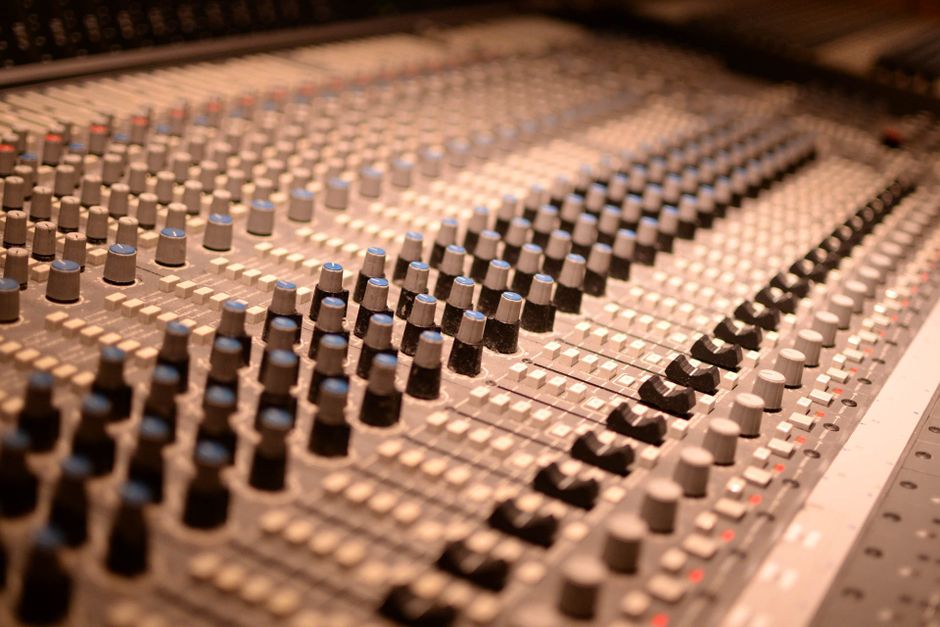
Over the following decades, analog multitrack recording technology flourished. Recording studios around the world adopted 8, 16, and 24-track tape recorders, with equipment from manufacturers like Studer, MCI, and Otari becoming industry standards. This period witnessed the emergence of iconic albums produced using multitrack, where the separation of instruments and the possibility of overdubs (additional recordings) allowed for complex sonic textures. Experimentation with effects such as reverb, delay, and compression, applied to individual tracks, became common practice. Artists like The Beatles and Pink Floyd utilized these tools to forge innovative soundscapes. The mixing console, with its multiple channels and signal paths, became the nerve center of the studio, facilitating the integration of all recorded tracks into a cohesive and balanced mix. Sound engineering evolved drastically, with professionals developing advanced techniques for miking and processing.
The Digital Transition and the Democratization of Production
The 1980s saw the advent of digital technology, which gradually began to replace analog systems. The ADAT (Alesis Digital Audio Tape) and the TASCAM DA-88, launched in the 90s, offered digital multitrack recording at more accessible prices, allowing small studios and independent musicians to access professional capabilities. However, the real transformation came with Digital Audio Workstations (DAWs). Software like Pro Tools, Cubase, and Logic Pro moved the entire recording, editing, and mixing process into the computer environment. This innovation eliminated the need for expensive magnetic tapes and bulky equipment, offering unprecedented flexibility and editing power. Producers could manipulate audio with millimeter precision, apply a vast array of virtual plugins, and collaborate more efficiently. Music production became de-localized, enabling the creation of home studios with professional results.
Digital Transition and Democratization of Music Production
Contemporary Innovations and the Future of Multitrack Production
Today, the multitrack recording ecosystem continues its evolution at an accelerated pace. Artificial intelligence (AI) is beginning to redefine workflows, with plugins assisting in tasks such as mixing, mastering, and audio restoration, like those offered by iZotope or Sonible. Cloud-based collaborative production, through platforms like Splice or Avid Cloud Collaboration, allows musicians and producers worldwide to work together, transcending geographical barriers.
Furthermore, immersive audio, with formats like Dolby Atmos, represents a significant trend. These systems expand the multitrack concept into a three-dimensional space, allowing engineers to place sounds anywhere in the listening environment, generating deeply engaging auditory experiences. Manufacturers like Universal Audio continue to innovate with low-latency audio interfaces and vintage hardware emulations, integrating the best of the analog world with the advantages of digital. The development of advanced MIDI controllers and increasingly realistic virtual synthesizers also expands creative capabilities. The constant search for new tools and methodologies drives the industry towards unexplored sonic horizons, consolidating multitrack recording as an unwavering pillar of modern music creation.
From Les Paul’s bold experiments to today’s sophisticated digital production environments, multitrack recording has been a relentless catalyst for musical innovation. Its trajectory reflects a constant pursuit of greater control, flexibility, and artistic possibilities. The ability to isolate and manipulate each sound element has enabled generations of creators to realize complex visions, and its evolution continues to drive the most avant-garde trends in audio production.
Related Posts
Zeca Pagodinho's Soulful Grooves: Mastering Ballads and Mid-Tempos for Producers
Explore the nuanced artistry of Zeca Pagodinho's ballads and mid-tempo samba, uncovering production techniques for Latin American musicians and producers.

The Evolving Artistry of Juan Carlos Baglietto: A Sonic Tapestry Unveiled
Explore the profound sonic evolution of Juan Carlos Baglietto, from his roots in La Trova Rosarina to his contemporary soundscapes, offering insights for artists.

X-Y and A-B Stereo Microphone Techniques: Coherence vs. Spatial Width
Comparative analysis of X-Y and A-B stereo microphone configurations, evaluating their impact on sonic imaging and spatiality.

Fundo de Quintal's Sonic Evolution: Acoustic Processing and Recording Technologies
A technical analysis of Fundo de Quintal's sonic evolution, from instrumentation to music production technologies.