Advanced Sampling: Granular Manipulation, AI, and Immersive Audio in Contemporary Sound Design
Exploring advanced sampling methodologies: granular synthesis, AI, spatial audio, and remote collaboration define current music production.

Deep Reshaping of Original Sound Material
Sampling, as a practice of reusing and manipulating pre-existing sound fragments, has evolved from a rudimentary technique to a sophisticated artistic and technical discipline. Currently, its application transcends mere loop repetition, establishing itself as a fundamental pillar in contemporary music creation. This methodology allows composers and producers to build innovative soundscapes, lending new dimensions to iconic recordings or generating unprecedented textures from unexpected sources. This analysis addresses advanced methodologies and future perspectives in audio sampling, considering recent technological innovations and industry trends.
The mere reproduction of an audio fragment has been surpassed by the deep reshaping of the original material. Techniques like granular synthesis, for instance, allow a sample to be disintegrated into small sound “grains,” which are then recombined with variable density, duration, and envelope parameters. This process generates ethereal textures, drones, or complex soundscapes that retain an essence of the original but are perceived as entirely new elements. Software tools like Granulator II in Ableton Live or third-party plugins such as Output’s Portal offer intuitive interfaces for this kind of manipulation, opening up a wide range of creative possibilities. Another approach involves extreme alteration of timing and pitch. Advanced time-stretching and pitch-shifting algorithms, present in modern DAWs and specialized plugins, allow the time of a sample to be stretched or compressed without altering its pitch, or vice versa, with a quality that was unthinkable just a few years ago. The creative application of these algorithms can transform a vocal phrase into an atmospheric pad or a percussion element into a subtle melodic component. Experimentation with these tools fosters originality and the construction of distinctive sonic identities in music production.
Integration of Artificial Intelligence in Audio Processing
The advent of artificial intelligence (AI) in the professional audio field has significantly transformed sampling methodologies. Currently, there are AI-based tools that facilitate the automatic identification of rhythmic or melodic elements within a sample, enabling their efficient extraction and categorization. Plugins like Sonible’s Smart:EQ 3, while not directly for sampling, use AI to analyze a sound’s spectrum and suggest equalization, indirectly optimizing the quality of a sample for subsequent integration. More directly, platforms like AIVA (Artificial Intelligence Virtual Artist) or Amper Music offer the capability to generate music from defined parameters. While this is not sampling in the traditional sense, reusing their outputs to create new layers or textures aligns with the spirit of sampling. Algorithmic analysis is also applied in the organization of vast sample libraries. Audio asset management software employs algorithms to tag and organize sounds by timbre, genre, instrument, or mood, streamlining workflows and allowing producers to quickly find the ideal material. The synergy between human creativity and algorithmic efficiency redefines the paradigm of sound creation.
The production of immersive audio, exemplified by formats like Dolby Atmos, introduces new considerations for sampling. The spatialization of samples becomes an expressive resource, allowing sound fragments to move three-dimensionally around the listener. A sample of an ambient sound, for example, can be positioned and animated in a 3D space, adding depth and realism to an immersive mix. This demands an advanced understanding of the panning and spatial objectification tools available in DAWs compatible with these formats. Producers in cities worldwide are adopting these techniques for their productions destined for streaming platforms like Spotify and Apple Music, which increasingly support spatial audio.
Sampling Considerations in Immersive Audio Environments
Furthermore, remote collaboration has fostered the emergence of new platforms and methodologies for sharing and manipulating samples. Services like Splice or Loopcloud not only offer immense sound libraries but also integrate functionalities for project synchronization and idea exchange among collaborators located in different geographies. This allows a producer in one location to work on the same sampling project with a colleague in another, sharing and modifying fragments in real-time, overcoming geographical and temporal barriers. The ease of accessing a universe of sounds and the ability to co-create remotely drive an unprecedented democratization in music production.
Creative sampling techniques have transcended their original conception, transforming into an essential tool for musical innovation. From deep granular manipulation to the integration of artificial intelligence systems and application in immersive audio environments, sampling continues to expand its horizons. The ability to recontextualize sounds and fuse analog with digital offers creators an unlimited sonic palette. Constant adaptation to new technologies and artistic vision are crucial for those seeking to generate works with a unique sonic identity and resonance in the contemporary music landscape. Rigorous experimentation and technical knowledge will enable the development of new creative frontiers.
Related Posts

Deep Learning in Vocal Restoration: Noise Reduction, De-reverberation, and Source Separation
How deep learning is redefining vocal enhancement, from noise removal to source separation.
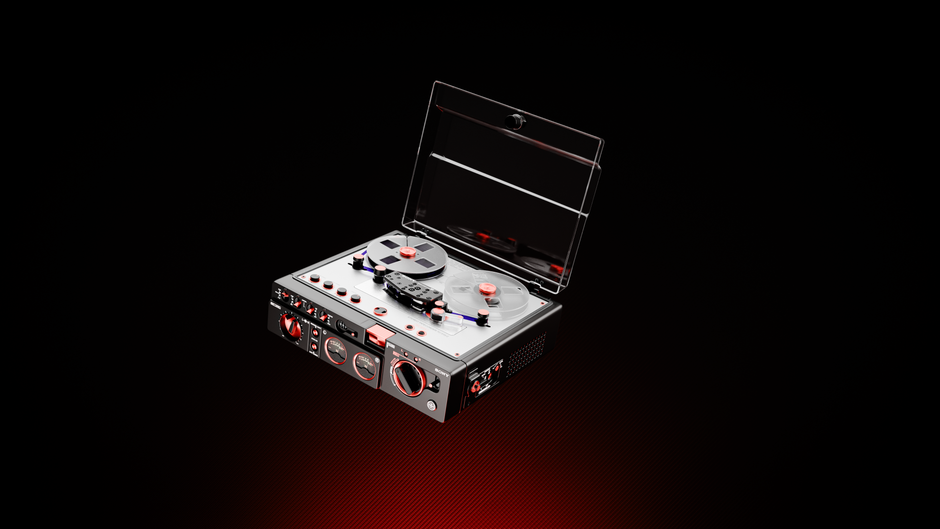
Wow and Flutter: Mechanical Phenomena, Quantification, and Relevance in Modern Audio Production
Exploring analog audio speed fluctuations, their measurement, sonic impact, and creative application in digital environments.

Capturing and Processing Electronic Gesture Instruments: Sonic Integrity and Expressiveness
Analysis of recording and modeling techniques for theremin and MPE controllers, optimizing fidelity and dynamic range.

Hindenburg Pro: Workflow Optimization and Sound Quality for Narrative and Music Production
Review of Hindenburg Pro: non-destructive editing, automatic loudness adjustment, and multitrack capabilities for high-fidelity sound.