Microtiming and Rhythmic Layers: Groove Engineering in Modern Music Production
Exploring temporal, dynamic, and textural subtleties that define compelling grooves in today's music productions.

Rhythmic Fundamentals and Microtiming in Music Production
The articulation of a groove forms the backbone of any musical composition, lending identity and movement to the rhythmic structure. It goes beyond the mere succession of notes; it involves a complex interplay of temporal, dynamic, and textural elements that, together, forge a particular feeling, an unmistakable “vibe.” In contemporary music production, groove crafting has evolved significantly, integrating traditional principles with technological innovations that allow for an unprecedented level of control and creativity.
The foundation of any groove lies in its fundamental rhythmic components: tempo, meter, and subdivision. From these pillars, microtiming emerges as a critical factor. This concept refers to intentional small deviations of musical events from a perfect quantization grid. While quantization can align notes with mathematical precision, humanization or the application of swing patterns introduces those subtle variations that imbue the rhythm with vitality and character. Advanced tools in digital audio workstations (DAWs) like Ableton Live or Logic Pro offer sophisticated functionalities for microtiming adjustments, from intelligent quantization to detailed MIDI velocity editors. This meticulous manipulation is especially relevant in genres such as lo-fi hip-hop or experimental electronic music, where atmosphere and organic feel heavily rely on these controlled imperfections.
Interaction of Instrumental Layers and Dynamic Processing
A compelling groove is not the result of a single element but of the harmonic interaction between different instrumental layers. Drums, bass, percussion, and harmonic elements must engage in rhythmic dialogue, creating a counterpoint that enriches the sonic texture. Techniques like sidechain compression are essential for managing the relationship between the kick drum and the bass, generating that “pumping” effect that drives the rhythm and optimizes clarity in the mix. Similarly, gating can apply a rhythmic effect to pads or synthesizers, transforming a sustained sound into a percussive element. Recent innovations include multiband sidechain compression and dynamic equalization, which allow for even more precise modeling of these interactions, ensuring each rhythmic component finds its space and contributes effectively to the overall cohesion of the track. This layered and interactive approach is indispensable for achieving dense, immersive mixes that perform optimally on current streaming platforms.
Beyond timing, the dynamics and texture of sounds play a paramount role in groove articulation. MIDI velocity variations, for instance, are fundamental to simulating the performance of a real instrument, avoiding a mechanical feel. Amplitude envelopes (ADSR) shape the attack and decay of each note, directly impacting rhythmic perception. Furthermore, temporal effects can become rhythmic elements in their own right. Tempo-synced delays (dotted values, ping-pong) can generate complex rhythmic echoes, while gated reverbs or tempo-synced auto-pan/tremolo add movement and pulse. The advent of artificial intelligence in music production has introduced plugins capable of analyzing existing rhythmic patterns and proposing variations, or even generating complete percussion sections based on the project’s style. These tools offer new avenues for experimentation, allowing producers to overcome creative blocks and explore unprecedented soundscapes. The integration of these dynamic and textural elements is particularly valuable in immersive audio formats like Dolby Atmos, where the movement and spatialization of sounds can exponentially enrich the rhythmic experience.
Dynamics, Texture, and Temporal Processing in Groove
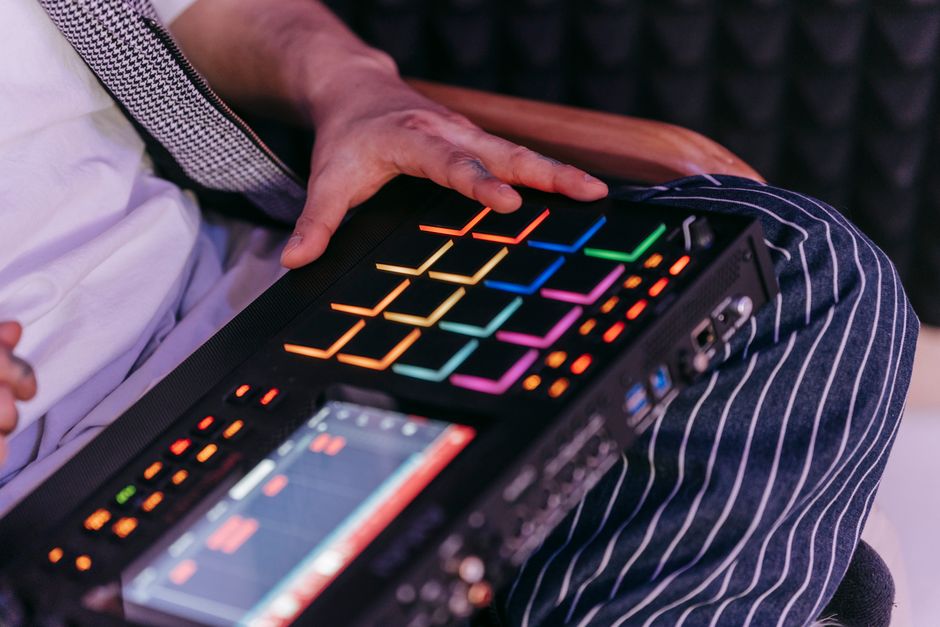
Current trends in groove creation also lean towards collaborative production and the use of advanced MIDI controllers. Cloud-based platforms allow producers from different locations to collaborate on rhythm construction, sharing ideas and refining patterns in real-time. Controllers like the Akai MPC or Native Instruments Maschine provide a tactile experience that fosters improvisation and spontaneous groove generation. Modular synthesis and the sound design of percussion using field recordings (foley) or granular synthesis also open a universe of possibilities for creating unique and distinctive rhythmic elements. The constant evolution of digital production environments and the increasing sophistication of plugins, including those with machine learning capabilities, continue to transform the landscape of rhythmic composition, offering artists increasingly powerful tools to realize their visions. The combination of a solid understanding of rhythmic principles and the leverage of technological innovations is essential for developing grooves that not only drive the music but also resonate emotionally with the listener.
Related Posts

Physical Modeling in Sound Synthesis: Principles, Applications, and Future Innovations
Fundamentals of physical modeling for recreating instruments and generating unique timbres, exploring its application in modern music production.
Ableton Live: Composition and Sound Design Methodologies in Electronic Music
Explore fundamental composition, sound design, and mixing techniques in Ableton Live for contemporary electronic music production.

Capturing and Processing Global Percussion: Integrating Tradition and Modern Technology
Recording and processing methodologies for world percussion, merging cultural authenticity with contemporary technical excellence.

Theoretical Musical Foundations in Modern Digital Production: Harmony, Rhythm, and Timbre
Understanding music theory (harmony, rhythm, timbre) optimizes creativity and technique in contemporary music production, integrating AI and immersive audio.