Evolution of USB Audio Interfaces: From Limited Connectivity to Professional Production
Historical analysis of USB audio interfaces: impact of bandwidth, latency, and standardization on modern music production.
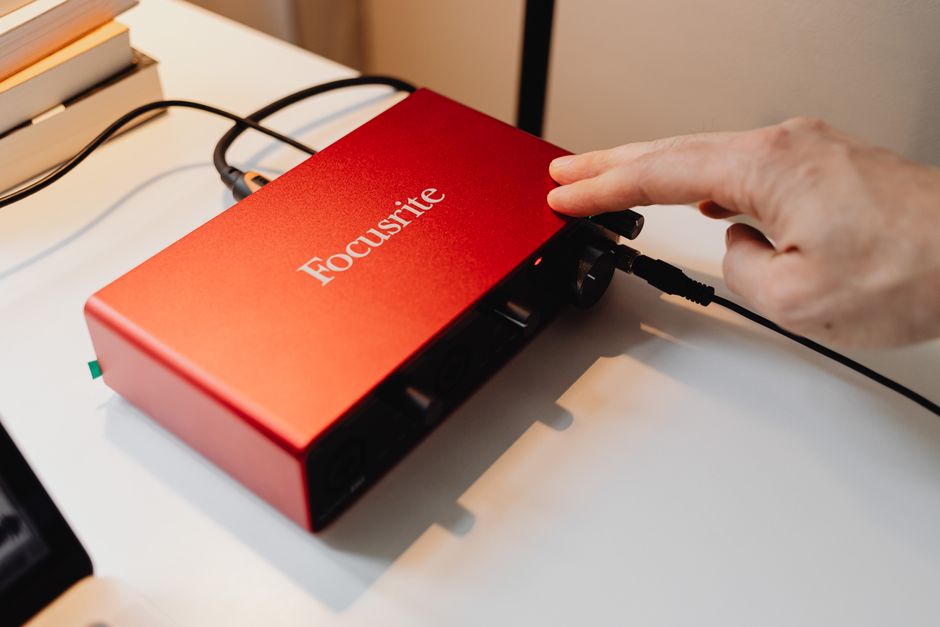
Evolution of Audio Interfaces: From Proprietary Connections to USB
Contemporary music production relies heavily on the flexibility and power of digital audio interfaces. However, this paradigm of compact and efficient studio setups is the result of considerable technological evolution. Before the ubiquity of USB, the interconnection between computers and professional audio equipment was a challenge, marked by proprietary or niche solutions. The advent of the Universal Serial Bus (USB) represented a milestone, promising unprecedented standardization and accessibility in the realm of personal computing. This historical analysis traces the journey of early USB audio interfaces, from their humble beginnings to their current position as a fundamental pillar in sound creation.
In the early days of computer-assisted music production, audio interfaces depended on internal PCI cards or external connections like SCSI and, later, FireWire. These solutions offered respectable performance for their time but involved complexities in installation and compatibility, often requiring specialized hardware and delicate configurations. With the arrival of USB 1.0 in the mid-90s, a universal connection alternative emerged, aiming to simplify the peripheral ecosystem. Initially, the USB 1.0/1.1 specification, with a limited bandwidth of 12 Mbps, presented significant restrictions for high-fidelity audio, especially for multiple channels. The first USB devices were limited to offering basic stereo inputs and outputs, often with noticeable latency that hindered real-time monitoring during recording. These units, while simplifying device linking, did not meet the demands of professional studios requiring simultaneous multi-channel operation, high sample rates, and minimal latency for efficient workflows.
USB 1.0/1.1: Early Steps and Limitations in Digital Audio
The true turning point arrived with the USB 2.0 specification, released in 2000. This standard dramatically increased bandwidth to 480 Mbps, a 40-fold increase over its predecessor. This crucial improvement allowed manufacturers to engineer audio interfaces with greater capabilities: support for sample rates up to 192 kHz and 24-bit depths, as well as an increased number of simultaneous inputs and outputs. Latency was significantly reduced, making it possible to record and monitor with real-time effects without perceptible delays. Companies like M-Audio, Focusrite, and Lexicon began releasing models that democratized access to studio-quality production. The USB 2.0 interface became the de facto standard for home studios and music projects, facilitating music creation in environments previously unattainable without considerable investment in dedicated hardware. The adoption of low-latency drivers like ASIO on Windows and Core Audio on macOS further solidified its viability for professional applications.
The trajectory of USB connectivity in audio continued with the introduction of USB 3.0 (SuperSpeed) and subsequent variants, including USB-C. Although the need for even higher bandwidth for pure audio was not as pressing as during the transition from USB 1.0 to 2.0, the new iterations brought substantial additional benefits. USB-C, in particular, established itself as a universal reversible connector, capable of delivering power and data at higher speeds, which facilitated bus-powered interfaces with increased power and expanded functionalities. Competition with Thunderbolt spurred innovation, leading to interfaces that integrate internal Digital Signal Processing (DSP), such as Universal Audio’s units, which allow for the execution of hardware emulation plugins with minimal latency, freeing up the computer’s CPU resources. Current trends show a deep integration with advanced software, including artificial intelligence tools for mixing and mastering, and compatibility with immersive audio formats like Dolby Atmos. The ability of modern interfaces to operate with a variety of devices, from laptops to tablets, underscores the achieved versatility and the continuous expansion of the mobile production ecosystem, evidencing recent advancements such as the plugins from the UAD Spark platform.
USB 2.0: The Qualitative Leap Towards Professional Music Production
From their beginnings as rudimentary solutions with performance limitations, USB audio interfaces have come an extraordinary way. Their evolution has not only simplified equipment interconnection but has been fundamental to the democratization of music production, making it possible for artists and producers worldwide, from Buenos Aires to any corner of Latin America, to access professional-quality tools. Constant innovation in bandwidth, processing, and compatibility promises a future where digital sound creation will continue to be more accessible, powerful, and fluid, adapting to the demands of new generations of creators and music consumption platforms.
Related Posts

Adapting Mastering for Digital Platforms: Loudness, Spatial Audio, and Codecs
Navigating mastering evolution: LUFS, Dolby Atmos, codecs, and AI for optimal sound distribution.

Machine Learning in Mastering: Sonic Optimization and Platform Adaptability
Exploring the role of ML in optimizing music mastering, ensuring sonic quality across diverse playback platforms.

Quantifying and Manipulating Virtual Presence in 3D Soundscapes
Exploring psychoacoustic cues and objective metrics for immersive audio engineering and realistic auditory experiences.
Wow and Flutter: Mechanical Phenomena, Quantification, and Relevance in Modern Audio Production
Exploring analog audio speed fluctuations, their measurement, sonic impact, and creative application in digital environments.