The Evolution of MIDI Controllers: From Universal Interface to Modern Production
Origins and development of the MIDI interface, its impact on music production, and the evolution of controllers to the present day.
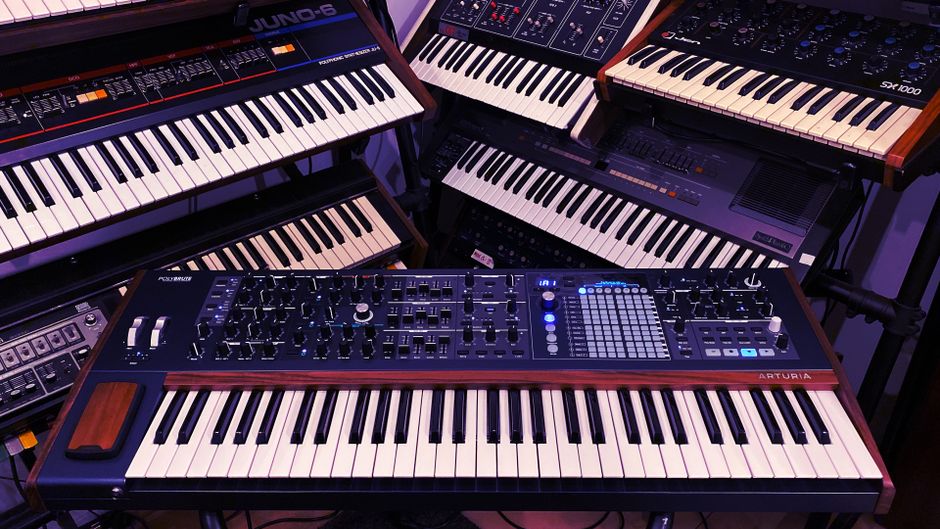
The Birth of the MIDI Protocol: Standardizing Musical Communication
The digital revolution in music began in the early 1980s with the introduction of the Musical Instrument Digital Interface, universally known as MIDI. This protocol radically transformed how musicians interacted with their electronic instruments, enabling communication between devices from different manufacturers. Before MIDI, compatibility between synthesizers, drum machines, and sequencers was virtually non-existent, severely limiting creativity and efficiency in the studio. The standardization of this communication opened up a universe of possibilities, laying the groundwork for modern music production. The emergence of the first MIDI controllers was a crucial milestone in this evolution, democratizing access to sophisticated production tools and redefining the roles of musicians and sound engineers.
The need for a universal interface became evident as analog synthesizers gave way to their digital counterparts and programmable drum machines proliferated. Manufacturers like Roland, Sequential Circuits, and Yamaha recognized the potential of a common language. In 1981, Dave Smith of Sequential Circuits and Chet Wood of Oberheim presented an initial draft of the “Universal Synthesizer Interface” (USI) at the Audio Engineering Society (AES). Following discussions and improvements with other companies, notably Roland, the MIDI 1.0 protocol was formally unveiled at the 1983 Winter NAMM Show. This standard specified the bidirectional communication of musical data, such as notes, velocity, pitch bend, modulation, and program changes, via a five-pin DIN cable. Its design allowed for daisy-chaining multiple devices, creating complex studio configurations with unprecedented flexibility, a significant achievement documented on the official MIDI website: midi.org.
Evolution of MIDI Controllers: From Synthesizers to Workstations
The first devices to integrate MIDI functionality were, naturally, the synthesizers and drum machines of the era. Iconic models like the Sequential Circuits Prophet-600 (the first synthesizer with integrated MIDI), the Roland JX-3P, and the Yamaha DX7 played a fundamental role. These instruments not only generated sound but also acted as the first controllers, sending and receiving MIDI messages. The keyboards of these synthesizers offered the primary interface for note and performance data input. Concurrently, devices dedicated exclusively to control began to appear. Hardware sequencers, such as the Roland MSQ-700 or the Korg SQD-1, allowed for the recording and playback of complex MIDI sequences, freeing musicians from the need to play each part manually. These units, though rudimentary by today’s standards, represented a massive improvement in efficiency and orchestration capabilities, facilitating the creation of dense arrangements and sonic experimentation. The integration of these early controllers marked the beginning of an era where music composition and production were progressively digitized.
As technology advanced, the range of MIDI controllers diversified. The first “master” controller keyboards, without sound-generating capabilities and designed solely to send MIDI data to other sound modules or synthesizers, emerged. Brands like Kawai and Akai introduced keyboards with more keys, aftertouch, and assignable controls, expanding expressive possibilities. Drum machines with MIDI, such as the Roland TR-707, enabled the synchronization of rhythmic patterns with other devices, creating complex and dynamic arrangements. MIDI interfaces for computers, like those from Opcode Systems or Mark of the Unicorn (MOTU), transformed personal computers into powerful workstations. This enabled the development of graphical sequencing software, such as Performer or Vision, which offered an intuitive visualization of MIDI tracks, detailed event editing, and automation. This synergy between hardware and software fueled both home and professional music production, making the manipulation of musical data more accessible and potent. The ability to unify diverse equipment under a single language became an essential pillar in recording studios worldwide, from Buenos Aires to London, optimizing workflows and fostering sonic experimentation.
The Legacy of MIDI Controllers in Modern Music Production
The impact of these early MIDI controllers is undeniable and extends to current music production practices. They laid the foundation for the proliferation of a vast array of modern control interfaces, from touch-sensitive keyboards and percussion pads to MIDI wind controllers and MPE (MIDI Polyphonic Expression) devices. The philosophy of separating the control interface from sound generation remains central to the setup of many studios. Today, the evolution continues with controllers integrating artificial intelligence for generating musical ideas or adapting parameters in real-time. Wireless connectivity and integration with mobile devices also represent significant advancements, expanding flexibility and portability. The fundamental principles established by those pioneers in the 1980s endure, adapting to new technologies and the demands of contemporary music creation. The ability to unify digital instrumentation, initiated with the first controllers, is manifested in online collaborative production platforms and the growing trend towards immersive audio, where every sonic parameter can be meticulously managed through a complex network of MIDI control.
From the humble keyboards of early synthesizers to today’s sophisticated modular controllers, the trajectory of MIDI controllers reflects a constant pursuit of expression and efficiency. Those initial devices not only facilitated interaction with musical technology but also catalyzed a profound transformation in creative and productive processes. Understanding their origins and evolution offers valuable insight into the present and future of human-machine interaction in the sonic realm. The MIDI standard, and with it its controllers, remains a testament to collaborative innovation, fundamental to the architecture of contemporary digital sound.
Related Posts

Blackbird Studios: Acoustic Architecture and Analog Gear in Contemporary Music Production
Exploring Blackbird Studios' acoustic design, vintage equipment, and immersive technology, setting sound quality standards.

From Post-Punk to Powerhouse: Sumo's Enduring Sonic Legacy
Explore the groundbreaking sonic evolution of Sumo, the legendary Argentine band that redefined rock music and influenced generations of artists in Latin America.

Fundamentals of A/D and D/A Conversion: Sampling, Quantization, and Audio Reconstruction
Technical principles of analog-to-digital and digital-to-analog conversion, crucial for modern audio production and consumption quality.

Neural Synthesis: Architectures and Emerging Applications in Advanced Sound Creation
Technical exploration of neural networks (GANs, Transformers) for organic audio generation and unique textures.