Evolution of Sound Sampling: From Early Hardware Samplers to Digital Convergence
Technical analysis of hardware sampler development, its impact on music production, and its legacy in current digital tools.
Precursors to Sampling: Analog Approaches and Early Digital Steps
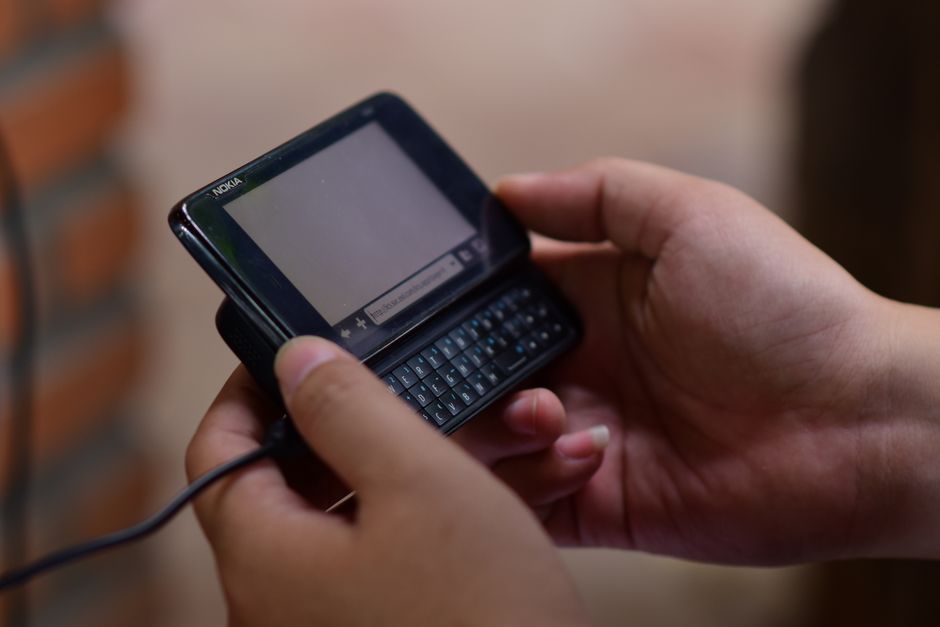
Sound manipulation in music has been a constant, evolving from concrete experiments to digital sophistication. Before the era of personal computers, the ability to record and reproduce audio fragments for musical use represented a transformative milestone. This technical analysis addresses the development of early hardware sampling devices, examining their impact on musical composition and production. The integration of sounds from the environment or other instruments into new creations radically altered the sonic landscape, laying the groundwork for current production practices.
The Birth of Sampling: Analog Precursors and Early Digital Steps
Before digitalization, instruments like the Mellotron and the Chamberlin offered an analog approach to sampling. These keyboards reproduced sounds recorded on magnetic tape for each note, providing orchestral and choral textures with limited but characteristic fidelity. The Mellotron, popularized by bands like The Beatles and King Crimson, demonstrated the appetite for integrating realistic or unusual sounds into pop and rock music. For more information on this classic instrument, you can visit the official Mellotron website: mellotron.com.
The advent of digital technology in the 1970s initiated a new phase. The Computer Music Melodian (1976), developed by Harry Mendell, was one of the first digital instruments capable of recording and reproducing audio, although its cost and complexity limited it to academic institutions and elite studios. These prototypes established the principle of analog-to-digital conversion for sound capture.
The Golden Age of Hardware Samplers: Innovation and Accessibility
The 1980s witnessed the emergence of samplers that would redefine music production. The Fairlight CMI (Computer Musical Instrument), introduced in 1979, pioneered a complete digital workstation with sampling, synthesis, and sequencing capabilities. Its graphical interface and its ability to visually manipulate waveforms made it a revolutionary tool, adopted by artists such as Peter Gabriel and Kate Bush. A detailed article on its history and functionality can be found at soundonsound.com. However, its exorbitant price (over $25,000 at the time) restricted its access to a few. The Synclavier, another high-end system from New England Digital, competed in this segment, offering superior audio quality and greater manipulation depth.
The democratization of sampling began with more affordable equipment. The E-mu Emulator (1981) was the first “budget-friendly” digital sampler (around $10,000), making the technology accessible to a broader user base. Subsequently, the Akai S900 (1986) and the E-mu SP-1200 (1987) became benchmarks in hip-hop and electronic music production. The SP-1200, with its characteristic 12-bit lo-fi sound, integrated sequencer, and pads for triggering samples, became a fundamental pillar for emerging genres. Akai’s MPC series, initiated with the MPC60 (1988) designed by Roger Linn, refined this concept, merging sampling, sequencing, and rhythmic control into an intuitive interface, transforming how beats were constructed. Current Akai MPC models continue this tradition, available at akaipro.com. These devices not only replicated sounds but invited deconstruction and recontextualization, fostering creativity.
Legacy and Current Perspectives: From Hardware to Digital Convergence
The legacy of these hardware samplers persists in contemporary music production. Although software samplers and VST plugins have replaced much of the original hardware’s functionality, the philosophy of sampling remains intact. Platforms like Ableton Live or Native Instruments Kontakt offer sampling and sound manipulation capabilities that far exceed the memory and processing limitations of pioneering equipment. For the latest versions of these programs, consult ableton.com and native-instruments.com.
The influence of the E-mu SP-1200 or the Akai MPC is evident in modern MIDI controller interfaces and the sonic aesthetic of current genres. Today, artificial intelligence is redefining the boundaries of sampling. Generative AI tools allow for the creation of new sound textures from existing samples or even the synthesis of realistic voices with control over timbre and pitch. Platforms like Splice or Loopcloud provide vast sample libraries, and collaborative cloud-based music production, facilitated by services like Soundtrap or BandLab, integrates sampling as a core component. To explore sound libraries, visiting splice.com is recommended. Immersive music, with formats like Dolby Atmos, also benefits from the ability to position and manipulate samples in a three-dimensional space. More information on Dolby Atmos Music can be found at professional.dolby.com/music/dolby-atmos-music/.
The evolutionary cycle of sampling, from magnetic tape to machine learning algorithms, underscores its immutable role as a driver of sonic innovation. Understanding these historical origins enriches the perspective on current and future trends in audio production.
Related Posts

Automation in DAWs: Dynamic and Textural Control for Contemporary Music Production
Explore how DAW automation sculpts sonic dynamics and texture, elevating musical expression beyond basic recording.
Ardour: Architecture and Workflow for High-Fidelity Digital Music Production
Technical analysis of Ardour: setup, multitrack recording, advanced mixing, and mastering for modern studios.

Theoretical Musical Foundations in Modern Digital Production: Harmony, Rhythm, and Timbre
Understanding music theory (harmony, rhythm, timbre) optimizes creativity and technique in contemporary music production, integrating AI and immersive audio.

Essential Northern Rock Anthems: Unearthing LatAm's Regional Powerhouses
Explore the foundational rock anthems from Latin America's northern regions, blending traditional sounds with raw rock energy for modern musicians.