Kinetic Sound Design: Spatial Manipulation and Parametric Modulation for Dynamic Auditory Experiences
Analysis of techniques like 3D spatialization, granular synthesis, and automation for creating vibrant, interactive soundscapes.

Kinetic Sound Design: Principles and Applications
Kinetic sound design represents a fundamental discipline in contemporary audio production, focused on creating dynamic and constantly evolving auditory experiences. Unlike static sound, kinetic textures possess inherent movement, transforming and adapting over time or in response to external stimuli. This approach is crucial in fields such as film post-production, game development, and immersive installation creation, where interaction and narrative depend on fluid and organic sonic responses. The ability to infuse a soundscape with life and dynamism not only enhances listener immersion but also articulates emotionality and narrative progression with unprecedented depth.
Spatial manipulation of sound constitutes one of the cornerstones of kinetic design, allowing sound sources to be perceived as constantly moving within an auditory environment. Advanced panning techniques, extending beyond simple stereo balance, facilitate the simulation of sound object displacement in a two-dimensional space, while spatial audio tools, such as those used in production for Dolby Atmos or Ambisonics formats, offer precise three-dimensional control. These technologies enable sound not only to move from left to right but also to orbit the listener, rise or descend, or convincingly approach and recede, creating profound immersion.
Spatial Manipulation and Parametric Modulation of Sound
Similarly, parametric modulation of sound properties is essential for infusing dynamism. The use of LFOs (Low-Frequency Oscillators) to automate parameters like volume, pitch, filter cutoff frequency, or the intensity of a delay or reverb effect, generates a sense of constant life and variation. The application of complex envelopes, beyond traditional ADSR, allows for the sculpting of detailed timbral transitions and evolutions, lending sounds an organic quality. Precise automation within a DAW, such as Ableton Live, Logic Pro, or Pro Tools, facilitates the programming of these changes over time, orchestrating sonic trajectories and tonal transformations with millimeter accuracy. For example, a reverb with a gradually lengthening decay time or a filter that rhythmically opens and closes can transform a static texture into a vibrant sonic element.
Granular synthesis techniques offer vast potential for kinetic design, allowing the deconstruction of audio samples into small ‘grains’ that can be recombined, stretched, and modulated to create constantly flowing sound textures. Plugins like Granulator II in Ableton Live, Native Instruments Reaktor with its granularity modules, or specialized sample manipulators, enable the generation of evolving drones, shifting atmospheres, or unique transition effects that react to input parameters.
Granular Synthesis and Dynamic Audio Processing
In the context of video games, kinetic sound design is deeply integrated through interactive audio engines like Wwise or FMOD. These systems allow sounds to dynamically react to player actions, the game environment, or internal variables, such as character health or movement speed. For instance, the sound of wind might gradually intensify as the player ascends a mountain, or the background music could adapt in tempo and orchestration based on the intensity of the action or the character’s emotional state. The integration of generative algorithms is also being actively explored in this domain, where artificial intelligence can create subtle variations or even complete compositions in real-time, responding to game parameters to maintain auditory freshness and avoid repetition.
Immersive audio production, especially in formats like Dolby Atmos or Sony 360 Reality Audio, represents one of the most prominent applications of kinetic design. The ability to freely position and move sounds in three-dimensional space enhances immersion in film, music, and virtual reality (VR) or augmented reality (AR) experiences. A clear example is the mix of a musical piece where specific elements like a solo voice or a particular instrument subtly move through the auditory space, adding a new dimension to listening and guiding the listener’s attention.
Integrating Kinetic Sound Design in Video Games and Immersive Audio
Current technological innovations, such as advanced dynamic processing plugins (e.g., FabFilter Pro-Q 3 for dynamic EQ or iZotope Neutron for AI-assisted intelligent mixing) and synthesis tools incorporating machine learning, are expanding creative possibilities. The manipulation of formants and pitch shifting using tools like Soundtoys Little AlterBoy or real-time pitch-shifting effects allows for creative and dynamic transformation of voices and sounds, generating creature effects or impactful transitions. Remote and collaborative production also benefits from these techniques, as the ability to create complex and dynamic soundscapes can be shared and developed in virtual environments, using platforms that support cloud projects and allow synchronization of complex automations. Experimentation with advanced MIDI controllers and touch control surfaces allows sound designers to ‘perform’ the movement and evolution of sounds in real-time, adding a layer of expressiveness and spontaneity that was previously difficult to achieve with traditional programming.
In summary, kinetic sound design is an essential discipline for creating captivating and immersive auditory experiences. From spatialization and parameter modulation to granular synthesis and integration with interactive systems, the techniques explored offer an arsenal of tools for infusing life and movement into sound. The constant technological evolution, with the rise of immersive audio, artificial intelligence in mixing and synthesis assistance, and remote collaboration platforms, promises to further expand the frontiers of this fascinating area. It allows creators to build sonic worlds that breathe and react, enriching the listener’s connection with the narrative, music, or virtual environment, and elevating the standard of contemporary audio production.
Related Posts

Recreating Virtual Acoustic Spaces: IRs, Algorithmic Reverb, and Spatial Processing
Emulating acoustic environments using IRs, algorithmic reverbs, and dynamic/spectral processing.
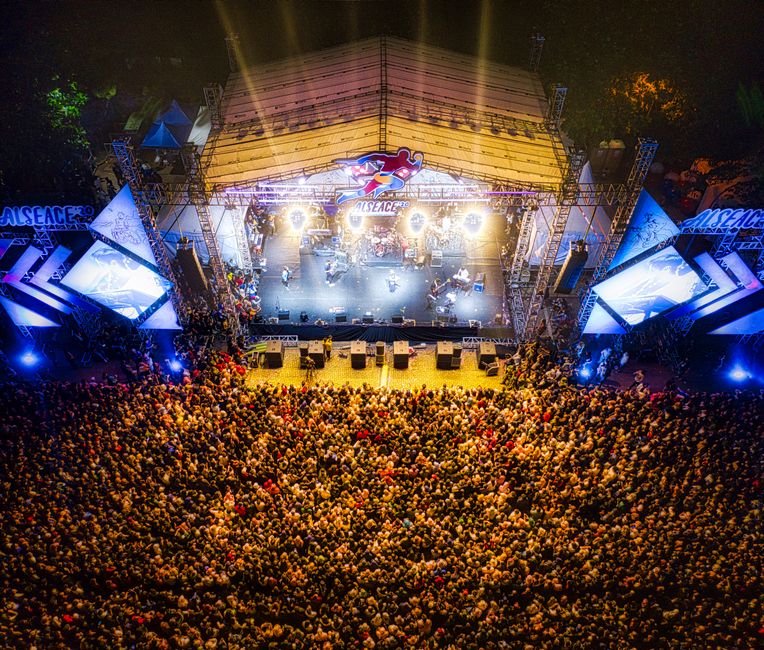
Artistic Collaborations: Sonic Expansion and Creative Evolution in Titãs
Technical analysis of how Titãs' collaborations expanded their sonic and lyrical scope, marking milestones in their evolution.

Vocal Tuning Processing: Methodologies and Creative Applications in Contemporary Music Production
Exploration of vocal tuning processing algorithms, parameters, and creative effects, from correction to sonic texturization.

Capturing Vintage Electronic Instruments: Electrical, Acoustic, and Processing Considerations for Modern Productions
Preserving analog warmth: recording, preamplification, EQ, and compression techniques for integrating classic synths and drum machines.