Mastering Music Podcasts: Dynamic Processing, EQ, and Loudness Standards
Technical optimization for music podcasts: dynamic control, spectral balance, and LUFS standards for a professional listening experience.

Dynamic Processing and Loudness Standards in Music Podcasts
The production of music podcasts has seen remarkable expansion, solidifying its position as a key format for disseminating audio content integrating voice and music. In this context, the mastering stage becomes critically important to ensure a coherent and professional listening experience. Mastering, in essence, is the final stage of audio mix adjustment and optimization, aiming for maximum sound quality, uniformity, and compliance with distribution standards. For a podcast that incorporates music, this process involves a delicate balance between vocal clarity and the presence of musical elements, preventing one from masking the other or the overall dynamics from becoming inconsistent.
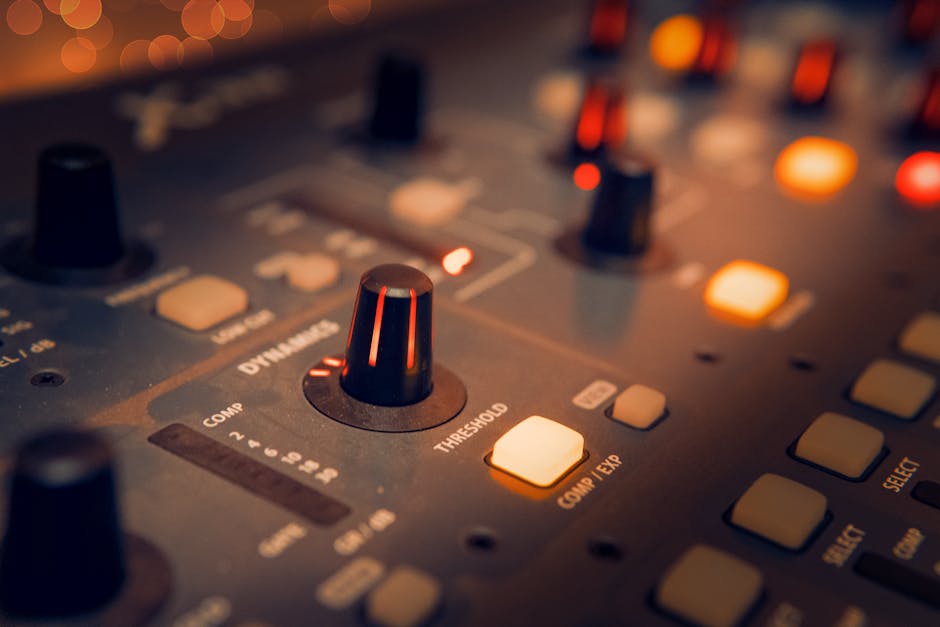
Dynamic processing is a fundamental pillar in mastering music podcasts. The application of compressors and limiters is essential for controlling signal peaks, leveling intensity between spoken and musical segments, and achieving a uniform overall volume. A well-adjusted compressor can smooth out differences between intense and soft vocal passages, while an effective limiter prevents digital distortion (clipping) by raising the perceived level. It is crucial to pay attention to parameters such as attack and release to avoid audible artifacts, especially during transitions between voice and music. Adherence to loudness standards like EBU R128 (measured in LUFS) is indispensable for distribution on streaming and podcast platforms, ensuring content plays at an appropriate and consistent volume across various devices. Platforms like Spotify and Apple Podcasts have specific LUFS recommendations that must be considered for optimizing audio delivery. A technical approach involves aiming for an integrated loudness range of -16 to -19 LUFS for podcasts, with True Peaks not exceeding -1 dBFS, which allows headroom for encoding and prevents distortion.
Spectral EQ for Vocal and Musical Clarity
Spectral equalization is another vital component for achieving tonal coherence in a music podcast. The primary goal is to balance the frequencies of the voice and music, avoiding masking and ensuring both elements are intelligible and pleasing. It is recommended to start with subtractive EQ, identifying and reducing problematic frequencies. For instance, applying a high-pass filter to the voice can eliminate unwanted low-frequency noise, while subtle adjustments in the mid-range of the music can open up space for vocal clarity. Spectral analysis tools, such as real-time spectrum analyzers available in many DAWs or advanced plugins like FabFilter Pro-Q 3, offer a visual representation of frequency energy, facilitating the identification of conflicts and informed decision-making. The key lies in finding resonant points and areas of overlap that could compromise intelligibility or musicality, and treating them with surgical precision.
The management of stereo imaging and spatiality, though subtle, can enrich the listening experience. While the main vocal is typically kept centered for direct perception, the music can benefit from controlled stereo widening to create a sense of spaciousness. Mid/Side processing techniques allow manipulation of the music’s stereo width without affecting the vocal’s centrality. The application of reverb or delay should be minimal and carefully calibrated, used more to create a sense of atmosphere or cohesion than for dramatic effects that might distract from the message. In the context of current trends, immersive or spatial audio production, such as Dolby Atmos, is gaining traction in music and could extend to more elaborate podcast formats, offering new possibilities for the sound experience, although its implementation in conventional music podcast mastering is still nascent and complex.
Stereo Imaging Management and Immersive Audio Trends
Digital tools and modern methodologies have transformed the mastering workflow. Digital Audio Workstations (DAWs) like Pro Tools, Logic Pro, Ableton Live, or Reaper serve as the base environment for these operations. The choice of high-quality plugins for equalization, multiband compression, limiting, and metering is crucial. Recent advancements include AI-assisted plugins, such as iZotope Ozone, or online mastering platforms like LANDR or mastering.studio, which offer starting points or even competent final results, although the intervention of a human engineer with a trained ear remains irreplaceable for artistic and technical nuances. Monitoring environment calibration is fundamental; a room with adequate acoustic treatment and quality reference monitors allows for precise decision-making. Likewise, remote collaboration capabilities via cloud platforms have facilitated interaction between producers and mastering engineers, transcending geographical barriers.
In summary, mastering for music podcasts is a technical process requiring a deep understanding of dynamic processing, spectral equalization, and spatiality management. Adherence to loudness standards, the use of advanced digital tools, and precise monitoring are essential elements for achieving a competitive final product. The balance between vocal intelligibility and musical presence, along with adaptation to technological trends, defines the professional quality of a music podcast in today’s audio landscape. Investment in technical knowledge and constant practice are key to standing out in this dynamic format.
Related Posts

Creative Automation in Music Production: Sculpting Sound Shape, Texture, and Dynamics
Explore parameter, shape, and texture manipulation via automation for dynamic, immersive musical compositions.

Micro-Timing, Layering, and AI: Foundations of Advanced Rhythmic Programming in Music Production
Technical analysis of micro-timing, layering, and AI for creating realistic and expressive percussive grooves in modern music.
The Evolution of Stereo: From Blumlein to Immersive Audio and Its Impact on Sound Production
A historical and technical journey through the development of stereo, its consolidation, and its role in contemporary audio innovations.

Drum Processing: EQ, Dynamics, and Spatialization for Sonic Cohesion
Analyzing EQ, compression, gates, and spatial effects to optimize drum sound in music productions.