Sound Sculpting: Technical Precision in Contemporary Minimalist Music Production
Analysis of methodologies and technologies to maximize emotional and technical impact with reduced sonic resources.

Principles of Minimalist Composition: Timbre Selection and Silence Management
Contemporary music production is often associated with complexity and the layering of elements. However, there is a current that values sonic refinement, where every element counts and empty space is as significant as the note played. The production of minimalist music does not simply imply fewer elements, but a deliberate choice of each component to maximize its emotional and technical impact. This approach demands a deep understanding of sound and discipline in arrangement, mixing, and mastering, seeking maximum expression with minimal resources. Throughout this analysis, we will explore the methodologies and technologies that allow for the sculpting of soundscapes with great depth and resonance using a reduced palette.
The essence of minimalist composition lies in the meticulous selection of each timbre and the management of silence. In contrast to dense orchestration, minimalism elevates the intrinsic quality of each sound. Sound design acquires critical relevance; a single synthesizer or a percussive rhythmic pattern must be capable of sustaining auditory interest and guiding the listener’s experience. Tools such as the virtual synthesizers from the Arturia V Collection or the instruments from Native Instruments Komplete offer a vast palette for creating these distinctive timbres, allowing for deep exploration of the sonic possibilities of a single element. Subtle textural variation, often achieved through slow modulation of filters, envelopes, or time-based effects, is fundamental to avoiding staticity and maintaining the organic evolution of the piece. Repetition, a cornerstone of many minimalist genres, transforms into a vehicle for introspection, where small rhythmic, harmonic, or melodic alterations guide the narrative. Silence is not an absence, but an active component that defines the contours of sounds and allows them to breathe, creating tension and freeing up space for reflection.
Precision in Minimalist Mixing: EQ, Panning, and Dynamic Control
The mixing phase in minimalist music requires surgical precision. With fewer elements competing, any imperfection or spectral imbalance is notably amplified. Clarity is achieved through selective and parametric equalization, eliminating unwanted resonances and ensuring that each sound occupies its own frequency space without masking others. Strategic panning is vital for creating width and depth, allowing the few elements to be harmoniously distributed in the stereo field, generating a sense of three-dimensional space. Dynamic management is crucial; transparent compressors like FabFilter Pro-C 2 or the UAD Teletronix LA-2A emulations are ideal for controlling peaks without crushing the vitality of transients and preserving the natural breathing of the music. Reverb and delay, used moderately and purposefully, can transform a simple sound into an immersive element, generating subtle atmospheres without saturating the mix. In the current context, spatialization tools, such as those used in production for immersive audio formats like Dolby Atmos, offer new dimensions for minimalist arrangements, allowing dispersed elements to create a sense of vast immersion and envelopment without adding sonic density, a technique increasingly explored by producers seeking to transcend the boundaries of traditional stereo.
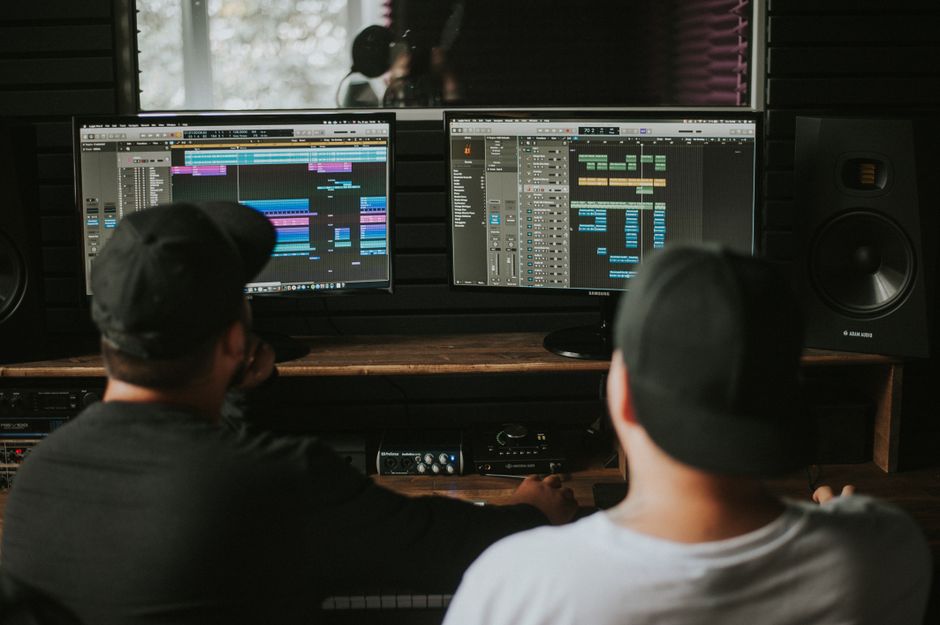
The production of minimalist music greatly benefits from current technological advancements, which offer unprecedented flexibility and control. DAWs such as Ableton Live or Logic Pro X facilitate experimentation with loops, detailed automation, and real-time manipulation, key aspects for the subtle evolution of sound patterns. Virtual modular synthesis, available in environments like VCV Rack or Native Instruments’ Reaktor, allows producers to design unique sounds from scratch, essential for forging a distinctive minimalist sonic identity. The ability to sculpt textures with millimeter precision is an invaluable asset in this genre. Remote collaboration, powered by platforms like Splice or cloud project services, enables artists to work together on minimalist pieces, sharing ideas and refining textures remotely, transcending geographical barriers. Furthermore, artificial intelligence is beginning to play a significant role in generating subtle rhythmic or melodic variations, or even in advanced spectral cleaning, optimizing the ‘less is more’ approach with unprecedented efficiency. The integration of expressive MIDI controllers, such as those from Ableton’s Push series or LinnStruments, allows for more organic and nuanced interaction with sonic elements, fostering controlled improvisation and micro-modulation that often characterize this style. These technological innovations not only simplify the workflow but also open new creative avenues for exploring minimalist sonority.
Current Technologies for Minimalist Production: DAWs, Synthesis, and Collaboration
Minimalist music production is a discipline that transcends the mere reduction of elements. It represents a creative philosophy that values intentionality, sonic quality, and the ability to communicate depth with economy of means. By mastering sound design, precise mixing, and the strategic incorporation of new technologies, producers can create works that, despite their apparent simplicity, offer rich and immersive listening experiences. This approach challenges creators to find maximum expression in minimal form, a pursuit that resonates deeply in the contemporary musical landscape.
Related Posts

Real World Studios: Acoustics, Collaboration, and Technological Evolution in Music Production
Analysis of Real World Studios' impact on music production: acoustic design, cross-cultural collaboration, and technological adaptation.

Additive Synthesis: Fundamentals, Harmonic Control, and Advanced Sound Design Applications
Explore the construction of complex timbres by layering sine waves, controlling harmonics and envelopes for unique sound textures.

The Historical Evolution of Drum Machines: From Mechanical to AI in Music Production
We analyze the technological journey of drum machines, from their origins to AI innovations and their sonic impact.
Stem Mastering: Advanced Tonal and Dynamic Control in Audio Post-Production
Technical analysis of stem mastering, optimizing clarity and balance for streaming and immersive audio formats.