Audio Phase Analysis: Fundamentals, Tools, and Applications in Modern Production
Understanding phase is vital for audio clarity, stereo imaging, and coherence. Explore its impact and correction in productions.

Fundamentals of Phase in Audio Engineering
In audio engineering, phase is a fundamental concept that is often underestimated, but its understanding and management are crucial for achieving high-quality sound productions. It refers to the temporal relationship between two or more sound waves. When these waves interact, whether in the air or within a digital environment, their temporal alignment determines how they combine, directly impacting the clarity, body, and stereo image of a mix. Meticulous phase analysis can be the decisive factor that distinguishes a professional production from one lacking cohesion and depth. Ignoring phase can lead to unwanted frequency cancellations, a weak or hollow sound, and an inconsistent stereo image, problems that are common in multi-microphone recordings or when heavily using processors with latency.
Phase shift and polarity inversion are two related but distinct phenomena that influence how waves interact. Polarity refers to the positive or negative orientation of the waveform; a polarity inversion simply flips the wave 180 degrees. Phase shift, on the other hand, describes a temporal delay or advance in one wave relative to another, which can occur naturally due to distance differences between a sound source and multiple microphones, or be introduced by electronic components and plugins. The audible effects of phase problems can manifest as “comb filtering,” where certain frequencies cancel out and others are reinforced, resulting in a metallic or artificial sound. In the worst-case scenario, low-frequency information can disappear, reducing the impact and weight of crucial elements like drums or bass. Understanding these interactions is the first step in diagnosing and correcting problems in a production.
Phase Shift and Polarity Inversion: Differences and Effects
For phase analysis and correction, audio engineers have various visual tools and techniques at their disposal. Most modern DAWs include phase correlation meters, often represented as Lissajous figures, which visualize the phase relationship between the left and right channels of a stereo signal. A meter that stays near the center or in the upper quadrant indicates good phase coherence, while a reading that extends into the lower or negative quadrants signals potential cancellation issues or an overly wide stereo image that could collapse in mono. In addition to these meters, spectrum analyzers can reveal specific frequency cancellations. Regarding correction techniques, manually adjusting the temporal position of tracks in the DAW is a basic but effective method. However, for more complex situations, specialized plugins exist, such as Sound Radix Auto-Align, available at https://www.soundradix.com/products/auto-align/, which uses advanced algorithms to automatically align the phases of multiple tracks recorded with different microphones, saving time and significantly improving coherence. These plugins represent a significant innovation, applying intelligent processing to solve challenges that previously required an extremely trained ear and a great deal of patience.
Practical applications of phase analysis are extensive and cover the entire music production process. In drum recording, the phase between close mics and overhead mics is critical for achieving a powerful, full-bodied sound. A mismatch can make the snare sound weak or the cymbals lack definition. Similarly, when recording guitar or bass amplifiers with multiple microphones, correct phase alignment ensures that the different captured perspectives combine cohesively. In mixing, mono compatibility is a fundamental consideration; a mix with phase problems might sound excellent in stereo but collapse and lose important elements when played on mono systems, such as radios or smartphones. Parallel processing, a popular technique for adding density and punch, also requires attention to phase to avoid cancellations when combining the dry signal with the processed one. Looking ahead, the relevance of phase is magnified in the realm of immersive audio, such as Dolby Atmos. In these formats, where the precise location of sound objects in a three-dimensional space is key, phase coherence across multiple channels is absolutely essential for a convincing and artifact-free spatial experience. Platforms like Dolby’s documentation at https://developer.dolby.com/technologies/dolby-atmos/ emphasize the importance of these technical details. Artificial intelligence is also beginning to offer solutions for phase optimization, with plugins that can automatically analyze and correct complex misalignments in real-time, facilitating the creation of cleaner and more spatial mixes.
Tools and Techniques for Phase Analysis and Correction
In summary, phase analysis is not a mere technical formality but a vital component for excellence in contemporary music production. A deep understanding of how sound waves interact in the temporal domain allows audio producers and engineers to make informed decisions that directly impact the clarity, depth, and cohesion of their mixes. From multi-microphone recording to preparation for immersive audio formats, phase management is an indispensable skill. Integrating phase analysis and correction tools into the workflow not only solves technical problems but also opens up new creative possibilities for sculpting sound, elevating the perceived quality of any production to a professional and competitive standard in today’s musical landscape.
Related Posts

Sound Spatialization in VR: HRTF, Ambisonics, and Object-Based Audio for Auditory Immersion
Dive into HRTF, ambisonics, and object-based audio techniques for creating immersive 3D sound experiences in virtual reality.
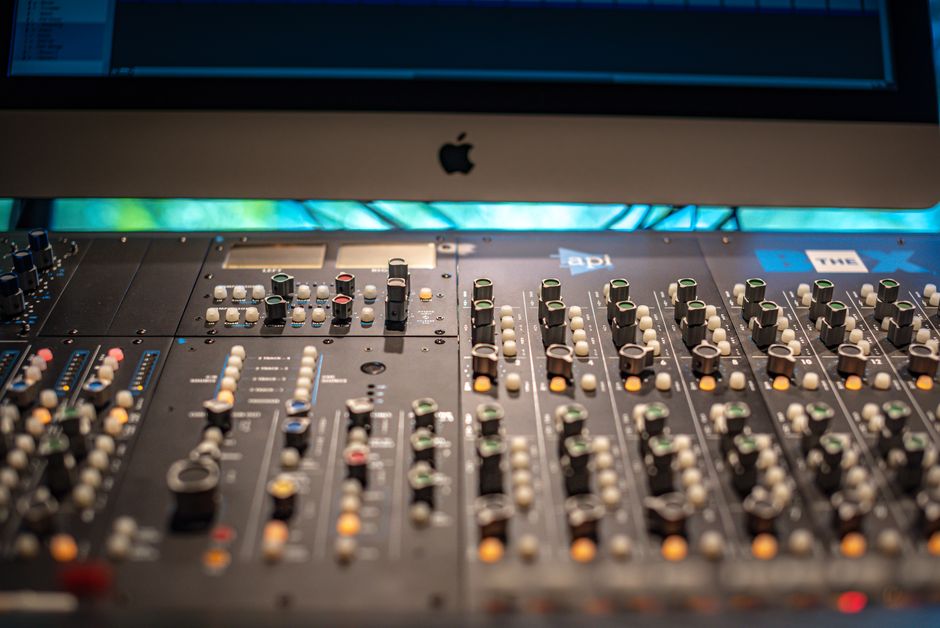
API's Sonic Legacy: Equalizer Design and Its Influence on Modern Production
Explore the evolution and impact of API equalizers, from their analog origins to their relevance in today's hybrid studios.

The Mid-Side Technique: Principles, Setup, and Applications in Stereo Audio Production
Dive into Mid-Side recording for precise stereo control and mono compatibility. Technical analysis of its implementation and benefits.

Corrective Equalization: Fundamental Principles and Advanced Applications in Sound Production
Optimize clarity and balance in your mixes. Advanced EQ techniques for professional productions on any platform.