The Evolution of Stereo: From Blumlein to Immersive Audio and the Future of Sound
Analyzes the historical trajectory of stereo audio, its technical milestones, and its adaptation to current immersive sound technologies.

Origins of Stereo Audio: Pioneers and Fundamental Principles
Spatial sound perception has been a fundamental pillar in the modern auditory experience, transforming how we interact with music, film, and media. From its humble beginnings to its current ubiquity, the stereo format represents one of the most significant innovations in audio history, allowing listeners to immerse themselves in soundscapes with unprecedented depth and realism. This development not only enriched the artistic quality of productions but also laid the groundwork for the immersive audio technologies that define the future of sound today.
The foundations of stereo audio were established in the early 20th century, driven by the pursuit of sound reproduction more faithful to reality. A crucial pioneer in this era was Alan Blumlein, a British engineer who, in the 1930s, patented a series of inventions that described the fundamental principles of stereophonic recording and playback. His work at EMI laboratories included methods for recording two discrete audio channels onto a single vinyl groove and the conceptualization of microphone techniques still used today, such as the Blumlein pair. For a deeper exploration of his contributions, one can consult the Audio Engineering Society (AES) archive https://www.aes.org/, which documents much of his technical legacy. These initial experiments, though not immediately commercialized on a large scale, demonstrated the potential for creating an illusion of space and sound direction, a radical advancement from the monaural nature of all previous recordings. Blumlein’s demonstrations already foreshadowed the ability of stereo systems to generate a coherent sound image, a concept that would be key to their future adoption.
The Stereo Vinyl Revolution: Technical Innovations and Commercial Adoption
The true explosion of stereo in the commercial sphere occurred in the late 1950s. After years of development and standardization, record labels began releasing albums in stereo format, offering a superior listening experience that quickly captured the public’s imagination. The introduction of stereo vinyl records presented considerable technical challenges, primarily the need for a groove that could independently encode two channels of audio information. The 45/45 degree groove cutting system, developed by Westrex, became the industry standard, allowing the turntable stylus to read lateral and vertical vibrations corresponding to the left and right channels. This technical breakthrough was key to the mass adoption of stereo, transforming the experience of listening to music at home and in high-fidelity systems. Artists and producers quickly embraced the new creative possibilities offered by stereo, using panning to place instruments and vocals in a three-dimensional sound space, adding a new dimension to musical compositions. Historical documents on the standardization of stereo vinyl can be found in specialized publications like Sound on Sound https://www.soundonsound.com/.
With the advent of the digital age, the stereo format not only remained relevant but adapted and thrived. CDs, and later high-resolution digital audio files, offered even greater fidelity and eliminated many of the physical limitations of vinyl. However, the fundamental principle of two channels to recreate a spatial image remained unaltered as the dominant consumer standard. Today, we are witnessing a significant evolution beyond traditional stereo with the rise of immersive audio. Technologies like Dolby Atmos https://www.dolby.com/technologies/dolby-atmos/ and Spatial Audio from platforms like Apple Music https://www.apple.com/la/apple-music/ or Spotify https://www.spotify.com/la/ are redefining the listening experience, expanding the soundscape to a full three-dimensional environment, with sound objects that can be positioned anywhere in space around the listener. This trend, incorporating elements of height and depth, represents the next great leap in sound reproduction, offering unprecedented immersion. Mixing and mastering engineers are now exploring new tools and workflows, often using digital audio workstations (DAWs) with spatial mixing capabilities, to create content that leverages these new dimensions. Artificial intelligence is also beginning to play a role in post-production, assisting in the spatialization and optimization of mixes for different formats, from conventional stereo to more complex immersive audio setups. This landscape indicates that, while stereo will continue to be a foundation, the future of audio leans towards increasingly enveloping and personalized experiences.
Evolution of Stereo in the Digital Age and the Rise of Immersive Audio
From the visionary experiments of Alan Blumlein to today’s sophisticated immersive audio experiences, the history of the stereo format is a testament to the continuous pursuit of richer, more enveloping sound reproduction. Stereo is not merely a two-channel configuration; it is an artistic and technical convention that has shaped generations of music production and consumption. Although immersive audio technologies are expanding horizons, the principles of stereo remain the cornerstone upon which these innovations are built. Understanding its development is essential for any audio professional seeking not only to master current techniques but also to anticipate and contribute to the future evolutions of sound.
Related Posts

AES/EBU: Evolution, Characteristics, and Persistence of the Professional Digital Audio Standard
Explore the development, technology, and lasting influence of the AES/EBU protocol in high-fidelity professional digital audio transmission.

Blackbird Studios: Advanced Acoustics and Equipment Heritage in Contemporary Audio Engineering
Innovation in acoustics and analog/digital technology at Blackbird Studios, a global benchmark for sound quality.
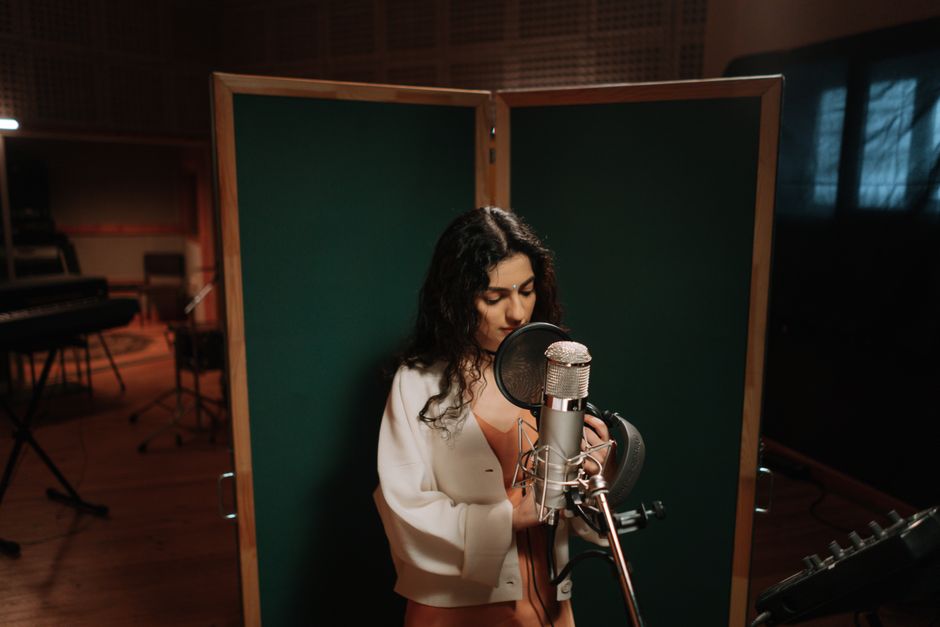
Vocal Pitch Processing: Techniques, Applications, and Expressive Preservation
Technical analysis of vocal pitch processing: from tuning correction to creative effects, optimizing expressiveness.

Analog vs. Digital Filters: Fundamentals, Differences, and Audio Production Applications
Compare analog and digital filters: their principles, unique sonic characteristics, and roles in modern music and immersive audio production.