Audio Engineering for Music Podcasts: Capture, Mix, and Master in the Digital Age
Optimize music podcast production with advanced mic, mix, master, and distribution techniques for a superior listening experience.

Fundamentals of Audio Capture for Music Podcasts
The convergence of music and the podcast format has created a unique auditory expression space. Beyond mere content dissemination, the production of music podcasts involves a meticulous integration of spoken word and sonic elements, where technical quality is not just a desirable attribute but an imperative necessity. In a saturated digital ecosystem, differentiation is built upon a superior listening experience, a challenge that demands specialized audio engineering knowledge and a deep understanding of contemporary distribution platforms. This analysis explores the essential methodologies and technologies for creating music podcasts that resonate with discerning audiences.
The initial phase in music podcast production lies in high-fidelity audio capture. For voice segments, selecting a large-diaphragm condenser microphone, such as an Audio-Technica AT2020 or a Rode NT1, is fundamental to ensuring a balanced frequency response and low self-noise. Acoustic treatment of the recording space, even at a domestic level, using absorption panels or diffusers, reduces unwanted reverberation and enhances vocal intelligibility. The audio interface, like those from Universal Audio or Focusrite, acts as the critical bridge between the microphone and the digital audio workstation (DAW), converting the analog signal to digital with minimal latency and maximum resolution.
When the podcast incorporates live or specifically recorded musical performances, instrument miking requires additional considerations. A Shure SM57 for guitar amplifiers or a pair of small condenser microphones for stereo recording of acoustic instruments are examples of standard configurations. Integrating pre-existing musical sources, whether original productions or third-party content, demands rigorous attention to copyright. It is essential to obtain the necessary licenses through collective management organizations, such as SADAIC in Argentina, or to use royalty-free music or music under Creative Commons licenses to avoid legal infringements. The quality of musical files is paramount; using lossless formats (WAV, AIFF, FLAC) during production is recommended to preserve sonic integrity before final export in compressed formats.
Integrating Musical Sources and Legal Considerations
Current trends in remote production have catalyzed the development of tools like Sessionwire or Cleanfeed, which enable remote recording of guests or musical collaborators with audio quality comparable to a physical studio. These platforms facilitate global collaboration, an increasingly relevant aspect in transnational content creation.
Mixing in a music podcast presents specific challenges, primarily balancing the voice with musical elements. A common technique is automatic or manual “ducking,” where the music’s volume is subtly reduced when the voice is present, ensuring spoken content maintains its primacy. Compression is vital for leveling vocal dynamics, making speech consistent and present. A low-to-medium ratio compressor (2:1 to 4:1) with appropriate attack and release times can smooth fluctuations without sounding unnatural. Equalization (EQ) is used to clean up the voice, removing unwanted low-frequency resonances and enhancing mid-high clarity, without clashing with the music’s frequency spectrum.
The mastering phase for podcasts focuses on optimizing audio for distribution platforms. Loudness Units Full Scale (LUFS) is crucial. Platforms like Spotify and Apple Podcasts suggest specific ranges (approximately -14 to -16 LUFS) to ensure consistent playback and avoid loudness penalties. Tools like the integrated loudness meter in DAWs or dedicated plugins are indispensable for monitoring this parameter. A transparent brickwall limiter, such as FabFilter Pro-L 2, is applied at the end of the chain to prevent digital clipping and achieve the target loudness without sacrificing dynamics.
Audio Processing: Mixing and Mastering for Digital Platforms
Artificial intelligence has entered audio processing with solutions like iZotope Ozone, which offers mastering assistants that analyze audio and suggest adjustments, or LANDR, an automated mastering platform. These advancements democratize access to high-quality processes, although human intervention remains fundamental for artistic decisions and fine-tuning. The exploration of immersive audio formats, such as Dolby Atmos, is also beginning to influence high-end podcast production, offering an enveloping listening experience for those with compatible systems. While its mass adoption in podcasts is nascent, it represents a technological frontier to consider for avant-garde productions.
Once produced, the podcast requires an effective distribution strategy. Hosting platforms like Libsyn, Buzzsprout, Spreaker, or Spotify for Podcasters (formerly Anchor) are essential for hosting audio files and generating the RSS feed, which is the mechanism by which podcast directories (Apple Podcasts, Google Podcasts, Spotify) access and update content. Optimizing metadata, including descriptive titles, detailed descriptions, and relevant tags, enhances the podcast’s visibility and discoverability.
Monetizing music podcasts can take various forms. Direct brand sponsorships, programmatic advertising inserted by hosting platforms, and subscription models through Patreon or integrated platforms are the most common avenues. Creating exclusive content for subscribers, such as bonus episodes, behind-the-scenes material, or extended versions, can foster audience loyalty and generate recurring revenue. Audience analytics, provided by hosting platforms, offer valuable data on listener behavior, enabling refinement of content and promotion strategies.
Distribution, Monetization, and Future Trends in Music Podcasts
Sustained audio quality is a critical factor for listener retention in today’s saturated market. A podcast with poor sound production can quickly lose audience interest, regardless of the richness of its musical or narrative content. Investment in equipment, continuous learning of production techniques, and attention to technical details are investments that translate directly into a more engaging and professional listener experience. The evolution towards interactive podcasts and integration with other multimedia platforms also marks the path for future innovations in user experience.
The production of music podcasts is a dynamic field that merges artistic creativity with technical precision. From meticulous audio acquisition and music licensing to complex mixing and mastering adapted to digital loudness standards, each stage directly influences content perception and success. The adoption of new technologies, from remote collaboration tools to AI in audio processing and the exploration of immersive formats, defines the cutting edge of this medium. Staying updated with these innovations and prioritizing a high-quality listening experience is fundamental to captivating audiences and ensuring relevance in the constantly evolving digital landscape.
Related Posts
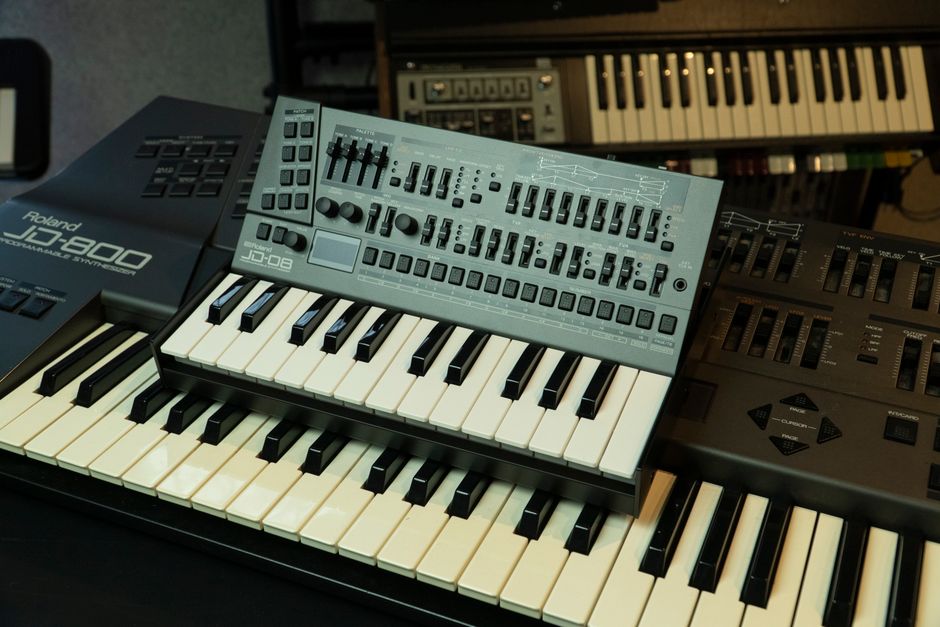
The Evolution of Digital Synthesis: From Academic Origins to Modern Music Production
A journey through the development of digital synthesizers, from their laboratory beginnings to their current impact on music.

Advanced Sound Texture Design: Granular Synthesis, Convolution, and Modulation
Exploring sound texture methodologies: granular synthesis, spatial convolution, and complex modulation in music production.
Nearfield vs. Midfield Monitors: Technical Selection for Modern Studio Environments
Understand the acoustic and application differences between nearfield and midfield monitors to optimize sound accuracy in your production.

Blackbird Studios: Acoustic Architecture and Equipment Collection in Contemporary Music Production
An analysis of the acoustic infrastructure, technology, and philosophy of Blackbird Studios, a benchmark in high-fidelity audio production.