Yamaha NS-10: Design, Legacy, and Sonic Traducibility in Modern Music Production
An analysis of the Yamaha NS-10's impact on audio engineering, exploring its frequency response and role in mix translatability.

Origin and Acoustic Design of the Yamaha NS-10
In the vast universe of professional audio, few pieces of equipment have generated as much debate and loyalty as the Yamaha NS-10 monitors. Originally conceived for the domestic hi-fi market in 1978, their unexpected adoption in recording studios worldwide transformed their status, turning them into an icon of music mixing. Their distinctive sound, often described as unforgiving and unflattering, became precisely the quality that engineers valued to ensure their mixes translated well across any playback system.
The initial design of the NS-10 was not aimed at audiophile perfection. Equipped with a 7-inch white cone woofer and a 1.5-inch soft-dome tweeter, these monitors presented a frequency response with a noticeable midrange peak, deficiencies in deep bass, and a roll-off in the high frequencies. Paradoxically, these “limitations” aligned with the needs of mixing engineers of the era. The prominence of the midrange allowed for critical listening of vocals and fundamental instruments, revealing balance and EQ issues that more “pleasing” monitors might mask. This characteristic forced engineers to work harder to achieve a mix that sounded good on the NS-10s, ensuring the final result was robust across a variety of consumer systems, from car radios to lower-quality home stereo equipment. This design philosophy, though accidental in its origin for studio use, underscores the importance of understanding tools beyond their theoretical specifications.
The Adoption of the NS-10 in Professional Studios
The true consecration of the NS-10 occurred in the 1980s, when influential engineers in Los Angeles and New York studios began using them as secondary or tertiary reference monitors. The key to their success lay in their ability to provide a clear “window” into how a mix would sound in the real world. If a mix sounded good on the NS-10s, there was a high probability it would sound good almost anywhere else. This phenomenon spread rapidly, establishing the NS-10 as an industry standard. Their presence in most professional studios allowed engineers to have a common reference point, facilitating collaboration and consistency at a time when differences between monitoring systems were vast. Demand grew so much that Yamaha had to adapt production, even modifying the white paper cone material to ensure consistency, leading to the NS-10M Studio variant, and later the NS-10M Pro, with improvements in connectivity and power handling. This standardization was crucial for the evolution of modern music production, enabling greater coherence in the global mixing process.
Despite their legendary status, the NS-10s are not without criticism. Many consider them fatiguing for extended listening due to their aggressive midrange response and lack of extension at the frequency extremes. The discontinuation of production in 2001 due to the impossibility of sourcing the original white paper cone material marked the end of an era, but not of their influence. Today, their legacy persists in various forms. Many renowned studios, even in Buenos Aires or Medellin, still keep functional pairs of NS-10s as reference monitors. Furthermore, technological innovation has enabled the emergence of software emulations that seek to replicate their characteristic response curve. Plugins such as those from Acustica Audio or virtual monitoring systems like Slate Digital VSX or Audified’s MixChecker Pro offer the ability to listen to a mix through the “lens” of the NS-10s without needing to acquire the physical hardware. This demonstrates how the industry adapts, using modern tools to reinterpret age-old wisdom. Understanding the frequency response of the NS-10s remains a valuable exercise for any engineer seeking to ensure the “translatability” of their mixes, a concept as relevant today as it was in the 1980s, especially with the proliferation of listening systems (headphones, smart speakers, streaming at different qualities).
Evolution and Legacy of the NS-10 Monitor
In conclusion, the Yamaha NS-10s transcended their original design to become an indispensable tool in music production. Their ability to expose the weaknesses of a mix forced generations of engineers to hone their craft, ensuring that music sounded good in any context. Although technology advances and new monitors with more linear and precise responses emerge, the spirit of the NS-10, focused on sonic honesty and translatability, remains a fundamental lesson. The story of these monitors underscores that the most effective tool is not always the most “perfect” in technical terms, but rather the one that best helps the engineer make critical decisions and understand how their work will be perceived by the final listener. Tags: studio monitors, Yamaha NS-10, audio history, audio mixing, sound engineering, reference monitoring, emulation plugins Category: Music Production
Related Posts

Temporal Granular Synthesis: Fundamentals, Applications, and Evolution in Digital Sound Design
Exploring microscopic audio manipulation to create innovative textures and soundscapes.
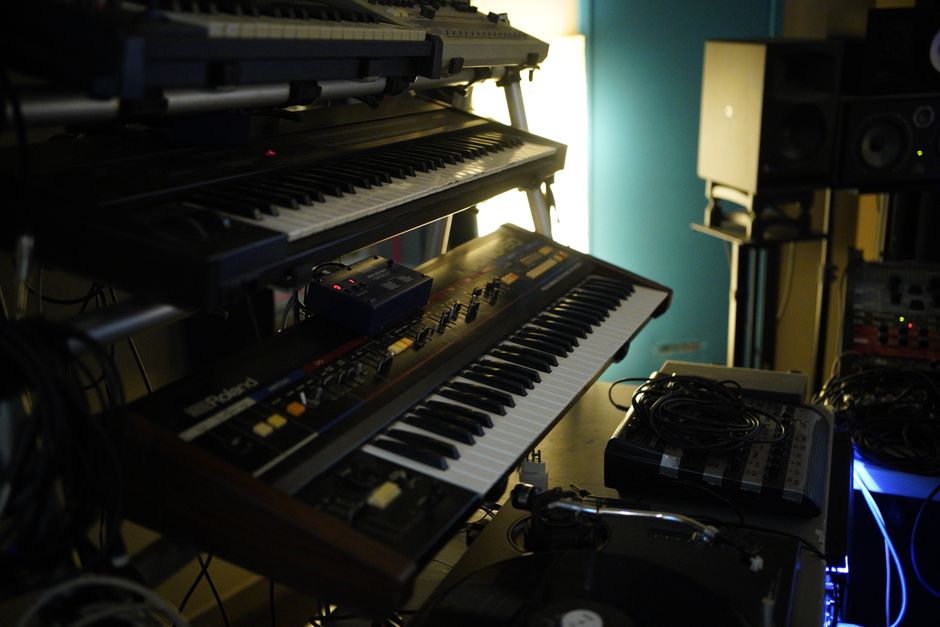
Integrating Vintage Electronic Instruments: Preparation, Capture, and Processing in Modern Workflows
Methodologies for capturing and processing vintage synthesizers and drum machines, ensuring sonic authenticity in current productions.

Total Harmonic Distortion (THD): Measurement, Implications, and Applications in Audio Engineering
Understand Total Harmonic Distortion (THD) as a key metric for evaluating audio fidelity and sonic character in audio equipment.

Synthesizer Layering: Spectral, Spatial, and Dynamic Principles for Complex Sound Design
Technical analysis of layering in music production, covering equalization, stereo imaging, envelopes, and advanced modulation.