Drum Processing: EQ, Dynamics, and Spatialization for Sonic Cohesion
Analyzing EQ, compression, gates, and spatial effects to optimize drum sound in music productions.

Frequency Processing for Drum Elements
The drum kit forms the fundamental rhythmic and energetic backbone of most musical productions. Its impact on the overall perception of a piece is decisive, delineating power, groove, and clarity. The correct integration of percussive elements within a mix demands a technical and creative approach, constantly evolving with innovations in software and hardware. Developing processing techniques optimizes the presence of each component, from the impactful kick drum to the subtle cymbals, ensuring sonic cohesion that drives the musical narrative. The pursuit of drums with punch and definition, without compromising their natural dynamics, is a central objective for engineers and producers.
Frequency manipulation is an essential process for sculpting the drum sound. Each element requires specific attention to coexist harmoniously within the spectrum. The kick drum, for example, benefits from a boost in the low frequencies (50-80 Hz for ‘sub’, 80-120 Hz for ‘body’) and a slight cut in the low-mid range (200-400 Hz) to avoid masking. The snare drum, on the other hand, finds its ‘punch’ in the 200 Hz region and its characteristic ‘snap’ between 3-5 kHz. Toms require definition in their fundamental resonances and control of harmonics to prevent a ‘muddy’ sound. Cymbals, while contributing brightness in the high frequencies (above 8 kHz), may require attenuation in the 4-6 kHz range to prevent harshness. The use of dynamic equalizers, such as those integrated into suites like iZotope Neutron (https://www.izotope.com/en/products/neutron.html), allows for adaptive control, adjusting frequencies only when they exceed a specific threshold, which preserves the instrument’s naturalness.
Dynamic Control and Transients in Percussion
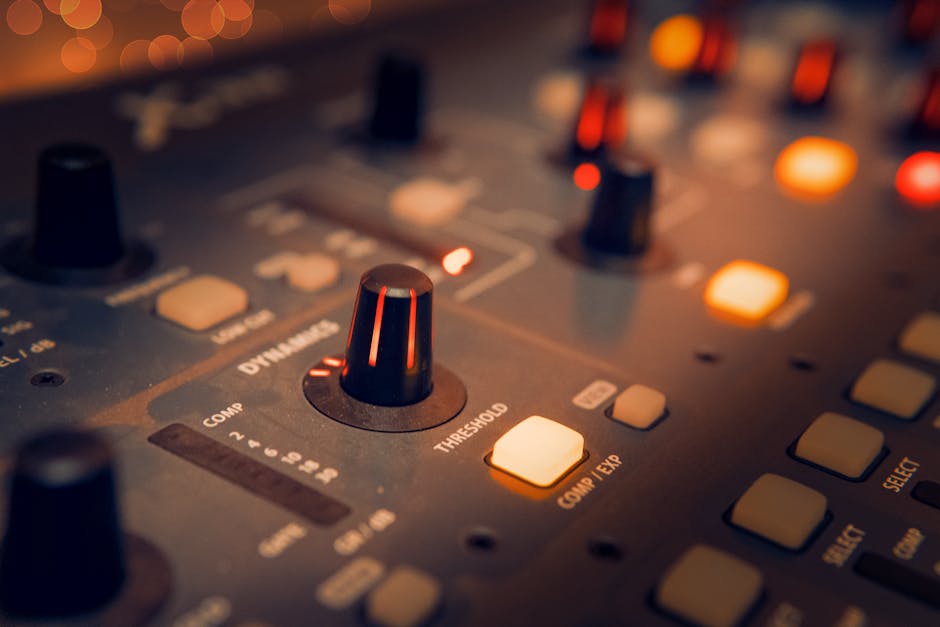
Controlling dynamics and transient shaping is crucial for drum articulation. Compression is applied to reduce the dynamic range, granting more sustain or controlling excessive peaks. Parallel compression, a technique that blends a dry signal with a heavily compressed version, adds density and presence without nullifying the original transients, resulting in a more powerful and full sound. This technique is particularly effective on the drum bus or individual elements like the kick and snare. Gates are fundamental for eliminating unwanted resonance and bleed from other microphones, improving separation between instruments. Recently, the development of transient shaping plugins, such as SPL Transient Designer or its emulations, offers precise capability to accentuate or soften attacks and sustains, granularly configuring the punch of each hit. The application of sidechaining, where the signal of one instrument (like the kick) controls the compression of another (like the bass), ensures both elements coexist without clashing, essential for a defined groove.
The creation of a three-dimensional spatial environment for the drums is a vital component in mixing, adding depth and a sense of atmosphere. Reverb emulates the reflections of a physical space, from small rooms to large concert halls. The choice of reverb type – plate for a bright and dense sound, room for natural ambience, or convolution for recreating specific acoustic spaces with great realism – directly impacts the atmosphere. Delays, meanwhile, can add rhythmic repetitions or a sense of width. Syncing delays to the song’s tempo is fundamental to avoid rhythmic disorganization. In the era of immersive audio, precise management of reverb and delay takes on a new dimension, with plugins and DAWs offering capabilities to position sounds in a 3D space, anticipating formats like Dolby Atmos. The integration of these effects with direct signals must be subtle and complementary, avoiding saturation of the mix and maintaining the intelligibility of each hit.
Creating Space and Depth with Effects
To consolidate the drums as a cohesive unit, processing on the drum bus is an extended practice. Applying stereo compression on this bus, often with emulations of classic hardware like the SSL G-Series Bus Compressor (https://www.solidstatelogic.com/products/the-ssl-bus-compressor), unifies the elements, providing ‘glue’ and a sense of cohesion. Harmonic saturation, whether through analog modeling plugins like those offered by Universal Audio (https://www.uaudio.com/) or external processors, can add warmth, character, and a perception of loudness without drastically increasing peak levels. Current trends in drum mixing also explore the assistance of artificial intelligence. Tools like Soundtheory Gullfoss automatically adjust the frequency spectrum for improved clarity, while other AI plugins suggest compression and EQ settings based on audio analysis. This synergy between human expertise and AI processing power redefines workflows, allowing engineers to focus on broader creative decisions. Consideration of loudness standards for streaming platforms like Spotify (https://artists.spotify.com/es/help/article/loudness-normalization) also influences final processing decisions, seeking a balance between dynamics and perceived loudness.
Drum mixing is a multifaceted process that combines acoustic science with artistic expression. Understanding and applying techniques of equalization, dynamic processing, spatial creation, and global cohesion are fundamental to achieving an impactful and professional result. Continuous technological evolution, with the emergence of new software tools and innovative approaches, such as AI assistance or production for immersive formats, offers unlimited possibilities for engineers and producers. Constant experimentation and adaptation to emerging trends are key to maintaining relevance and excellence in the dynamic landscape of music production.
Related Posts
Electric Lady Studios: Acoustic Architecture and Technological Evolution in Modern Music Production
An analysis of Electric Lady Studios' genesis and adaptation, from its acoustic design to the integration of immersive and collaborative technologies.

Audio Engineering for Music Podcasts: Capture, Mix, and Master in the Digital Age
Optimize music podcast production with advanced mic, mix, master, and distribution techniques for a superior listening experience.

Synthesizer Layering: Frequency and Spatial Management for Complex Sound Textures
Technical analysis of synthesizer layering, optimizing timbral and dynamic interactions for advanced productions.

Advanced Drum Engineering: Mixing and Processing Methodologies for Sonic Integration
Explore pre-mix, dynamic, spectral, and spatial sculpting techniques for superior percussive integration in music productions.