Evolutionary Sound Design: Adaptive Synthesis and Modulation for Dynamic Auditory Landscapes
Exploring generative synthesis, advanced modulation, and AI for organic, ever-changing sound textures.

Fundamentals of Evolutionary and Generative Sound Design
Contemporary sound design transcends the mere selection of presets, delving into the creation of organic, constantly mutating auditory landscapes. The pursuit of sound textures that dynamically evolve, responding to complex parameters or real-time interaction, defines a key frontier in music production and audio for media. This approach, known as evolutionary or generative sound design, enables producers and artists to construct immersive and highly original auditory experiences, where sound is not static but a living entity transforming over time. The implementation of these techniques opens new avenues for creative expression, from atmospheric ambiances to complex rhythmic instrumentations, offering tools to sculpt sound with unprecedented depth and predictability. Exploring these methodologies is fundamental for those seeking to differentiate their work in an increasingly saturated sonic panorama.
The foundation of evolutionary sound design lies in adaptive and generative synthesis, which utilizes algorithms and interconnected parameters to create sounds that develop in an unpredictable yet controlled manner. Techniques such as granular synthesis, where small audio “grains” are manipulated in real-time to form new textures, are essential. Modern virtual instruments like Xfer Serum or Native Instruments Kontakt allow for advanced programming of modulators, envelopes, and LFOs that interact with each other, generating complex sonic movements. Wavetable synthesis, for example, facilitates morphing between different waveforms, creating smooth or abrupt transitions that define the evolutionary character of a timbre. The application of FM (Frequency Modulation) synthesis with multiple operators and complex modulators also contributes to the generation of harmonically rich sounds that can mutate drastically with minor parametric adjustments. These methods not only enrich the sonic palette but also encourage a more experimental approach to music creation, where the sound designer acts as an architect of complex systems rather than a mere selector of pre-existing sounds. The ability to program chains of events and responses within a synthesis environment transforms the design process into a form of algorithmic composition applied directly to timbre.
Adaptive Synthesis Techniques for Dynamic Sound Textures
Beyond synthesis, dynamic processing and complex modulation are pillars for breathing life into any sonic element. Applying LFOs (Low-Frequency Oscillators) and envelopes to almost any effect parameter – from a filter’s cutoff frequency to the delay time or reverb depth – allows for subtle or dramatic movements. Advanced modulation tools, present in many DAWs and third-party plugins, offer flexible routing matrices, where multiple modulation sources can influence multiple destinations simultaneously. For instance, a slow LFO could modulate panning, while an input amplitude follower envelope could control a filter’s resonance, resulting in a sound that organically reacts to its own dynamics. The introduction of MIDI Polyphonic Expression (MPE) has elevated this capability, allowing each individual note to have its own modulation of timbre, vibrato, and expression, opening a universe of possibilities for instruments that sound and feel more alive. In the context of immersive audio, such as Dolby Atmos, the ability to design sounds that move and transform in a three-dimensional space becomes crucial, requiring an even more sophisticated approach to spatial and temporal modulation. The interaction between different signal processors, orchestrated through modulation chains, is what allows a sound not just to change, but to develop with its own narrative over time.
The cutting edge of evolutionary sound design lies in the integration of artificial intelligence (AI) and advanced algorithms. AI-powered tools are redefining how producers interact with sound, offering analysis, generation, and mutation capabilities that were previously unthinkable. Plugins like iZotope Neutron or Ozone use AI to suggest mixing and mastering adjustments based on audio material analysis, which can be adapted to guide the evolution of a sound. Beyond assistance, there are platforms that employ generative algorithms to create entirely new sound textures from user-defined parameters, or even to “mutate” existing sounds, exploring variations that a human ear might not initially conceive. AI also facilitates the creation of adaptive sound systems for video games or interactive installations, where music and sound effects modify in real-time based on user actions or environmental events. This represents a qualitative leap, moving from static sound design to one that is inherently reactive and evolutionary, where algorithms act as co-creators. The exploration of neural networks and machine learning in the sonic realm promises a future where auditory landscapes can be designed with a complexity and adaptability that mirrors the richness of the natural world, expanding the boundaries of what is possible in audio production.
Dynamic Processing and Modulation for Living Sounds
Evolutionary sound design is not just a technique, but a philosophy driving audio creation towards horizons of greater dynamism and originality. By adopting methodologies of adaptive synthesis, complex dynamic processing, and the integration of artificial intelligence, producers and sound designers can sculpt auditory experiences that not only capture attention but also maintain it through their constant transformation. Investing in the knowledge and application of these techniques is crucial for staying relevant in a music production ecosystem that values innovation and differentiation. The future of audio promises to be a canvas where sounds breathe, adapt, and evolve, inviting continuous exploration of their infinite possibilities.
Related Posts

Additive Synthesis: Fundamentals of Sound Construction via Harmonic Superposition
Analysis of additive synthesis, Fourier series, and envelope control for creating complex, dynamic timbres.
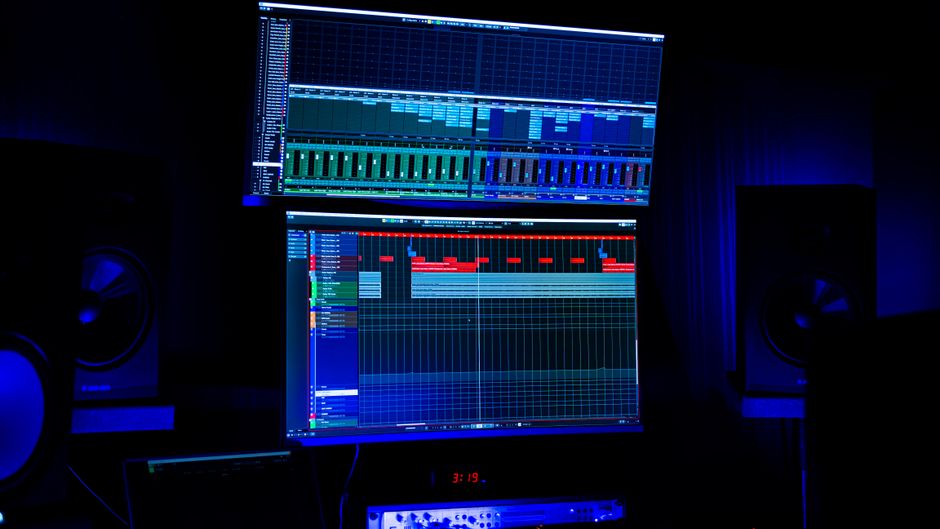
Cubase: Architecture and Key Features for Contemporary Music Production
Evaluating Cubase's capabilities in workflow, advanced audio processing, and virtual instrumentation for sound creation.

Corrective EQ: Spectral Cleaning Strategies for Clear Mixes
Dive into subtractive, parametric, and dynamic EQ techniques to optimize sonic clarity and coherence in music productions.

Recording and Processing Methodologies for Programmable Sound Sources in Contemporary Music Production
Optimizing the capture and manipulation of synthetic and algorithmic instruments for distinctive acoustic textures.