Crest Factor: Dynamics Metrics and Their Relevance in Modern Audio Production
Technical analysis of crest factor, its measurement, and optimization for sound quality in current platforms and immersive formats.

The Crest Factor: Definition and Relevance in Audio
Precise management of dynamics is a fundamental pillar in audio engineering, determining the final perception of a production. In this context, the crest factor emerges as an essential metric, offering a quantitative view of the relationship between transient peaks and the average level of an audio signal. Understanding and applying this concept allows engineers and producers to optimize sound quality, ensure consistency across various playback platforms, and preserve the artistic intent of the work.
The crest factor is defined as the ratio between the peak level of a signal and its RMS (Root Mean Square) level, commonly expressed in decibels (dB). A high crest factor value indicates a signal with pronounced transients and a large difference between the loudest points and the average volume, characteristic of material with high dynamics, such as acoustic recordings or classical music. Conversely, a low crest factor suggests a more compressed or limited signal, where peaks have been reduced to approach the RMS level, typical of modern productions with a lower dynamic range. This distinction is crucial for evaluating the perceived loudness and sonic energy of any audio material, from an individual mix to a final mastered track. Its relevance extends to preventing distortion and optimizing for different listening environments, from high-fidelity systems to mobile devices.
Measuring Crest Factor: Tools and Analysis
The measurement of the crest factor is performed using tools that quantify both the true peak level and the RMS level. True peak meters are fundamental for detecting inter-sample peaks, which can generate distortion when converting the digital signal to analog, even if a traditional peak meter does not register them. In parallel, RMS meters calculate the average energy of the signal, offering a representation closer to perceived loudness. Numerous DAWs and third-party plugins integrate meters that display both values, allowing the engineer to calculate the crest factor intuitively. Advanced tools such as FabFilter Pro-L 2 or iZotope Ozone [https://www.izotope.com/en/products/ozone.html] not only offer detailed visualizations of these parameters but also incorporate analysis functions that can indicate the crest factor or related dynamics metrics. Interpreting this data is vital for making informed decisions about compression, limiting, and equalization, seeking a balance between impact and transparency.
The management of the crest factor has acquired renewed importance in the era of streaming and new audio platforms. Loudness recommendations for services like Spotify [https://artists.spotify.com/en/help/article/audio-file-specifications] or the ITU-R BS.1770-4 [https://www.itu.int/rec/R-REC-BS.1770-4-201509-I/en] standards for broadcasting emphasize the need for adequate dynamic range. An excessively low crest factor, resulting from aggressive compression or limiting, can lead to platforms reducing the track’s volume, losing impact, or the audio sounding fatiguing to the listener. Conversely, a well-managed crest factor allows the material to sound powerful and clear without falling into the “loudness war.”
Managing Crest Factor in the Streaming Era
In the realm of current music production, especially with the growing adoption of immersive formats like Dolby Atmos, preserving dynamics and, consequently, the crest factor, is more critical than ever. Spatialization benefits greatly from intact dynamic range, where transients can move and be placed with clarity without being crushed. Innovations in dynamic processing plugins, including those powered by artificial intelligence, offer new avenues for controlling the crest factor more transparently and musically. These tools analyze the signal and suggest adjustments that optimize dynamics without sacrificing punch or clarity. Understanding and consciously applying the crest factor is, therefore, an indispensable skill for professionals seeking to produce high-quality audio, relevant to the technical and aesthetic demands of the contemporary soundscape.
In summary, the crest factor is not just a technical figure but a direct indicator of the vitality and impact of a sound production. Its correct interpretation and management allow engineers and producers to navigate the complexities of dynamics, from mixing to mastering, adapting to industry standards and audience expectations. By prioritizing balanced dynamics, it is ensured that music is not only audible but also resonates with the emotional and artistic intent of its creators, maintaining sound integrity in an ever-evolving playback ecosystem.
Related Posts
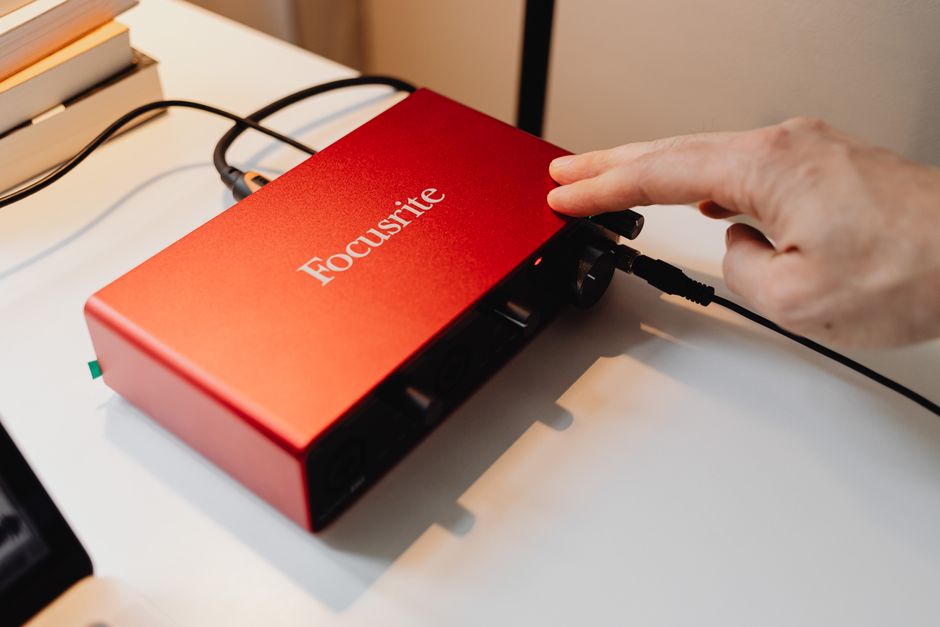
Evolution of USB Audio Interfaces: From Limited Connectivity to Professional Production
Historical analysis of USB audio interfaces: impact of bandwidth, latency, and standardization on modern music production.

Global Percussion Miking and Processing: Preserving Sonic Essence
Analyzing miking and post-production techniques to capture the acoustic identity of traditional and contemporary percussion.

Audio Compression Principles: Key Parameters and Advanced Sound Applications
Explore audio compression fundamentals, essential parameters, and techniques for optimizing professional music mixes.

Piano Miking and Acoustics: Analyzing Techniques and Technologies for High-Fidelity Recording
Optimizing piano sound capture: methodologies, microphone selection, stereo placement, and processing for high-quality recordings.