Sequoia: Architecture and Workflows in Mastering, Post-Production, and Broadcast
Exploring object-based editing, audio restoration, and immersive format support in Sequoia.
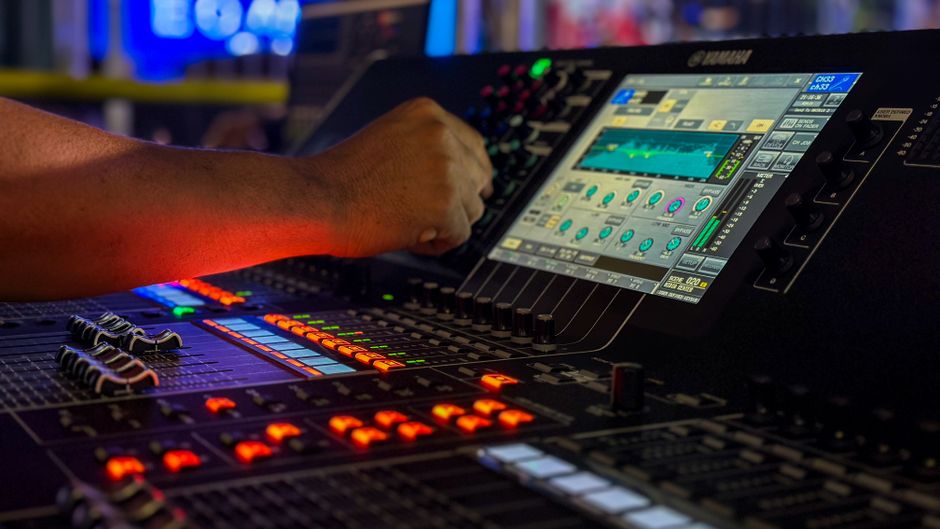
Sequoia’s Architecture and Workflow for High-Fidelity Audio
Contemporary music production demands tools that combine stability, surgical precision, and constant adaptability to technological innovations. In this context, Sequoia stands out as a reference digital audio workstation (DAW), particularly for professionals in mastering, post-production, and broadcast. Its architecture, designed for maximum fidelity and exhaustive control over every audio parameter, differentiates it from other platforms with a more initial creative focus, positioning it as a cornerstone in workflows where accuracy is paramount.
Advanced Editing and Restoration Tools in Sound Production
One of Sequoia’s distinctive features lies in its approach to workflow and editing. Object-based editing allows for non-destructive manipulation of individual audio fragments, applying specific processing (such as equalization or compression) to clips without altering the original file, offering unprecedented flexibility and facilitating experimentation. This methodology is crucial in complex projects where reversibility and iteration are constant. Complementarily, source/destination editing streamlines the management of takes and versions, enabling efficient handling of large volumes of sound material – a significant advantage in orchestral or film productions. Furthermore, Sequoia incorporates high-end audio restoration tools, such as DeHisser and DeNoiser, essential for working with historical recordings or material with imperfections, ensuring maximum clarity and quality. Precision in metering is another of its strong points, offering compatibility with standards like EBU R128 for loudness, fundamental in delivering content for streaming and broadcast platforms, ensuring sonic consistency across various media.
Immersive Audio Integration and AI Plugins in Production Ecosystems
Sequoia’s integration into modern production ecosystems is robust and adaptable. Its support for immersive audio formats, such as Dolby Atmos, positions it at the forefront of spatial audio production. As the demand for three-dimensional listening experiences grows on platforms like Apple Music and Amazon Music, Sequoia’s ability to handle and mix in these environments becomes indispensable. This allows engineers to create enveloping soundscapes, capitalizing on new creative and commercial opportunities. Compatibility with VST and VST3 plugins ensures that users can integrate the latest innovations in audio processing, including artificial intelligence (AI)-driven solutions from companies like iZotope, with its Ozone suite for mastering, or Sonible with smart:EQ 3, which assist in optimizing mixes and masterizations. These AI tools do not replace human expertise but act as intelligent assistants, accelerating processes and offering informed starting points. Remote collaborative workflows also benefit from Sequoia’s stability, facilitating project exchange and collaboration among geographically dispersed teams, a consolidated trend in today’s industry, exacerbated by post-pandemic work dynamics. Integration with high-end hardware, from cutting-edge audio interfaces to specialized control surfaces, ensures a fluid user experience and optimal performance.
Future Relevance of Precision DAWs in Audio Technological Evolution
Looking ahead, Sequoia maintains its relevance in the face of technological developments. Although generative AI in audio presents new paradigms, DAWs like Sequoia continue to be the backbone for precision editing, mixing, and mastering, where human control and critical decision-making are irreplaceable. The importance of fidelity in high-resolution (Hi-Res Audio) formats remains a priority, with growing demand from audiophiles and the streaming industry, and Sequoia is optimized to work with these requirements. Beyond its use in music and audiovisual production, Sequoia is a fundamental tool for the preservation and restoration of historical audio archives, ensuring that sonic heritage is preserved with the utmost quality. Its constant evolution and adherence to the highest technical standards ensure it remains a preferred choice for professionals seeking a reliable, high-performance tool in an increasingly complex and technical music production landscape. Investing in a platform like Sequoia represents a commitment to quality and efficiency in professional audio production.
Related Posts

Unveiling the Sonic Alchemy: Charly García's Revolutionary Studio Production
Explore the groundbreaking studio techniques and artistic vision that shaped Charly García's iconic sound and influenced Latin American music.

FM Synthesis: Modulation Fundamentals, Algorithms, and Contemporary Applications
Exploring FM sound design, from its modulation principles to its resurgence in modern plugins and music genres.

Amplitude Modulation in Sound Synthesis: Principles, Spectra, and Practical Applications
Analysis of the harmonic spectrum generated by AM synthesis, its applications in metallic timbres, and its presence in hardware and software.
Nearfield vs. Midfield Monitors: Technical Selection for Modern Studio Environments
Understand the acoustic and application differences between nearfield and midfield monitors to optimize sound accuracy in your production.