Power Station Studios: Acoustic Legacy and Technological Evolution
Iconic studio: acoustic design, hybrid consoles, and digital adaptation define sonic excellence.
Pioneering Acoustic Design and Analog Equipment
The history of Power Station studios represents a fundamental chapter in the evolution of professional music recording, setting a standard for technical and acoustic excellence that endures to this day. Founded in 1977 in New York City by Tony Bongiovi and Bob Walters, this studio complex quickly established itself as a creative epicenter, attracting world-renowned artists and producing iconic recordings that defined entire genres. Its innovative architectural design, which included non-parallel walls to optimize sound dispersion and minimize standing waves, was a testament to a pioneering vision in acoustic engineering. This focus on room acoustics, aiming for a balanced frequency response and precise reverberation control, became a distinctive signature that many modern studios still aspire to emulate.
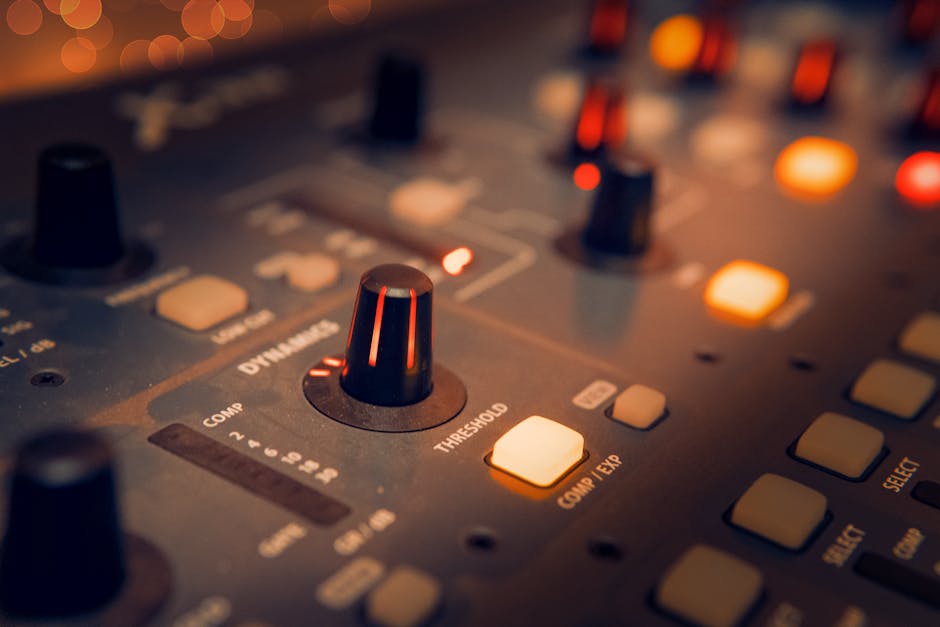
From its inception, Power Station distinguished itself with state-of-the-art equipment and a work philosophy centered on uncompromising sonic quality. Custom consoles, often hybrids of modified API and Neve components, were the heart of its control rooms, offering unparalleled flexibility and tonal palette. Legendary outboard gear, such as UREI 1176 and Fairchild 670 compressors, Pultec equalizers, and EMT reverb plates, contributed to forging Power Station’s distinctive sound: a blend of power, clarity, and an organic spaciousness that became synonymous with high-level productions. Artists like Bruce Springsteen, David Bowie, The Rolling Stones, Bon Jovi, and Madonna are just a few of the names who trusted this studio to bring their masterpieces to life, solidifying its reputation as a true crucible of talent and technology. The meticulous attention to detail at every stage of the recording process, from microphone selection to the final mix, laid the groundwork for countless commercial hits and critical acclaim. The influence of its miking and signal processing techniques resonates in contemporary productions, where the pursuit of a unique sonic character remains paramount.
In the mid-1990s, the studio underwent a significant transition, being renamed Avatar Studios under the direction of the Kunkel family. During this period, it maintained its status as one of the world’s most prestigious recording studios, continuing the tradition of excellence while adapting to new technologies. The integration of digital audio workstations (DAWs) like Pro Tools harmoniously coexisted with vintage analog gear, allowing engineers and producers to combine the best of both worlds: the warmth and character of analog hardware with the flexibility and efficiency of a digital workflow. This adaptability was key to its longevity in a constantly evolving industry. The incorporation of high-resolution monitoring systems and the continuous improvement of its rooms to optimize frequency response and stereo imaging ensured that Avatar Studios remained at the forefront of music production. This phase demonstrated the studio’s resilience and its ability to evolve without compromising quality.
In a move that underscores its educational legacy and commitment to the future of music, the complex was acquired by Berklee College of Music in 2017, reopening its doors as Power Station at BerkleeNYC. This acquisition not only preserved a historic landmark of recording but transformed it into an elite learning and production center. Today, Power Station at BerkleeNYC is a testament to how fundamental principles of audio engineering can merge with the latest trends. The studio now houses cutting-edge facilities for immersive audio production, including rooms equipped for Dolby Atmos mixing, reflecting the growing demand for three-dimensional listening experiences on streaming platforms like Spotify and Apple Music. Students and professionals have access to emerging technologies, such as AI-based plugins for mastering and mixing, and remote production workflows that facilitate global collaboration. The ability to emulate the sound of classic gear through Universal Audio plugins or processing with original hardware allows new generations to understand and apply the techniques that made the original Power Station legendary, connecting the past with the present of music production.
The impact of Power Station extends beyond its walls; its innovations in acoustic design and workflow have influenced studios worldwide. Its history is a constant reminder that, while technology advances, the pursuit of sonic excellence and a deep understanding of acoustics and psychoacoustics remain pillars of music production. The evolution of Power Station, from a reference analog studio to a state-of-the-art educational and technological hub, demonstrates the importance of adaptation and continuous innovation in the audio industry. The fusion of its rich analog heritage with the most advanced digital capabilities, including research into collaborative production techniques and experimentation with new forms of sound synthesis, positions Power Station at BerkleeNYC as a beacon for the future of sound engineering.
For those interested in delving deeper into the history and techniques employed at this iconic studio, resources such as the Sound on Sound archives or the Audio Engineering Society (AES) publications offer valuable insights. Experiencing recordings made at Power Station is a direct way to appreciate its sonic legacy. The studio’s continued relevance underscores that, in the era of global and digital music production, the quality of the space and technical mastery remain irreplaceable for achieving a distinctive level of sonic excellence.
Related Posts

Microtiming, Dynamics, and Spatialization: Sculpting Organic Groove in Music Production
Technical analysis of how microtiming, dynamics, and spatialization define music's rhythmic character and emotional resonance.

Concatenative Synthesis: Audio Analysis, Segmentation, and Reassembly for Advanced Sound Production
Explore advanced audio analysis and synthesis through segmentation and reassembly for innovative sound texture creation.

Psychoacoustics: Fundamentals of Sound Perception for Audio Optimization
Explore how psychoacoustics shapes auditory experience, from frequency sensitivity to spatial localization, for impactful audio productions.

Nuendo: Architecture for Immersive Audio, Post-Production, and Advanced Music Production
Technical analysis of Nuendo: immersive audio, post-production, and AI-powered collaborative workflows.