Music Sequencers: Genesis, Technological Evolution, and Future Prospects in Sound Creation
A journey through the history of the sequencer, from its mechanical origins to AI tools, redefining music production.
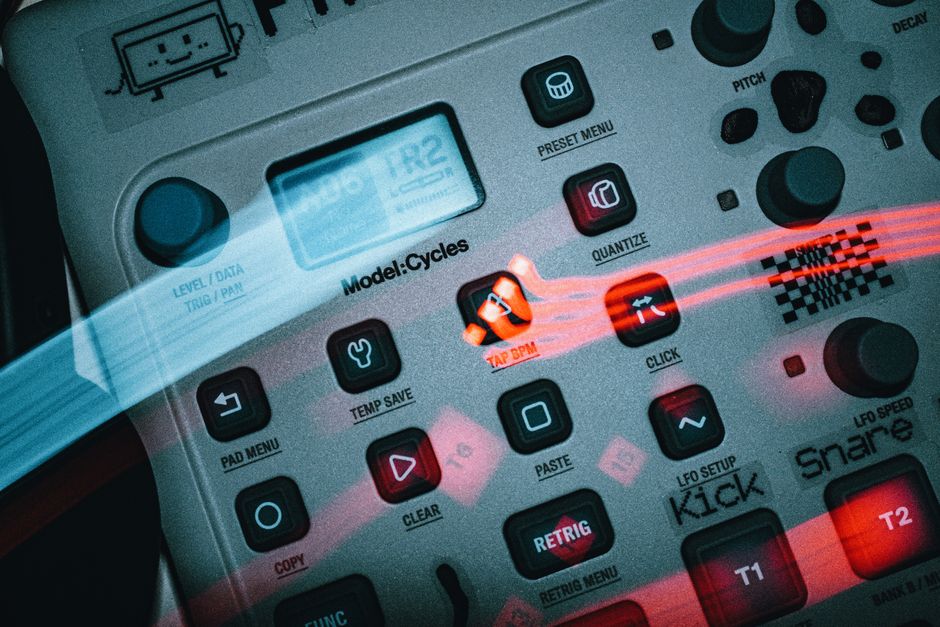
Genesis of the Sequencer: From Electromechanical Mechanisms to Analog Circuits
The evolution of music production is a narrative rich in ingenuity and vision, where the sequencer emerges as one of its most transcendental innovations. From its rudimentary beginnings to the sophisticated digital tools of today, the sequencer has been the silent engine that has enabled composers and producers to materialize complex musical ideas with unprecedented precision. Understanding its genesis not only illuminates the path traveled but also offers invaluable perspective on current and future trends in sound creation, in a landscape where technology continues to redefine the boundaries of art.
Before electronic circuits dominated the scene, the idea of automating musical sequences already existed in electromechanical mechanisms. Instruments like player pianos with perforated rolls or fairground organs, which used pegged cylinders or cards to trigger notes, represented the first attempts at “sequencing” music. However, the real turning point came with electronics. In the 1950s, the RCA Mark II Sound Synthesizer in the United States already incorporated a primitive sequencer capable of programming sequences of sound events. Subsequently, in the 1960s, pioneers like Don Buchla and Robert Moog began integrating analog voltage-controlled (CV) sequencers into their modular synthesizers. These devices allowed musicians to program patterns of notes and synthesis parameters, opening up a universe of rhythmic and melodic possibilities that previously required constant manual execution. Models like the Moog 960 Sequencer offered an intuitive interface of steps and knobs, transforming composition and real-time performance. This development laid the groundwork for programmed sound manipulation, moving away from mere reproduction towards structured creation.
The Digital Revolution: Microprocessors and MIDI Democratization
The advent of microprocessors in the 1970s marked a fundamental revolution for sequencers. The ability to store and manipulate digital data allowed for unprecedented flexibility and precision. One of the most significant milestones was the Roland MC-8 MicroComposer, released in 1977. This digital monophonic sequencer was one of the first to offer a numerical programming interface and considerable memory capacity, freeing musicians from the limitations of fixed-step analog sequencers. The 1980s saw the explosion of sequencers integrated into drum machines and synthesizers, such as the iconic LinnDrum or the Fairlight CMI, which, in addition to sequencing, offered sampling and synthesis. However, the true catalyst for the democratization of sequencing was the MIDI (Musical Instrument Digital Interface) standard, introduced in 1983. MIDI allowed different instruments and devices from various manufacturers to communicate with each other, standardizing the transmission of musical data. This led to dedicated MIDI sequencers, such as those from Roland, Korg, or Yamaha, which could control an entire studio of synthesizers and drum machines from a single central unit, radically transforming the workflow in studios worldwide.
With the increasing power of personal computers, the sequencer found its ultimate home in software. In the late 80s and early 90s, programs like Cubase and Performer (later Digital Performer) emerged as the first software-based digital audio workstations (DAWs). These programs not only allowed for MIDI sequencing with a much friendlier graphical interface but also integrated audio recording and editing capabilities, consolidating the production process within a single environment. Today, DAWs like Ableton Live, Logic Pro, and Pro Tools are the industry standard, offering incredibly advanced sequencing tools, from detailed MIDI note editing to the automation of every imaginable parameter. The evolution has been constant, with innovations ranging from step sequencing in graphical environments to algorithmic and generative sequencing. Platforms like Splice [https://splice.com/] or Output Arcade [https://output.com/products/arcade] offer sound and pattern libraries that integrate directly with the sequencing functions of modern DAWs, enabling the creation of rhythms and melodies at an unprecedented speed.
Sequencers in Software: The Era of Digital Audio Workstations (DAW)
The legacy of early sequencers is palpable in every aspect of contemporary music production. The conception of a musical piece as a programmable sequence of events is now the norm. Current trends, such as generative music and AI-assisted composition, are a direct extension of these principles. Tools like Google’s Magenta Studio [https://magenta.tensorflow.org/studio] or AI plugins from companies like iZotope [https://www.izotope.com/] not only analyze and process audio but can also suggest or generate melodic and rhythmic sequences, taking automation to a new creative level. Remote and collaborative production, facilitated by platforms like Ableton Link [https://www.ableton.com/en/link/], allows musicians from different locations to sequence and synchronize their ideas in real-time, reflecting a decentralization of the studio. Furthermore, the growing popularity of immersive audio formats, such as Dolby Atmos, demands new ways of sequencing not only notes but also the spatial position of sounds, opening a new chapter in the history of sequencing. The versatility of modern sequencers, from dedicated hardware like Elektron’s [https://www.elektron.se/] to virtual modular environments like VCV Rack [https://vcvrack.com/], demonstrates that this concept, born from the need for control and repetition, remains a fundamental pillar for sonic innovation.
From rudimentary perforated rolls to complex artificial intelligence algorithms that compose musical fragments today, the trajectory of the sequencer is a testament to the incessant human desire to organize and control sound. Its evolution has democratized music creation, allowing artists worldwide, from small studios in Buenos Aires to major productions, to explore new sonic frontiers. Understanding this history is not merely academic; it is an essential tool for any producer or musician aspiring to master current tools and anticipate the innovations that will continue to shape the future of music.
Related Posts
Pappo's Rioplatense Soul: How Local Rhythms Forged Argentina's Blues Icon
Explore how the rich musical traditions of the Río de la Plata profoundly shaped Pappo's iconic blues and rock, cementing his legacy in Argentinian music.

Bandalos Chinos: Echoes of Synth-Pop and the Future of Latin American Indie
Explore Bandalos Chinos' unique blend of nostalgic synth-pop and modern indie, dissecting their influences, production artistry, and significant cultural impact across Latin America.
From Raw Energy to Refined Artistry: Los Gardelitos' Creative Blueprint for Musicians
Explore the creative evolution of Los Gardelitos, from their authentic street sound to their enduring artistic legacy in Latin American rock.

Logic Pro X: Architecture, Processing, and Applications in Contemporary Music Production
Technical analysis of Logic Pro X capabilities for composition, mixing, and spatial audio, optimizing creative workflows.