Compass Point Studios: Sound Engineering and Legacy in Music Production
An analysis of Compass Point's iconic sound, its genre influence, and applicable production techniques today.
Origins and Design Philosophy of Compass Point Studios
In the history of music production, certain studios transcend their function as mere recording spaces to become true epicenters of sonic innovation. Among these, Compass Point Studios, located in Nassau, Bahamas, emerges as a creative beacon that, from the late 1970s to the early 1990s, redefined genres and forged an unmistakable sound.
Compass Point Studios: Establishment and Foundational Concept
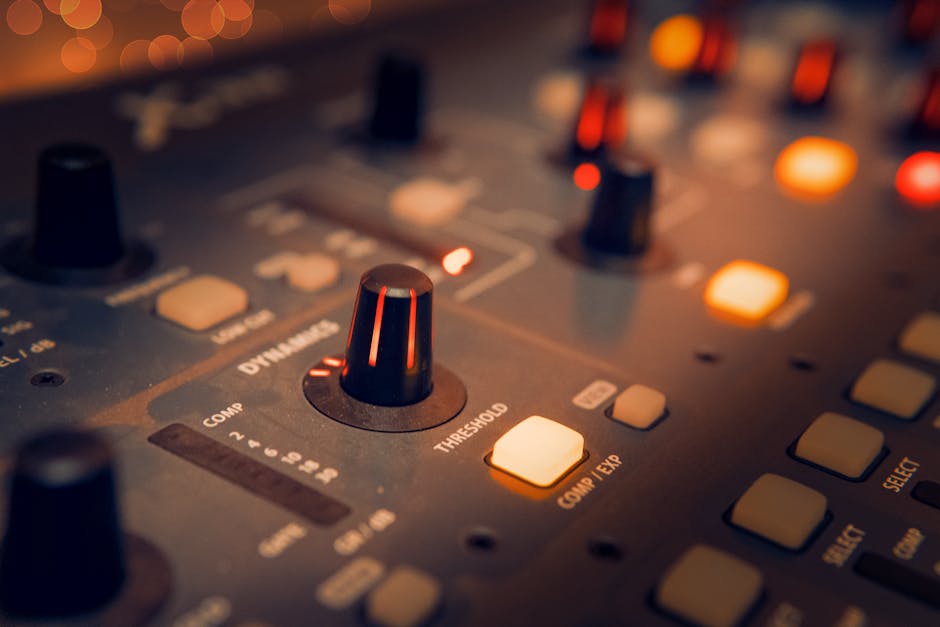
The vision of Chris Blackwell, founder of Island Records, was the catalyst behind Compass Point. In the late 1970s, Blackwell sought an environment that fostered creativity and experimentation, far from the pressures of traditional urban music industry hubs. His choice fell upon Nassau, Bahamas, a location that offered isolation conducive to artistic concentration, combined with a relaxed Caribbean atmosphere. The studio, designed with particular acoustics and equipped with state-of-the-art technology for its time, such as the iconic MCI console and multi-track tape machines, quickly became a destination for globally renowned artists. Blackwell’s philosophy was not merely to build a studio, but to create a sanctuary where music could evolve organically, free from distractions and with total immersion in the creative process. This approach laid the groundwork for a series of productions that not only marked an era but also profoundly influenced the development of genres like post-punk, new wave, and reggae-funk.
Engineering Techniques and Iconic Sound at Compass Point
Audio Engineering at Compass Point: Sound and Emblematic Techniques
The distinctive sound of Compass Point was no accident; it was the result of a masterful combination of technical and artistic talent. Engineers like Alex Sadkin and producers like Steven Stanley, along with the legendary rhythm section of Sly & Robbie (Sly Dunbar on drums and Robbie Shakespeare on bass), were fundamental in creating a particular sonic identity. This sound was characterized by its clarity, its powerful rhythmic foundation, and a natural reverb that evoked the tropical space. Recordings often featured crisp instrumental separation, deep basslines, and drums with a characteristic punch, achieved through innovative miking techniques and the creative use of available outboard gear. Artists such as Grace Jones, Talking Heads, Robert Palmer, The B-52’s, and Joe Cocker, among many others, recorded seminal albums at Compass Point, which are today considered milestones in their respective discographies. The emphasis on groove and experimentation with sonic textures became the studio’s trademark, an approach that valued spontaneity and atmosphere over sterile technical perfection. The interaction between musicians, technical staff, and the Caribbean environment generated a unique synergy that translated into musically rich and sonically innovative productions.
Sonic Impact and Compass Point’s Relevance in Modern Production
Legacy and Influence of Compass Point on Today’s Music Production
The legacy of Compass Point Studios endures in contemporary music production in various ways. Its focus on creating an immersive and collaborative workspace resonates with the growing trend of boutique studios and remote production projects, where the choice of environment is crucial for inspiration. The pursuit of an authentic and organic sound, so central to Compass Point, is manifested today in the resurgence of interest in analog hardware and the emulation of classic equipment through advanced plugins. Companies like Universal Audio (https://www.uaudio.com/) offer precise digital emulations of the consoles and compressors that defined the sound of that era, allowing today’s producers to infuse that analog character into their digital mixes. Furthermore, the experimentation with spaciousness and sonic depth, key elements in many Compass Point productions, finds an echo in immersive audio technologies like Dolby Atmos (https://www.dolby.com/technologies/dolby-atmos/). Contemporary engineers explore how the separation of elements and the creation of three-dimensional soundscapes can enrich the listening experience, an evolution of the principles of clarity and spaciousness that were already cultivated in the Bahamas. The rhythmic influence and genre fusion that Compass Point promoted continue to inspire producers in Argentina and Latin America, who often seek to integrate elements of folk and popular music with global sounds, reflecting a heritage of eclecticism and sonic daring. The story of Compass Point underscores the importance of artistic vision, technical excellence, and a conducive environment for experimentation as fundamental pillars for creating transcendent music, a lesson that remains fully relevant in the age of artificial intelligence and digital production.
Compass Point Studios represent a fundamental chapter in the evolution of recorded music. Its impact extends beyond the records produced there; it is a testament to the power of limitless creativity and the relentless pursuit of a unique sound. Its legacy continues to be a source of inspiration for artists and producers, demonstrating that innovation arises from the confluence of talent, technology, and an environment that fosters audacity.
Related Posts

Deep Dive into Digital Audio Format Conversion: Fidelity, Compression, and Key Parameters
Explore encoding, compression, and essential parameters (sample rate, bit depth) in digital audio conversion for music production.

The Oberheim Legacy: Sound Architecture, Polyphony, and Iconic Analog Tone
Dive into Oberheim's analog engineering, from the SEM to the OB series, and its lasting impact on electronic music.

From Roar to Resonance: The Enduring Soul of Ratones Paranoicos' Ballads and Mid-Tempos
Explore the profound artistry behind Ratones Paranoicos' slower tracks, revealing their emotional depth and lasting influence on Latin American rock.

Synthesizer Layering: Sound Design and Processing Techniques
Explore synthesizer layering for complex soundscapes, optimizing timbre, frequency, and texture.