Olympic Studios: Pioneering Acoustics and Technological Legacy in Global Music Production
A technical exploration of Olympic Studios' acoustic and technological impact on contemporary music recording.
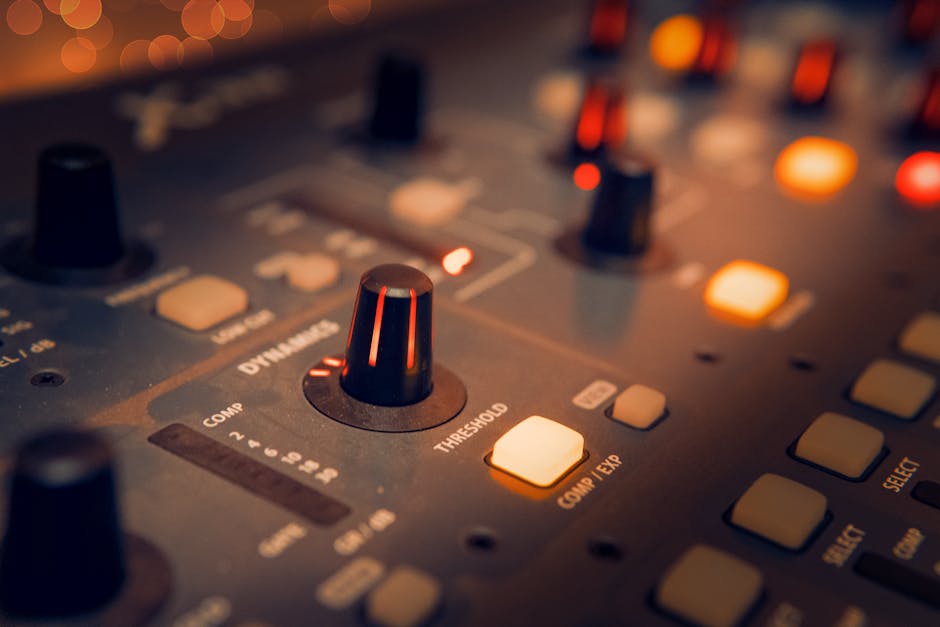
Acoustic Design and Technical Equipment at Olympic Studios
The history of London’s Olympic Studios represents a pivotal chapter in the evolution of music recording. Initially founded in 1958 on Carlton Road and later relocating to Barnes in 1966, these studios were not mere workspaces but true epicenters of sonic creativity. For decades, their walls bore witness to the creation of albums that defined genres and shaped popular culture. Olympic’s meticulous sound engineering and distinctive acoustics fostered an environment conducive to experimentation and the capture of legendary performances. This technical analysis explores the significance of Olympic, examining its impact on global music production and the resonance of its legacy in contemporary recording methodologies.
The Olympic Studios in Barnes quickly established themselves as a benchmark due to their innovative acoustic design, conceived by Keith Grant. Studio One, in particular, stood out for its spacious recording room, capable of accommodating full orchestras and rock bands with exceptional instrumental separation and controlled natural resonance. This configuration allowed for unprecedented flexibility in microphone placement and musician arrangement, facilitating the capture of live recordings with remarkable cohesion.
The early adoption of cutting-edge mixing consoles, such as the custom-built Olympic console and later the iconic SSL (Solid State Logic) and Neve consoles, positioned the studio at the technological forefront. These tools not only offered a clean signal path and robust dynamic control but also directly influenced the “sound” of countless productions. Artists like The Rolling Stones, Led Zeppelin, Queen, and Jimi Hendrix found the ideal environment at Olympic to realize their artistic visions, leveraging the expertise of their engineers and the unparalleled quality of their equipment. The interaction between the space’s acoustics and the recording technology defined a particular sonic aesthetic, characterized by its depth and clarity. For a deeper dive into the history of the consoles used, consult SSL’s official history page [https://www.solidstatelogic.com/company/history].
Mixing Consoles and Sonic Aesthetics at Olympic
The closure of Olympic Studios as a commercial recording space in 2009 marked the end of an era, but not the oblivion of its influence. The preservation of its legacy is evident in the continued reference to its recording techniques and the pursuit of the sonic quality that characterized them. Many engineers and producers trained at Olympic went on to apply their knowledge in other studios worldwide, disseminating the studio’s practices and philosophy. The original building’s architecture, though reconverted into a cinema and restaurant, retains elements of its sonic design, serving as a reminder of its glorious past.
Olympic’s footprint is discernible in the emulation of its classic equipment through modern plugins. Companies like Universal Audio and Waves have developed digital emulations of compressors, equalizers, and preamplifiers that replicate the sonic character of the analog units that once resided in Olympic’s consoles. This allows current producers to infuse their mixes with a tonal palette inspired by the studio’s golden age, democratizing access to sounds that previously required prohibitive equipment. An example of these emulations can be found in Universal Audio’s product line [https://www.uaudio.com/].
The pursuit of sonic excellence, inherent in Olympic’s philosophy, persists in contemporary music production, albeit with radically different tools and methodologies. The digital age has transformed the concept of a studio, migrating from large analog complexes to highly sophisticated home studio setups, powered by robust DAWs like Ableton Live, Logic Pro, or Pro Tools. The ability to collaborate remotely, facilitated by platforms like Splice or SoundBetter, allows artists and producers from Buenos Aires or anywhere in Latin America to work with global talent without the need for physical presence in a studio like Olympic.
Legacy and Digital Emulation of Olympic Studios
Artificial intelligence (AI) is emerging as a disruptive force in the audio realm. AI-assisted mastering tools, such as iZotope Ozone, or intelligent mixing plugins that suggest EQ and compression adjustments, are redefining workflows. These advancements offer undeniable efficiency, automating repetitive tasks and democratizing access to complex processes. Nevertheless, the human touch and artistic sensitivity that characterized sessions at Olympic, where the interaction between musicians and engineers was crucial, remain irreplaceable for creating works with a unique identity.
Furthermore, the growing demand for immersive audio experiences, such as spatial audio and Dolby Atmos mixes, represents a new frontier for production. Modern studios are investing in advanced multichannel monitoring systems to create three-dimensional soundscapes, a direct evolution of the ambition for depth and spatiality that Olympic sought in its stereo recordings. The integration of technologies like high-fidelity streaming on platforms such as Spotify or Tidal underscores the importance of final audio quality, a principle that Olympic championed from its inception. The proliferation of new MIDI controllers with advanced expressive capabilities and lower-latency audio interfaces also reflects this constant pursuit of greater fidelity and creative control. The history of these studios reminds us that, beyond technology, artistic vision and dedication to sonic fidelity are the pillars of enduring music production, evolving from Olympic’s grand rooms to today’s distributed, AI-assisted production environments. To learn more about the possibilities of immersive audio, Dolby Atmos’s website offers detailed information [https://www.dolby.com/experience/dolby-atmos/].
London’s Olympic Studios, with its legacy of technical innovation and its contribution to iconic recordings, offers a valuable perspective on the evolution of music production. Its influence extends from inspiring the acoustic design of modern studios to the digital emulation of its classic equipment and the constant pursuit of sonic excellence in the age of AI and immersive audio. Understanding its trajectory provides a framework for appreciating how the fundamental principles of high-quality recording transcend eras, adapting and enriching the current practices of producers and artists worldwide, including the vibrant music scene in Argentina.
Related Posts
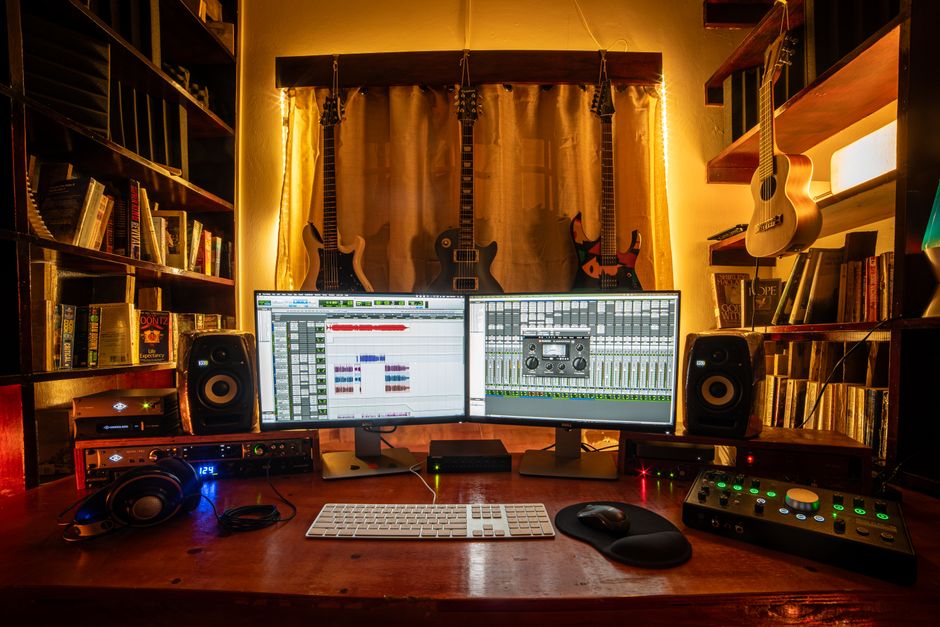
Parallel Compression: Fundamentals, Application, and Synergy with Modern Music Production Technologies
Explore the application of parallel compression in music production, from instruments to mix buses and its integration with AI.

Power Station: Acoustic Evolution and Legacy in Global Music Production
An analysis of Avatar Studios' (Power Station) trajectory and its lasting influence on sound engineering.

Multiversal Mastering: Technical Adaptation for Diverse Audio Platforms
Optimizing masters for streaming, physical formats, and immersive audio. Acoustic and dynamic keys.

The VST Protocol: Origins, Evolution, and Its Transformative Influence on Digital Music Production
Analyzes Steinberg VST's impact on democratizing music production, shifting from expensive hardware to accessible virtual studios.