Loudness Optimization and Spectral Processing in Mastering for Streaming Platforms
Mastering techniques for streaming: LUFS, True Peak, and dynamic processing for faithful and competitive playback.
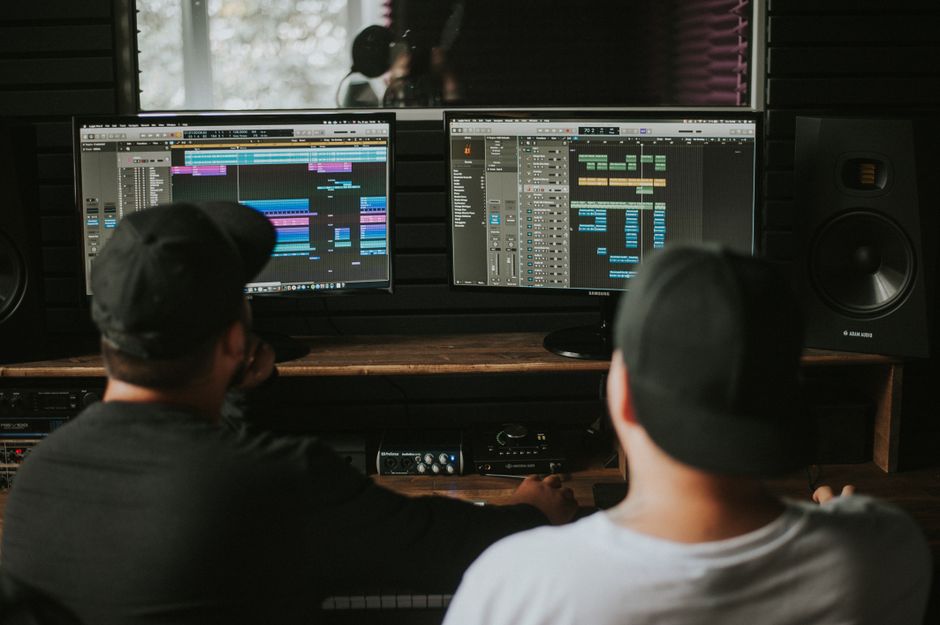
Loudness Normalization and True Peaks on Streaming Platforms
Mastering is the final, critical phase in music production, a process that imbues mixes with sonic coherence and prepares them for distribution. In the streaming era, where music is consumed across diverse platforms with their own loudness standards, audio quality is more relevant than ever. This article explores essential mastering techniques designed to optimize sonic material, ensuring faithful and competitive playback on popular streaming services, from Spotify to Apple Music, while preserving artistic integrity and original dynamics.
The normalization of loudness in streaming is a fundamental aspect. Platforms implement algorithms to deliver a consistent listening experience, adjusting track volumes to a reference level, commonly measured in LUFS (Loudness Units Full Scale). Understanding how these algorithms operate is crucial. Spotify, for example, normalizes to -14 LUFS integrated, while Apple Music does so at -16 LUFS. A common mistake is mastering excessively loud, leading platforms to reduce the track’s volume, often with a perceptible loss of dynamics and punch. Conversely, a track that is too quiet may sound weak in comparison. It is essential to target a loudness level that minimizes signal attenuation by the platform, preserving the mix’s dynamic intent. Furthermore, True Peak is another critical parameter, as peaks exceeding -1 dBTP (decibels True Peak) can cause distortion when converted to compressed formats like MP3 or AAC. Tools such as LUFS and True Peak meters are indispensable for accurately monitoring these values, with plugins from iZotope or FabFilter being highly recommended.
Dynamic and Spectral Processing for Streaming Mastering
The strategic application of dynamic and spectral processing forms the core of mastering for streaming. Multiband compression and equalization are powerful tools for sculpting sound. Multiband compression allows for control over specific frequency ranges, correcting imbalances without affecting the entire spectrum. For instance, subtle compression can be applied to low frequencies to provide more cohesion to the kick drum and bass, or to high frequencies to tame excessive brightness. Equalization, on the other hand, is used to refine the overall tonal balance, enhancing clarity and definition. A subtle and surgical approach is preferable to drastic adjustments. Advanced plugins like FabFilter Pro-MB or iZotope Ozone offer detailed control over these processes, even incorporating AI-assisted mastering modules that suggest initial adjustments based on musical reference analysis. The limiter is the final stage in the dynamic processing chain, responsible for bringing the overall loudness to a competitive level without introducing distortion. It is vital that the limiter is used judiciously, avoiding excessive reduction of the dynamic range that results in a “crushed” or lifeless sound. The goal is to achieve the desired loudness while maintaining a safe True Peak below -1 dBTP, ideally -2 dBTP for greater safety margin during encoding.
Beyond loudness and basic processing, there are advanced technical considerations that impact the final quality. The choice of sample rate and bit depth for the final master is a constant debate. While most streaming platforms ultimately transcode to lossy formats, working at higher resolutions (e.g., 48 kHz/24 bits or even 96 kHz/24 bits) during the mastering process can offer greater fidelity and headroom. Dithering, a process of adding low-level noise, is applied when reducing bit depth (e.g., from 24 to 16 bits) to minimize quantization distortion, being crucial for final delivery to platforms that may still require 16 bits.
Advanced Technical Considerations: Sample Rate and Dithering
Currently, the audio industry is experiencing an evolution towards immersive formats like Dolby Atmos. Mastering studios in cities like Buenos Aires and other Latin American capitals are adapting their setups to work with spatial audio. This represents a new frontier for mastering, where the mix is not only optimized for stereo but for a three-dimensional experience, implying a re-evaluation of processing techniques and monitoring. Platforms like Apple Music and Tidal already offer Dolby Atmos content, suggesting that mastering for immersive formats will become standard practice in the near future. Artificial intelligence is also playing an increasing role, with tools that not only analyze audio but can also perform automatic remastering tasks or suggest optimized presets for different streaming platforms, such as those found in mastering suites from Universal Audio or iZotope. For more information on audio specifications, one can consult the official documentation from platforms like Spotify for Artists [https://artists.spotify.com/] or Apple Music for Artists [https://artists.apple.com/]. Exploring immersive technologies like Dolby Atmos [https://www.dolby.com/technologies/dolby-atmos/] also offers valuable insights.
High-quality mastering for streaming is a delicate balance between technique, creativity, and understanding industry standards. It involves a deep knowledge of loudness normalization, judicious use of dynamic and spectral processing, and meticulous attention to technical details like True Peaks and dithering. Adapting to emerging trends, such as immersive audio and AI-based tools, will be key for mastering engineers seeking to ensure their artists’ music resonates with maximum quality and fidelity in today’s digital landscape. The goal is always to preserve the artistic intention of the mix, presenting it in the best possible way to a global audience.
Related Posts

FL Studio: Architecture, Synthesis, and Workflow in Contemporary Music Production
An analysis of FL Studio's capabilities in composition, sound design, mixing, and mastering for modern music production.

Lookahead Compression: Advanced Dynamic Control for Musical Transients
Analyzing the operational principle of lookahead compression and its application in optimizing transients and clarity in music productions.

The Evolution of Audio Engineering: From Analog Processing to Digital Effects and AI
Explores the metamorphosis of audio engineering, from analog effects to AI, democratizing creative tools.
Psychoacoustics and Perceptual Compression: Engineering Digital Audio and Human Perception
The impact of psychoacoustics on audio compression, optimizing sound quality and data efficiency in modern formats.