Criteria Studios Miami: Acoustics, Innovation, and Legacy in Global Music Production
Exploring Criteria Studios' influence on Latin American and global music, from its founding to the digital age.
Origins and Technical Consolidation of Criteria Studios
The trajectory of Criteria Studios in Miami stands as a fundamental pillar in the history of global music production, an epicenter where technical innovation merged with artistic talent to forge some of the most distinctive sounds of the 20th and 21st centuries. This recording complex, more than just a physical space, has been a crucible of genres, a sonic laboratory that transcended borders and whose resonance profoundly impacted Latin American and global music.
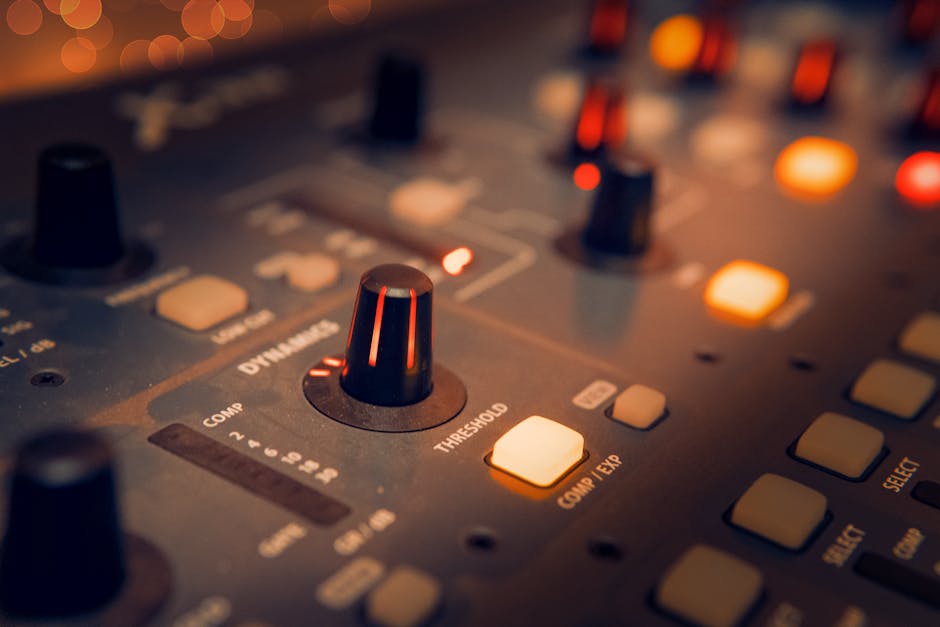
The studio was founded in 1958 by Mack Emerman, a visionary with a deep passion for jazz and recording technology. Initially conceived as a space for local productions, Criteria quickly gained a reputation for its exceptional acoustics and its state-of-the-art equipment for the era. The arrival of legendary producer and engineer Tom Dowd in the 1960s marked a turning point. Dowd, with his experimental approach and mastery of microphone and mixing techniques, transformed Criteria into a magnet for world-class artists. During this era, the studio witnessed seminal recordings by figures such as Aretha Franklin, James Brown, and the Bee Gees, solidifying its status as an industry benchmark. The meticulous attention to detail in room setup and equipment selection, from tube preamplifiers to custom consoles, defined a quality standard that would be emulated globally. Criteria’s ability to capture the raw essence of R&B and soul, while offering a polished sound for pop, demonstrated exceptional technical versatility.
Expansion and Genre Fusion at Criteria Studios
During the 1970s and 1980s, Criteria Studios underwent significant expansion and modernization, evolving into a multi-studio complex with multiple recording rooms capable of operating simultaneously. Renowned rock and pop artists, such as the Eagles (who recorded parts of their iconic album “Hotel California” at Criteria), Eric Clapton, and Fleetwood Mac, found the ideal environment for their productions within its facilities. Acquisition by Atlantic Records and later by Warner Music Group solidified its position in the elite tier of recording studios. Concurrently, Criteria forged an inseparable bond with Latin music. It was here that Gloria Estefan and Miami Sound Machine, Julio Iglesias, and Jon Secada, among others, shaped much of their international success. The studio became the epicenter of the “Miami Sound,” an innovative fusion of Latin rhythms, pop, and R&B that defined an era. The adoption of SSL mixing consoles, recognized for their transparency and versatility, and the early integration of digital recording, allowed Criteria’s engineers to stay at the technological forefront, offering artists an expanded sonic palette and an efficient workflow. Criteria’s infrastructure adapted to handle the complexities of large-scale multitrack productions, an essential requirement for the popular music of that period.
In the 21st century, Criteria Studios has navigated the complex transition into the era of digital production and streaming, maintaining its relevance through continuous modernization and the preservation of its acoustic essence. While the rise of home studios and AI-powered production tools has democratized music creation, the demand for professional studios with impeccable acoustics and top-tier equipment persists. Criteria exemplifies how elite studio infrastructure can adapt to current trends, such as the production of immersive music in formats like Dolby Atmos, which requires specialized mixing rooms and precise calibration. The pursuit of sonic quality, often compromised in less controlled production environments, finds a bastion in Criteria. Its legacy resonates with new generations of engineers and producers, many inspired by the “Miami Sound” and the iconic recordings made within its rooms. The accumulated experience at Criteria offers valuable lessons on the importance of acoustics, the analog and digital signal chain, and human interaction in the creative process—elements that remain crucial even with advances in AI mastering plugins or remote collaboration tools. Criteria’s story underscores that technology is a tool in service of artistic vision, and that the quality of a recording space remains a determining factor in sonic excellence. Its influence extends to the training of professionals throughout Latin America, who seek to emulate the production standards established in its iconic rooms.
Technological Adaptation and Legacy in the Digital Age
The history of Criteria Studios Miami is an enduring testament to excellence in audio engineering and music production. From its humble beginnings to its status as a laboratory of innovation, the studio has been a catalyst for countless masterpieces, influencing genres and artists globally. Its legacy lies not only in the recordings it produced but in the standard of quality and the spirit of innovation that continues to inspire the music industry in the digital age.
Related Posts

Modular Architecture and Sound Design in Reason Studios: A Technical Perspective
Exploring Reason Studios' virtual rack interface, instruments, and workflows for advanced sound creation.

Sampling in Contemporary Music: From Turntablism to AI and Its Cultural Impact
Trace the evolution of sampling, from its hip-hop origins to current AI and digital platform innovations.

Integrating Hardware Synthesizers: Setup, Recording, and Processing in Digital Production
Optimize the capture and processing of hardware synthesizers. Connection, synchronization, and mixing techniques for distinctive sound textures.

Psychoacoustics and Sound Production: Designing Auditory Landscapes for Physiological Well-being
Technical analysis of frequency, timbre, and spatialization manipulation for effective therapeutic music.