Organic Sound Design: Field Recording and Advanced Processing for Evocative Audio Landscapes
Integrating field recordings and techniques like granular synthesis to create rich, realistic auditory textures.

Organic Sound Design: Fundamentals and Revaluation
The pursuit of authenticity and depth in contemporary sound production has led to a revaluation of organic sound design techniques. This approach focuses on capturing and manipulating real-world sounds to generate textures, atmospheres, and effects that evoke a natural connection with the audience. Far from purely synthetic sound palettes, organic design offers a timbral richness and complexity that is fundamental across diverse musical genres, film productions, and immersive audio experiences. The integration of natural elements provides a credible foundation upon which unique and evocative auditory landscapes are built.
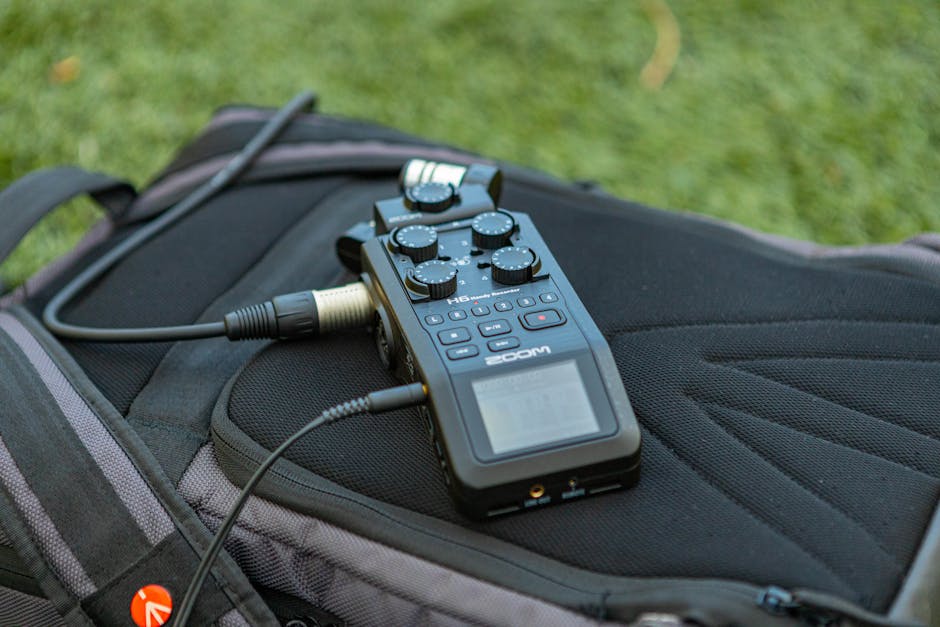
One of the cornerstones of organic sound design is field recording. This discipline involves capturing ambient sounds in their original context, from the murmur of a city to the whisper of nature. The choice of equipment, which may include contact microphones for subtle vibrations or stereo setups to capture spatiality, is crucial. The pre-production phase considers factors such as time of day, weather conditions, and environmental acoustics, ensuring a pristine audio source. Subsequently, the curation of these “found sounds” allows for the identification of the most promising elements for further manipulation. Techniques like extreme proximity miking for everyday objects or high-frequency recording for creative pitch-shifting expand the possibilities of these sources. Platforms such as Bandcamp [https://bandcamp.com/] or SoundCloud [https://soundcloud.com/] often showcase works utilizing these methodologies, demonstrating their versatility.
Field Recording: Capturing and Curating Natural Sources
The advanced processing of these recordings constitutes the next stage in organic sound modeling. Granular synthesis, for example, breaks down an audio sample into microscopic “grains” that can be rearranged, stretched, or layered to create entirely new textures while maintaining a resonance with the original material. Tools like Ableton Live [https://www.ableton.com/es/] or commercially available granular synthesis plugins offer extensive capabilities for this technique. Another invaluable resource is convolution reverb, which allows the “acoustic space” of a real recording (impulse response) to be applied to any sound, generating realistic environments ranging from cathedrals to car interiors. This contrasts with traditional algorithmic reverb by providing unparalleled spatial authenticity. Furthermore, physical modeling, which simulates the acoustic properties of objects or materials, has advanced significantly, enabling the creation of sounds that mimic instruments or natural phenomena with great detail, without the need for direct recordings, but based on organic acoustic principles.
Current trends in music production and audio design highlight the growing relevance of organic sound. The emergence of immersive audio, exemplified by formats like Dolby Atmos, demands a spatiality and sonic texture often achieved through field recordings and advanced processing. Sound designers use these techniques to construct three-dimensional auditory environments that envelop the listener. Artificial intelligence also plays an increasing role, with plugins assisting in the cleaning, classification, and resynthesis of recordings, optimizing workflows and opening new creative avenues. For instance, restoration tools like iZotope RX [https://www.izotope.com/] use advanced algorithms to clean unwanted noise from field recordings, preserving the organic essence. The combination of authentic capture with cutting-edge digital manipulation capabilities, such as those offered by Universal Audio [https://www.uaudio.com/] or articles from Sound on Sound [https://www.soundonsound.com/], shapes a landscape where innovation intertwines with the materiality of sound. This symbiosis allows current productions not only to sound richer and more detailed but also to establish a deeper, more visceral connection with the audience.
Advanced Processing: Granular Synthesis and Convolution Reverb
The application of these organic sound design techniques enriches any production, from experimental music to sound design for video games, where immersion is key. Constant exploration of unconventional sound sources and experimentation with advanced processing tools are fundamental to expanding the boundaries of auditory expression and creating sonic experiences that transcend the purely digital. The fusion of analog and digital, captured and synthesized, drives a continuous evolution in the art of sound.
Related Posts

Physical Modeling Synthesis: Simulating Acoustic Principles for Advanced Sound Design
Explore how simulating physical phenomena generates realistic and expressive timbres, overcoming traditional technique limitations.

Adaptive Mastering: Sonic Methodologies for Digital Platforms, High-Resolution, and Immersive Audio
Technical analysis of mastering for streaming, Hi-Res, and immersive audio, optimizing sound quality across diverse playback ecosystems.

The Historical Evolution of Drum Machines: From Optical Mechanisms to Generative AI
Trace the development of drum machines, from their mechanical origins to advanced digital tools and current AI.
Organic Sound Design: From Field Recordings to Immersive Acoustic Environments
Methodologies for capturing, processing, and integrating natural sounds into advanced audio productions, creating rich, distinctive textures.