Pro Tools: Technological Evolution and Standard in Digital Audio Production
An analysis of Pro Tools' journey, from its DSP beginnings to native production and immersive audio.
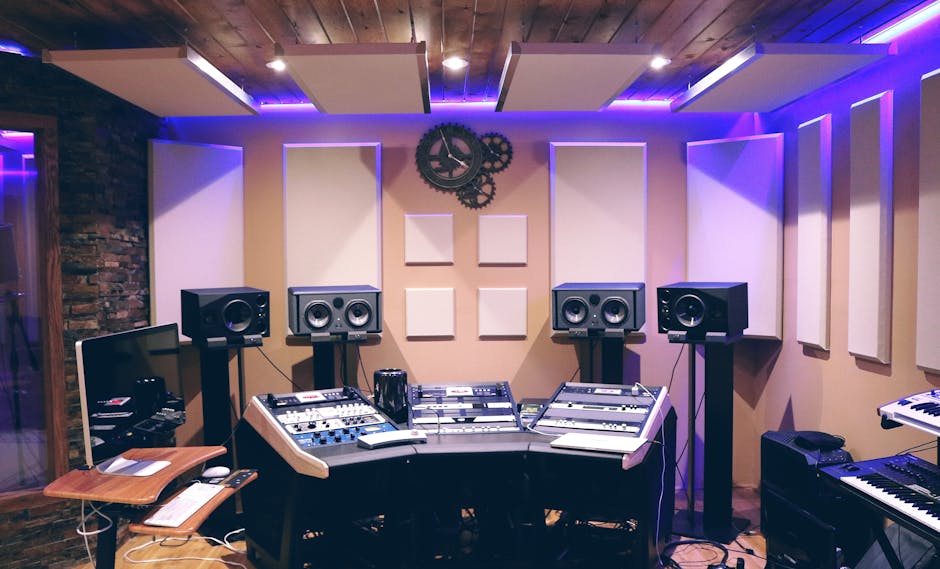
Genesis of Pro Tools: From Sound Tools to Digital Editing
From its inception as a cutting-edge digital audio editing tool to its current standing as an industry standard, Pro Tools’ trajectory mirrors the evolution of music and sound production. Developed by Avid Technology, this system has been instrumental in transforming recording studios worldwide, enabling engineers and producers to tackle creative challenges with unprecedented efficiency. Its development has been a series of innovations, adapting to the ever-changing technological and artistic demands of the industry. Understanding its genesis and progression is essential for any audio professional seeking to contextualize the modern tools that define the sonic landscape today.
In the late 1980s, as personal computing began to gain traction, digital audio editing was still an nascent and costly field. Digidesign, the precursor to Avid, launched ‘Sound Tools’ in 1989, a revolutionary system that allowed two-track audio editing directly on a Macintosh computer. This initial package, comprising digital signal processing (DSP) hardware and software, offered a radical alternative to the tedious techniques of analog tape editing. The ability to cut, paste, and manipulate audio with sample-level precision opened new frontiers for post-production and mastering. The true turning point arrived in 1991 with the introduction of ‘Pro Tools’. Initially, Pro Tools was a NuBus card-based system for Macintosh, scaling from four to sixteen simultaneous audio tracks. The key to its power lay in the use of dedicated DSP hardware, which offloaded intensive workloads from the computer’s main processor, ensuring real-time performance for effects, equalization, and mixing. This was crucial in an era where native CPUs lacked the capacity to handle multiple tracks and plugins without significant latency. Recording studios began to envision a future where digital flexibility would complement, and eventually surpass, the limitations of traditional analog equipment.
TDM Architecture and Pro Tools’ Industrial Consolidation
The 1990s and early 2000s witnessed Pro Tools’ consolidation as the industry standard, particularly with the TDM (Time Division Multiplexing) architecture. Pro Tools HD systems, introduced in the late 90s, took the concept of dedicated DSP processing to a new level. With PCI (and later PCIe) cards housing multiple DSP chips, studios could handle hundreds of tracks, countless plugins, and complex automation, all with minimal latency and robust stability. This architecture allowed Pro Tools to dominate the film and television post-production markets, as well as high-profile music production. Pro Tools’ ability to integrate high-quality audio interfaces, control surfaces, and a vast library of third-party plugins within a unified environment made it indispensable. Mixing, editing, and mastering became more efficient and precise processes. Collaboration between studios, though still reliant on physical hard drive exchanges, benefited from a standardized project format. The robustness of TDM systems, while expensive, justified the investment for studios requiring maximum reliability and performance in large-scale productions. Many musical successes from that era were recorded and mixed in these environments, establishing a sonic legacy.
As computer CPU processing power advanced exponentially, the exclusive reliance on DSP hardware began to diminish. Digidesign (already under the Avid umbrella) introduced Pro Tools LE (Limited Edition) in 1999, offering a more affordable and accessible solution by utilizing a combination of dedicated DSP in smaller audio interfaces and the computer’s native processing. This opened the doors of Pro Tools to a much wider user base, including home studios and independent producers. The transition towards a predominantly native architecture culminated in modern Pro Tools versions, where most plugins and a significant portion of processing run directly on the host CPU. This has allowed for greater flexibility and reduced entry costs. Recent innovations include features like cloud collaboration (Avid Cloud Collaboration), enabling musicians and producers to work on projects remotely—a crucial trend in the current era of distributed production. Furthermore, Pro Tools has fully embraced the new frontiers of immersive audio, with integrated tools for mixing in formats like Dolby Atmos, a growing demand in streaming and entertainment. The integration of artificial intelligence is also beginning to emerge, with third-party plugins using AI for tasks such as audio cleanup, assisted mastering, or effects generation. This hybrid approach, combining the stability of its legacy with adaptability to the latest technologies, keeps Pro Tools at the forefront, constantly evolving to meet the needs of an ever-innovating industry, from major studios to the most intimate home setups. To delve deeper into its current capabilities, consult the official information at Avid Pro Tools.
Evolution to Native Processing and New Technological Frontiers
From its humble beginnings to its current incarnation as a versatile and powerful platform, Pro Tools has demonstrated a remarkable capacity for adaptation. Its evolution from purely DSP hardware-based systems to hybrid and native solutions reflects the trajectory of digital audio technology itself, as documented in specialized publications like Sound on Sound. It continues to be a fundamental tool for thousands of professionals, not only for its robustness and feature set but also for its constant integration of new technologies and workflows, such as remote production and immersive audio, including mixes for Dolby Atmos Music. The story of Pro Tools is, ultimately, the story of how technological innovation has empowered sound creators to reach new heights of expression and efficiency in music and audiovisual production.
Related Posts

Granular Synthesis: Fundamentals, Parameters, and Applications in Sound Design
A technical exploration of granular synthesis, its key parameters, and its impact on contemporary music production and sound design.

Brass Acoustics and Microphony: Capture and Processing in Modern Production
Technical analysis of miking, EQ, and compression techniques for brass instruments in high-fidelity recordings.

Studio Monitoring Fundamentals: Acoustics, Components, and Calibration for Sonic Reliability
Establishing an accurate listening environment with components, acoustic treatment, and calibration for reliable production decisions.
Pro Tools: Technological Evolution and Adaptation in Professional Audio Production
Documenting Pro Tools' historical trajectory from its inception to its current leadership in music and post-production.