Vocal Harmonizers: Fundamentals, Advanced Techniques, and Innovations in Music Production
Exploring vocal harmonizer technology, from pitch detection to AI and immersive audio.

Vocal Harmonizer Fundamentals: Pitch Detection and Harmony Synthesis
Voice manipulation has been a constant in music production, evolving from meticulously recorded choirs to complex digitally generated textures. The vocal harmonizer, once viewed as a purely corrective or novelty effect, has solidified its position as an essential component in the sonic palette of producers and engineers. Its ability to generate additional voices, thicken tracks, or create ethereal soundscapes makes it an invaluable resource, whether in a studio in Buenos Aires or any corner of the globe. This analysis will explore the fundamental and advanced techniques of harmonizers, their integration with recent innovations, and how these tools are redefining creative possibilities in contemporary vocal production.
The foundation of any vocal harmonizer lies in its ability to detect the pitch of an incoming audio signal and, based on that, generate one or more synthetic voices at specific musical intervals. This process involves converting the audio signal into pitch and formant data, manipulating it, and then resynthesizing it. Harmonizers can operate in various ways: some allow the selection of fixed intervals (thirds, fifths), others synchronize with MIDI chords sent from a keyboard or DAW, and the most sophisticated even detect the key of an entire track to generate contextually appropriate harmonies.
For basic application, the goal is typically to thicken a lead vocal or add a subtle harmonic layer. This is achieved by selecting diatonic intervals that complement the melody. It is crucial to adjust parameters such as ‘formant shift’ to maintain the naturalness of the generated voices; incorrect adjustment can result in an artificial or “chipmunk” sound. For instance, a slight downward shift in the formant of a harmony voice can lend it a deeper, less strident quality, integrating it better into the mix. Latency is another factor to consider, especially in real-time recording environments, where hardware processors or low-latency plugins are preferable.
Vocal Harmonization Techniques: Formant Adjustment and Latency Management
Beyond simple choir addition, vocal harmonizers offer vast potential for sonic experimentation. An advanced technique is ‘micro-pitch shifting,’ which involves shifting the pitch of a voice by a few cents (hundredths of a semitone) up and down, creating a thickening or “doubling” effect without generating distinct harmonies. This is used to add body and presence to the lead vocal, a technique popular in genres ranging from pop to progressive rock.
Formant manipulation, on the other hand, allows for altering the timbral quality of the voice without changing its pitch. This is invaluable for creating dramatic effects, such as transforming a male voice into a female voice or vice versa, or generating robotic and creature-like voices. Plugins like iZotope Nectar or the classic Eventide H3000 have pioneered these capabilities, offering granular control over vocal resonance. MIDI integration is another pillar of advanced techniques; by sending chord information to a harmonizer, complex vocal arrangements can be created that follow specific harmonic progressions, opening doors to the composition of intricate choirs that would otherwise require multiple vocal takes. Artists and producers in Latin America often explore these tools to give a distinctive character to their productions, blending the traditional with the avant-garde.
The landscape of vocal processing is constantly evolving, driven by advances in artificial intelligence and the growing demand for immersive audio experiences. Vocal harmonizers are no exception to these trends. Recently, we have seen the emergence of AI-powered plugins that not only detect pitch with greater accuracy but can also “learn” the key and style of a musical piece to generate more organic and contextually relevant harmonies. These tools promise to reduce setup time and deliver more natural results, approaching the complexity of a real human choir.
Advanced Applications: Micro-Pitch Shifting, Formant Manipulation, and MIDI Integration
Production for immersive formats, such as Dolby Atmos, is also influencing harmonizer design. The ability to spatialize harmonized voices in a 3D environment, moving them around the listener, opens new creative dimensions for mixing. This allows harmonies not only to add tonal richness but also to contribute to the spatial narrative of a song. Furthermore, in the realm of remote and collaborative production, which has gained significant relevance, digital harmonizers facilitate vocal consistency among different collaborators and studios, ensuring that vocal tracks maintain cohesion regardless of where they are recorded. Companies like Antares with its Auto-Tune suite, and independent developers, continue to push boundaries, offering tools that not only correct but inspire new forms of vocal expression. An example of these innovations can be seen in the capabilities of modern plugins that integrate not only harmonization but also advanced vocal modeling effects, allowing producers to sculpt vocal textures that were unthinkable a decade ago.
To further explore the capabilities of Auto-Tune, one can visit the official Antares website: https://www.antarestech.com/products/auto-tune/pro/. Similarly, for a broader view on vocal processing and the use of tools like iZotope Nectar, the official resource is: https://www.izotope.com/en/products/nectar.html. The integration of these techniques in productions for Dolby Atmos is becoming a standard in advanced studios, and detailed information can be found on the Dolby page: https://www.dolby.com/music/dolby-atmos-for-music/.
From their origins as pitch correction tools, vocal harmonizers have evolved into multifaceted processors capable of radically transforming a vocal performance. Understanding their fundamentals and exploring their advanced applications allows producers and engineers to expand their creative horizons and achieve distinctive sonic results. With the continued integration of technologies like artificial intelligence and the adoption of immersive formats, the future of vocal harmonization promises even more possibilities for artistic expression and innovation in music.
Related Posts

Capturing and Processing Hardware Synthesizers: Integration in Contemporary Music Production
Technical fundamentals for recording hardware synthesizers: from studio setup to advanced mixing techniques.

Mastering by Stems: Detailed Intervention and Adaptability in Modern Audio Post-Production
Analysis of granular stem processing to optimize clarity, dynamics, and adaptability in current music productions.

The Stax Sound: Cinema Acoustics and Live Recording in Soul Production
An analysis of Stax Records' recording philosophy: spontaneity, live interaction, and the legacy of its iconic sound.
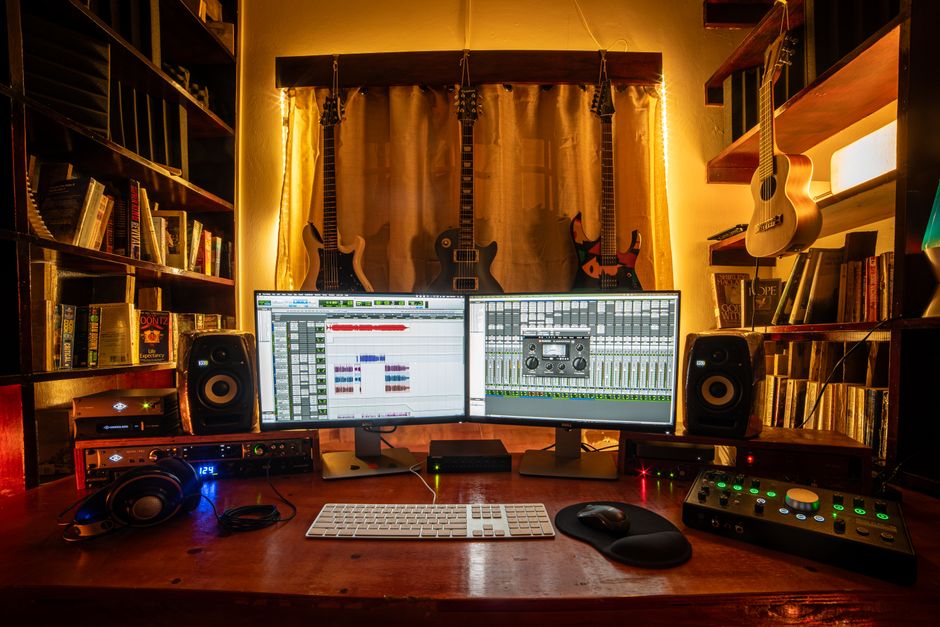
The Evolution of Pro Tools: From Sound Tools to Immersive and Collaborative Audio Production
A historical analysis of Pro Tools, highlighting its impact on digital audio production and its adaptation to contemporary technologies.