Stochastic Synthesis: Principles and Applications in Contemporary Sound Creation
Exploring controlled randomness in sound design, its fundamentals, tools, and use in AI and immersive audio.
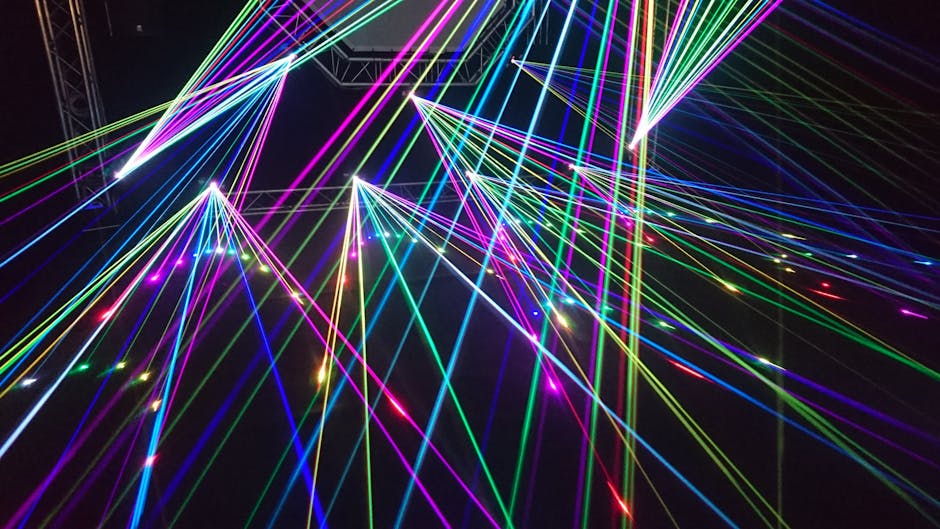
Fundamental Principles of Random Variation in Sound
Stochastic synthesis represents a fascinating frontier in sound design, diverging from traditional methods based on fixed patterns to explore a universe of generative possibilities. This approach utilizes controlled randomness to shape acoustic parameters, enabling the creation of textures, rhythms, and melodies that evolve unpredictably yet within predefined limits. Its relevance in contemporary music production is undeniable, especially with the rise of artificial intelligence and generative music tools, offering producers and sound designers new avenues for innovation.
Fundamental Principles of Random Variation in Sound
At its core, stochastic synthesis is based on applying random processes to sound attributes. This means that instead of programming a precise sequence of notes, durations, or amplitudes, ranges and probabilities are established within which these parameters can vary. For example, an oscillator might generate tones whose frequency drifts randomly within a specific octave, or an amplitude envelope might have attack and decay times that fluctuate slightly with each event. This ‘controlled randomness’ is crucial; it’s not about arbitrary sonic chaos, but rather a systematic exploration of a user-defined sonic space.
The typical parameters subject to these variations include:
- Frequency (pitch): Tonal shifts within defined scales or ranges.
- Amplitude (volume): Dynamic fluctuations that add life and movement.
- Duration: Variations in the length of notes or events, creating complex rhythms.
- Timbre: Random modulation of filters, resonators, or the mix of sound sources.
- Spatial position: Random movement within stereo or immersive environments, ideal for Dolby Atmos or spatial audio productions.
Modern Tools and Applications in Music Production
The implementation of these principles is often achieved through algorithms that generate random numbers, which are then mapped to synthesis parameters. Tools like Max/MSP or Pure Data are ideal platforms for experimenting with these concepts, allowing users to build their own stochastic synthesis engines from scratch, defining the rules and the degree of randomness. A classic example is the random ‘walker,’ where a parameter moves one step in one direction or another with a given probability, generating an unpredictable yet coherent progression.
Modern Tools and Applications in Music Production
Access to stochastic synthesis techniques has been significantly democratized with the development of software plugins and modules. Many virtual modular synthesizers, such as VCV Rack, offer randomness modules that can be interconnected to generate complex patterns. In the realm of VST/AU plugins, tools like Output’s Portal granular synthesizer or synthesizers like Arturia’s Pigments incorporate randomness generators and complex modulators that can be applied to almost any parameter, allowing producers to inject elements of unpredictability into their sound designs. Even some modern DAWs, like Ableton Live with its M4L devices, facilitate the creation of effect chains and MIDI generators that operate with stochastic logic.
Artificial intelligence is taking stochastic synthesis to new horizons. Machine learning algorithms can be trained on vast sound libraries to then generate new textures and melodies that exhibit stochastic properties, learning the implicit ‘rules’ of musical randomness. Platforms like Google Magenta or AI-integrated plugins are beginning to offer tools capable of co-creating music with generative elements, where the user defines the framework and the AI explores the stochastic possibilities within it. This is particularly relevant in the creation of music for video games, where adaptive soundtracks can dynamically evolve based on gameplay action, or in sound art installations where the sound is constantly transforming.
Creative Exploration and Trends in Immersive Audio
Creative Exploration and Trends in Immersive Audio
The creative applications of stochastic synthesis are vast and growing with technological innovation. In ambient and experimental music, it allows for the construction of soundscapes that never repeat exactly, maintaining interest through constant evolution. For percussion, intricate and mutating rhythmic patterns can be generated that challenge the traditional grid. In orchestral music, it can simulate the unpredictable behavior of a large number of musicians, adding organic realism to synthetic textures.
One of the most exciting trends is its integration with immersive and spatial audio. By applying stochastic principles to the position of sound sources in three-dimensional space, designers can create sonic environments that envelop the listener with subtle, unpredictable movements. This is invaluable for productions in formats like Dolby Atmos or for virtual and augmented reality experiences, where immersion is enhanced by a dynamic and lively soundscape. The ability to generate infinite variations of the same sonic concept is also a significant advantage for producing scalable and adaptable content in today’s digital environment.
In conclusion, stochastic synthesis offers a powerful methodology for sound creation, enabling artists to transcend the limitations of linear programming. Its capacity to generate complexity and novelty from simple rules positions it as a fundamental technique in the modern sound designer’s arsenal. As artificial intelligence and immersive audio interfaces continue to evolve, the exploration of controlled randomness will remain a key driver for innovation in music design and production. Experimenting with these techniques opens doors to unique sonic possibilities and ever-evolving artistic expression.
Related Posts

The Evolution of Loudness Measurement: From the Loudness War to LUFS Consistency for Global Platforms
A technical analysis of LUFS and True Peak metrics, essential for contemporary music production and streaming distribution.

Algorithmic vs. Convolution Reverb: Fundamentals, Applications, and Technological Convergence in Music Production
A comparative technical analysis of algorithmic and convolution reverb, exploring their differences, applications, and the evolution towards hybrid solutions.

Harmonic Analysis: Fundamentals and Applications in Modern Music Production
Understanding frequency decomposition and overtones to sculpt timbres and optimize audio mixes.

AI Voice Synthesis and Modeling: Technical Methodologies, Ethical Implications, and Creative Applications
Delve into voice cloning: AI techniques, ethical debates, and innovative uses in contemporary music production.