Audio Format Conversion: Sound Quality and Compatibility in Digital Music Production
Technical analysis of lossy/lossless formats, sample rate, bit depth, and tools for preserving audio integrity.

Fundamentals of Digital Audio Formats: Lossy vs. Lossless
The digital era in music production underscores the critical relevance of audio format conversion. From initial capture to final distribution, understanding how different formats impact sound quality and compatibility is fundamental for any producer or sound engineer. This often underestimated process is indispensable for preserving the integrity of the material and ensuring its correct reproduction across a diverse range of platforms, from studio monitoring systems to high-fidelity streaming services. The appropriate choice and precise application of conversion techniques directly influence the final perception of the musical work.
Understanding Digital Audio Formats
The foundation of any successful conversion lies in a deep understanding of audio format types. These are primarily classified into two categories: lossy and lossless. Lossless formats, such as WAV and AIFF, store audio information identically to the original, guaranteeing the highest possible quality. They are the preferred choice for recording, mixing, and mastering stages. The FLAC format is another example of lossless, offering compression without loss, reducing file size without sacrificing quality, making it very useful for archival and high-fidelity distribution.
In contrast, lossy formats, like MP3 and AAC, employ algorithms to drastically reduce file size by eliminating information deemed less perceptible to the human ear. While ideal for streaming distribution and mobile devices due to their bandwidth efficiency, their use in critical production stages can introduce artifacts or degrade sound quality. The selection of the appropriate format depends on the audio’s final purpose. For instance, a 24-bit, 48 kHz WAV file is a standard in recording studios, while a 320 kbps MP3 is common for mass-consumption platforms like Spotify or Apple Music. Converting between these, especially from lossy to lossless, must be managed with precision to avoid the accumulation of compression errors.
Critical Parameters in Conversion: Sample Rate and Bit Depth
Key Factors in Audio Conversion
Format conversion involves more than simply changing a file extension. Technical aspects such as sample rate and bit depth are crucial. When converting a sample rate, for example, from 96 kHz to 44.1 kHz, a high-quality resampling algorithm is required to avoid aliasing and preserve frequency response. Tools like the Sample Rate Converter (SRC) integrated into advanced DAWs or dedicated plugins use complex filters to ensure a smooth and accurate transition.
Bit depth, which determines dynamic range and quantization noise, is also a critical factor. Reducing bit depth, for instance, from 24 to 16 bits, requires the use of dithering. Dithering is the addition of low-level random noise to mask quantization distortion and improve the perception of low-level details in the audio. Incorrect conversion of either of these parameters can result in a loss of clarity, introducing unwanted noise or digital artifacts. Understanding these processes is fundamental for producers seeking to maintain their audio’s fidelity through all stages, from mixing to mastering for distribution.
Current Tools and Methodologies in Conversion
The current landscape of music production offers a wide array of tools for format conversion. Most Digital Audio Workstations (DAWs) like Ableton Live, Logic Pro, Pro Tools, or Cubase, include robust functions for exporting and converting audio into multiple formats and configurations. Additionally, third-party applications like XLD (X Lossless Decoder) for macOS or dBpoweramp for Windows provide high-quality conversion options with granular control over technical parameters.
Recent trends incorporate artificial intelligence (AI) into audio enhancement processes during conversion. AI-based plugins and services can, for example, attempt to restore lost details in low-quality recordings or optimize compression for streaming, dynamically adapting to the content. Collaborative cloud-based music production also plays a role, with platforms that automatically manage format conversion for compatibility across users and devices. Services like SoundCloud or Bandcamp handle these processes internally, facilitating global distribution.
For immersive music, such as audio for Dolby Atmos, conversion and packaging into specific formats like ADM BWF (Audio Definition Model Broadcast Wave Format with Atmos metadata) are essential. This ensures that spatial information is correctly preserved for playback on compatible systems. Understanding these standards and using the right tools are vital for producers exploring these new sonic frontiers, ensuring their work meets the technical requirements of distribution platforms and the expectations of an immersive listening experience.
Conclusion
Technical and Artistic Implications of Audio Format Conversion
Audio format conversion is an indispensable technical skill in contemporary music production. Understanding the differences between lossy and lossless formats, mastering the principles of sample rate and bit depth, and familiarizing oneself with current tools and trends allow audio professionals to ensure the maximum quality and compatibility of their works. The constant evolution of technology demands continuous knowledge updates to adapt to new challenges, from optimizing for streaming to preparing for immersive audio experiences. Accurate conversion is not just a technical step, but a guarantee of the artistic integrity of sound in an ever-changing digital ecosystem.
Related Posts
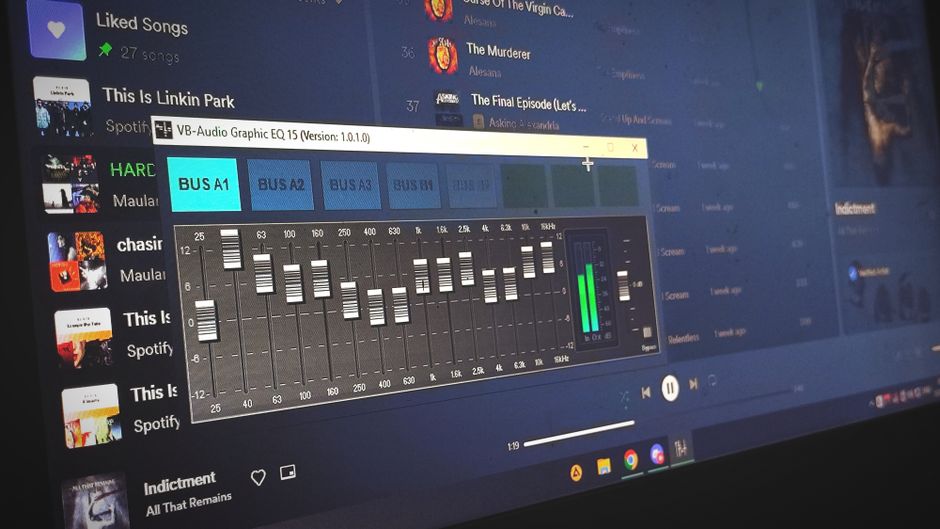
Brain-Computer Interfaces and Music Production: A New Paradigm for Sound Creation
Research on how BCIs translate neural activity into musical expressions, redefining composition and performance.
Temporal Modulation and Dynamics: Technical Foundations of Musical Groove
Technical exploration of temporal, dynamic, and spatial modulation for creating compelling musical grooves.

Algorithmic Music Composition for Neural Simulations: Design and Application
Explore the synergy between music production and computational brain models for interactive, adaptive sound experiences.

Capturing and Processing Sympathetic Resonance in Musical Instruments: Recording Methodologies
Exploring advanced miking and processing techniques to preserve the harmonic richness of instrumental sympathetic resonance.