REAPER: Customization Architecture and Efficiency in Modern Music Production
An analysis of REAPER's architecture, advanced customization, and workflow optimization for contemporary music production.
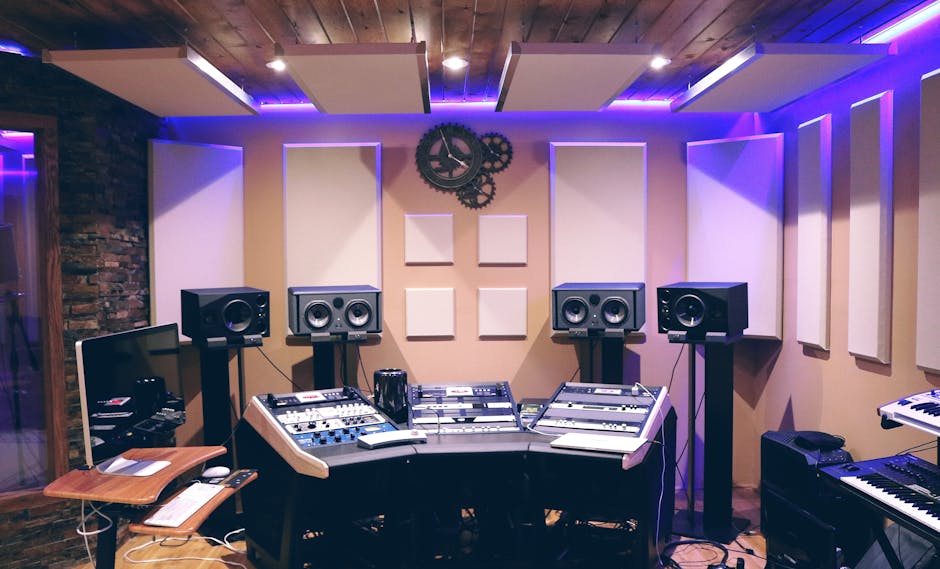
REAPER’s Architecture and Customization for Adaptive Workflows
Contemporary music production demands flexible and efficient tools. In this context, REAPER (Rapid Environment for Audio Production, Engineering, and Recording) stands out as a highly adaptable digital audio workstation (DAW). It is distinguished by its deep customization capabilities and robust architecture, making it ideal for studios of any scale, from home setups to professional environments worldwide. Its resource optimization capabilities and user-centric design philosophy position it as a relevant choice for producers aiming to maximize their creativity without the constraints of more rigid platforms.
REAPER’s project structure allows for meticulous organization, which is fundamental for complex sessions with numerous tracks. The configuration of custom templates streamlines the initiation of new projects, whether for band recordings or electronic compositions. Track and bus management, coupled with flexible signal routing, facilitates intuitive implementation of advanced techniques such as sidechaining or sending to auxiliary effects. For multitrack recording, REAPER offers minimal latency, crucial for capturing performances in real-time. This is complemented by the ability to create Custom Actions, which automate command sequences, thereby optimizing workflows for repetitive tasks. For instance, macros can be generated to arm multiple tracks, assign inputs, and apply basic effects with a single command, significantly accelerating the pre-production process. Integration with modern audio interfaces is seamless, allowing users to easily configure their inputs and outputs for low-latency monitoring—a vital aspect for musician comfort during takes. In an environment where remote collaboration is increasingly common, REAPER facilitates stem export and compatibility with standard file formats, enabling project sharing with collaborators using different DAWs. This is a key factor for geographically distributed productions, as is typical in today’s music scene.
Project Management and Multitrack Recording Workflow in REAPER
REAPER’s audio processing benefits from its comprehensive suite of native plugins (including ReaEQ, ReaComp, ReaDelay, ReaVerb, ReaGate, among others), which offer professional quality comparable to many third-party alternatives. ReaEQ, for example, is a versatile parametric equalizer with multiple bands, ideal for shaping the frequency curve of any instrument or voice, allowing for precise cleanup and tonal enhancement. ReaComp is a transparent and efficient compressor, suitable for controlling the dynamics of individual tracks or entire buses. Furthermore, compatibility with VST, VST3, AU, and JSFX (REAPER’s own script format) plugins exponentially expands its capabilities. Experienced producers often integrate third-party plugins from developers like FabFilter or Universal Audio for specific mixing and mastering tasks, leveraging REAPER’s flexible routing for complex configurations such as parallel compression or dynamic equalization. Current mixing trends include employing mastering techniques for streaming platforms, where loudness and dynamic range management are critical. REAPER allows precise control over these parameters, ensuring productions meet the Loudness Unit (LUFS) standards required by services like Spotify or YouTube, thereby avoiding penalties for excessive compression or lack of dynamic range.
The advanced customization is perhaps REAPER’s most distinctive feature. Users can modify almost any aspect of the interface, from visual themes to the behavior of internal functions. ReaScript, the integrated scripting language, empowers users to write custom scripts in Lua, Python, or EOL (Embedded Expression Language) to extend the DAW’s functionality, creating unique tools tailored to specific workflows. This is particularly useful for addressing repetitive tasks or implementing features not available natively. REAPER’s user community is highly active, sharing scripts and configurations that enhance productivity. This adaptability makes it ideal for contemporary music production, which often requires bespoke solutions for emerging genres or innovative formats like immersive audio or game sound production. MIDI controller integration is robust, allowing any DAW parameter to be mapped to physical buttons, faders, or encoders, providing a more intuitive and creative tactile experience. Compatibility with control surfaces like Mackie Control or EuCon facilitates interaction with complex mixes, replicating the feel of an analog console but with the flexibility of a digital environment. This is especially valuable for producers seeking to optimize their studios on a budget, as REAPER offers elite performance at a fraction of the cost of other premium DAWs, allowing for greater investment in external hardware or high-end plugins.
Native and Extensible Audio Processing in REAPER
In summary, REAPER solidifies its position as a cutting-edge music production tool, offering an unparalleled combination of flexibility, efficiency, and customization. Its open architecture and active community foster continuous innovation, enabling producers to adapt to the evolving demands of the music industry. From multitrack recording to final mastering for streaming platforms, REAPER provides a comprehensive environment to bring any creative vision to life, without compromising quality or control. It is a smart investment for any audio professional who values the freedom to configure their workstation exactly as needed.
Related Posts

Frequency-Adaptive Compression: Advanced Spectral Dynamic Control for Music Production
Technical analysis of frequency-adaptive compression, optimizing mixes and masters with spectral precision without artifacts.

Neural Voice Synthesis: Architectures, Applications, and Ethical Challenges in Sound Production
Exploring AI models for realistic voice generation, their creative applications, and ethical considerations in the industry.
Amplitude Modulation Synthesis: Principles, Sidebands, and Timbral Applications
Explore AM synthesis for unique sound textures. Understand its principles, sidebands, and applications in music production.
Parallel Compression: Fundamentals, Application, and Synergy with Modern Music Production Technologies
Explore the application of parallel compression in music production, from instruments to mix buses and its integration with AI.