Fundamentals of Audio Monitoring: Components, Acoustics, and Calibration for Professional Production
Technical analysis of monitoring systems, room acoustics, and calibration for achieving sonic accuracy in music productions.
Fundamentals of Professional Audio Monitoring
Sonic accuracy is the cornerstone of any professional music production process. A well-configured and understood monitoring system allows engineers and producers to make informed decisions during mixing and mastering, ensuring the final work translates consistently across diverse listening environments. Investing in quality equipment and understanding its interaction with the workspace are therefore decisive factors in achieving professional results. Ignoring these fundamentals can lead to unbalanced mixes, with frequency or dynamic issues that manifest when reproduced on other systems.
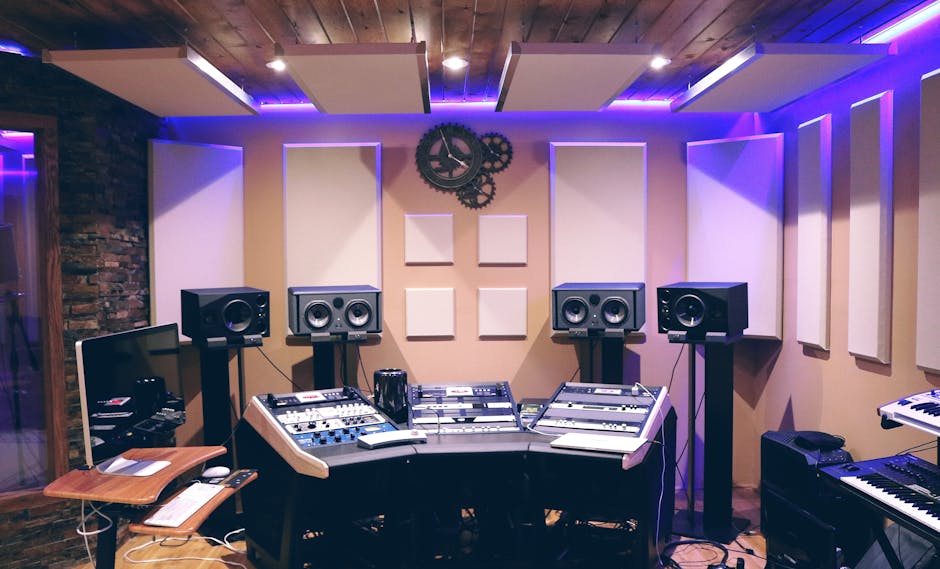
The core of an effective monitoring system lies in its essential components. Near-field monitors, such as models from Focal or Neumann, are the predominant choice in most studios due to their ability to deliver detailed frequency response and precise stereo imaging control in smaller spaces. Complementarily, a high-quality audio interface, with transparent D/A converters, is crucial to ensure the digital signal is transformed into analog without degradation. Brands like RME or Universal Audio are benchmarks in this field, providing the necessary fidelity. The choice of balanced, low-capacitance interconnect cables also impacts signal integrity, minimizing noise and interference. In contemporary music genres, where low-frequency response is fundamental, the incorporation of a properly calibrated subwoofer becomes indispensable for accurate perception of the low end of the spectrum, always seeking coherent integration with the main monitors.
Key Components of a Monitoring System
Beyond hardware, studio acoustics is a passive yet fundamental component. The interaction of sound waves with room surfaces generates reflections, resonances, and standing waves that can drastically alter sound perception. For example, primary reflections from side walls, the ceiling, or the desk can introduce coloration and affect stereo imaging. Optimal monitor placement, following the equilateral triangle rule relative to the listening position (the ‘sweet spot’), and correct tweeter height at ear level, is the first step. Subsequently, acoustic treatment using absorption panels at first reflection points, diffusers to scatter sound energy, and bass traps to control low frequencies, is vital. Pre-fabricated solutions exist, as well as the possibility of building custom treatments, adapting to the characteristics of each space, from a home studio in a Buenos Aires apartment to a professional studio. Reference articles in publications like Sound on Sound offer detailed guides on acoustic design.
Monitoring system calibration represents the final step to ensure neutrality and accuracy. Software tools like Sonarworks SoundID Reference or IK Multimedia ARC System use a measurement microphone to analyze the room’s frequency response and apply DSP corrections that compensate for acoustic anomalies. This process is indispensable for obtaining the flattest possible response at the listening position. Current trends in music production have increased the complexity of monitoring. The growing adoption of immersive audio formats, such as Dolby Atmos, demands multichannel monitoring systems (e.g., 7.1.4) and much more sophisticated calibration. Platforms like Dolby provide rigorous specifications for these environments. Furthermore, the integration of artificial intelligence (AI) is beginning to influence acoustic correction algorithms, offering more detailed and adaptive analyses. Remote collaborative production has also driven the development of virtual monitoring and cross-referencing solutions, allowing engineers to compare their work in simulated environments or share the same listening experience with remote collaborators, an increasingly relevant aspect in the globalized industry.
Impact of Room Acoustics on Sound Reproduction
In conclusion, accurate studio monitoring is the foundation upon which high-quality music productions are built. From selecting appropriate components and optimizing room acoustics to calibrating with modern tools and adapting to the latest trends in immersive audio and AI, each element contributes to the reliability of artistic and technical decisions. Understanding and mastering these fundamentals allows audio professionals in Argentina and across the region to produce work that stands out for its quality and sonic coherence on any playback platform, from a hi-fi system to the most common headphones on Spotify.
Related Posts
Sunset Sound Studios: Acoustics, Innovation, and Legacy in Iconic Music Production
An analysis of the sound engineering and acoustic design of Sunset Sound, a catalyst for historic and contemporary musical successes.

Melodyne: Advanced Formant, Time, and Dynamics Manipulation for Contemporary Vocal Production
Technical analysis of Melodyne's capabilities for granular vocal editing, from micro-tuning to timbral shaping and temporal control.

Textural Synthesis and Spatialization: Foundations of Modern Ambient Music Production
Delve into crafting sonic atmospheres with advanced synthesis and immersive audio techniques for ambient music.

VCA vs. Optical Compressors: Mechanisms, Applications, and Sonic Cohesion in Music Production
Analyzes the technical and sonic differences between VCA and optical compressors for optimizing dynamics in mixes.