The Evolution of Multitrack Recording: From Les Paul to DAWs
Exploring the history and impact of multitrack recording, from its analog beginnings to the digital DAW revolution.
The Origins of Multitrack Recording: Les Paul’s Innovation
Multitrack recording represents a fundamental milestone in the evolution of music production. This methodology transformed how artists and producers conceived and executed their works, allowing for the layering of multiple instrument and vocal performances into a single composition. Before its advent, recordings were made on one or two tracks, demanding that all musicians perform simultaneously and without error – a considerable limitation for experimentation and sonic perfection.
The genesis of multitrack recording can be traced back to experimentation with magnetic tape. One of the most influential pioneers was Les Paul, the American guitarist and inventor. In the late 1940s and early ’50s, Paul adapted tape recorders, such as those from Ampex, to develop his “sound-on-sound” technique. This innovation enabled him to record one track, then play it back while recording a new track onto the same tape, creating layers of sound. Although rudimentary and destructive (the new recording erased the previous one), it laid the conceptual groundwork. The true revolution arrived when Ampex, in collaboration with Les Paul, launched the first commercially viable eight-track tape recorder in 1955, the Ampex 300-8. This equipment allowed instruments to be recorded independently and mixed later, opening up a universe of creative possibilities. Artists like The Beatles exploited these new capabilities, using EMI’s four-track technology to build complex arrangements and sonic textures that would have been impossible to achieve live or with monophonic recordings.
Analog Evolution: From 8 to 48 Tracks in Classic Studios
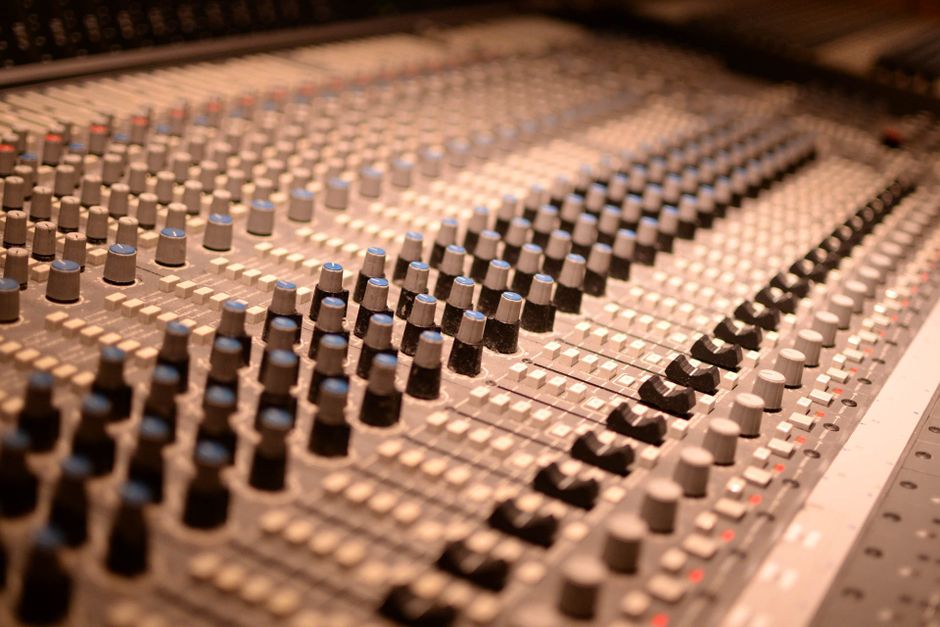
Throughout the 1960s and 1970s, multitrack technology continued its expansion and refinement in major recording studios. Analog tape recorders evolved, offering 16, 24, and even 48 tracks by synchronizing multiple machines. Manufacturers such as Studer, MCI, and Otari became benchmarks, providing the tools that defined the sound of countless classic albums. During this period, techniques like overdubbing (recording a new part over an existing one), punching (inserting a new section into a specific track), and bouncing (mixing several tracks down to a single one to free up tracks) became standard practice. Managing these sessions required large-format mixing consoles, like the iconic Neve and SSL consoles, which allowed for detailed control over each track, effects, and signal routing. This era solidified the role of the sound engineer as a central figure in music production, capable of sculpting the sound and atmosphere of a recording with unprecedented precision.
The arrival of the digital age in the 1980s and 1990s marked another significant transformation. Digital tape recorders like the Alesis ADAT and Tascam DA-88 offered higher fidelity, lower noise, and simpler operation. However, the true disruption came with the development of Digital Audio Workstations (DAWs). Software like Pro Tools, Cubase, and Logic transformed the personal computer into a complete recording studio. Digitization enabled non-destructive editing, unlimited parameter automation, the use of plugins for effects processing, and the ability to have a virtually unlimited number of tracks. This shift democratized music production, making sophisticated tools accessible to home studios in cities like Buenos Aires and throughout the region. The flexibility and efficiency of modern DAWs have driven innovations in mixing, composition, and post-production, allowing creators to experiment with complex sonic structures and remote collaborative workflows.
The Digital Revolution: Audio Workstations and Accessible Production
From Les Paul’s ingenious adaptations to today’s sophisticated digital environments, the trajectory of multitrack recording is a chronicle of constant innovation. Its impact transcends mere technical improvement, redefining artistic expression and the methodology of musical creation. The ability to isolate, manipulate, and combine sonic elements has empowered generations of musicians and producers, enabling them to realize sonic visions that were previously unattainable. This evolution underscores how technology, when applied with ingenuity, can catalyze an unlimited expansion of human creativity.
Related Posts

Sound Capture and Processing of Hang Drum and Steel Tongue: Techniques and Considerations
Acoustic analysis and miking strategies for recording hang drum and steel tongue, optimizing their timbral richness in modern productions.

The Evolution of the Home Studio: From Private Sessions to Accessible Professional Production
Trace the technological and creative transformation of home recording studios, democratizing global music production.

Mastering for Diverse Distribution Platforms: A Technical Optimization Guide
Technical analysis of mastering for streaming, physical formats, and immersive audio, covering LUFS, True Peak, and spatial considerations.

PreSonus Studio One's Evolution: Tech Innovations and Modern Music Production Impact
A technical analysis of Studio One's journey, design milestones, and key features defining current workflows.