USB vs. Thunderbolt Audio Interfaces: A Technical Deep Dive for Music Production
Technical comparison of USB and Thunderbolt audio interfaces: bandwidth, latency, and applications for music producers.
Understanding Audio Interfaces: USB vs. Thunderbolt
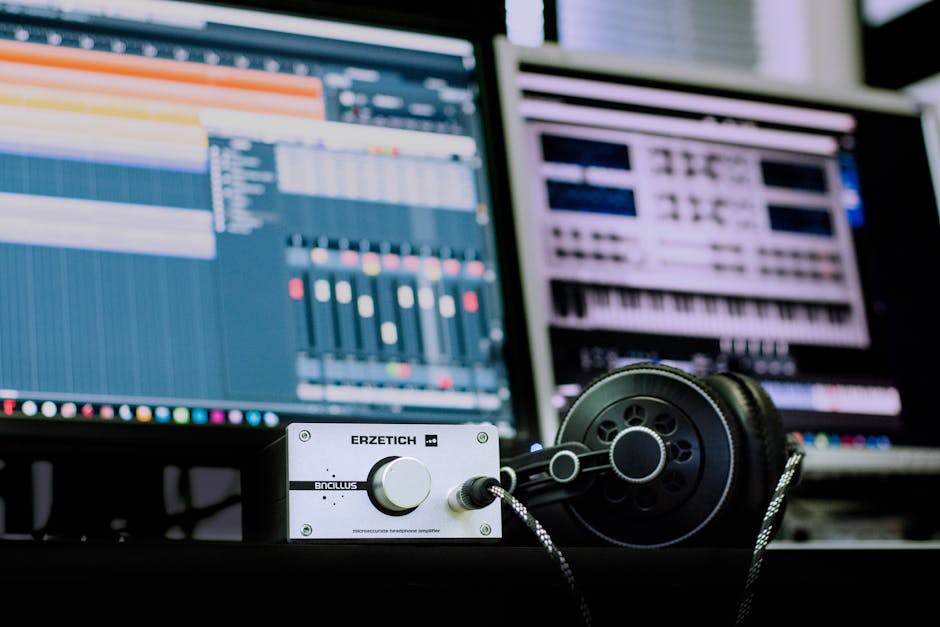
An audio interface serves as the critical bridge between the analog world and the digital domain in music production. Its selection directly impacts recording quality, monitoring latency, and workflow efficiency. Today, the choice between a USB and a Thunderbolt interface represents a fundamental technical analysis point for musicians and producers globally, as they seek to optimize their studio and recording environments. The evolution of these technologies has introduced options with distinct capabilities and performance characteristics, each suited to different production scenarios.
The USB (Universal Serial Bus) technology has been a cornerstone of audio connectivity for decades, evolving through various iterations: USB 2.0, USB 3.0 (also known as USB 3.1 Gen 1), and more recently USB 3.1 Gen 2 and USB 3.2. USB 2.0 interfaces, with their 480 Mbps bandwidth, remain prevalent in many studio setups due to their wide compatibility and affordability. They enable stable operation for recordings with a moderate number of channels, making them ideal for home studios and smaller-scale projects.
Evolution and Characteristics of USB Interfaces
Later USB versions, such as USB 3.0 and its variants, offer significantly higher bandwidth, reaching up to 5 Gbps for USB 3.0 and 10 Gbps for USB 3.1 Gen 2. This increase in data transfer capacity allows for a greater number of simultaneous channels and more efficient latency management, especially when processing multiple tracks with real-time effects. Latency, although influenced by factors like buffer size and CPU power, tends to be manageable for most studio applications with modern hardware. An inherent advantage of USB is its universality. Virtually any modern computer, both PCs and Macs, incorporates USB ports, facilitating integration and portability. Furthermore, many smaller USB interfaces can be powered directly via the USB bus, eliminating the need for an external power supply – a convenient factor for mobile or location recording. Popular examples of USB interfaces include models from Focusrite and PreSonus, offering robust solutions for a wide range of users.
Developed by Intel in collaboration with Apple, Thunderbolt technology was designed to offer superior performance in terms of bandwidth and latency. Through its versions (Thunderbolt 1, 2, 3, and 4), it has set a high standard for high-performance peripheral connectivity. Thunderbolt 1 and 2 utilized the Mini DisplayPort connector, while Thunderbolt 3 and 4 adopted the USB-C connector. This often causes confusion but highlights their physical compatibility with the USB-C standard while maintaining their own protocol capabilities. The primary distinction of Thunderbolt lies in its PCIe (Peripheral Component Interconnect Express) architecture, which allows for a direct connection to the computer’s CPU. This translates to substantially higher bandwidth (up to 40 Gbps in Thunderbolt 3 and 4) and significantly lower latency compared to USB. This performance is crucial for studios requiring a high number of simultaneous inputs and outputs, onboard DSP processing (like the Universal Audio Apollo interfaces, which use their own UAD processors), and the ability to daisy-chain multiple devices without performance degradation. Thunderbolt’s low latency is particularly beneficial for musicians recording virtual instruments or vocals with real-time monitoring through complex plugins, where every millisecond counts. Its ability to transfer large volumes of data with stability makes it the preferred choice for professional studios and large-scale production projects. However, the cost of Thunderbolt interfaces is typically higher, and their compatibility requires the computer to have specific Thunderbolt ports, which is more common on high-end Mac machines and PCs with motherboards integrating this technology.
Architecture and Performance of Thunderbolt Interfaces
The choice between a USB and a Thunderbolt interface should be based on a pragmatic evaluation of studio needs and workflow. For producers and musicians working primarily with a limited number of channels (up to 8-16 inputs/outputs) and a tighter budget, a USB 3.0 or higher interface may offer more than adequate performance. These interfaces are ideal for recording demos, vocals, guitars, and electronic production projects with virtual instruments. Their universal compatibility and portability make them versatile for different environments. On the other hand, if production involves simultaneously recording a full band, orchestras, or intensive use of external and internal DSP processing with critical low latency, investing in a Thunderbolt interface is fully justified. Professional studios requiring a high input/output count (16+), real-time plugin monitoring without perceptible delay, and the ability to expand the system with other high-speed peripherals (like external hard drives or high-resolution displays) will find Thunderbolt to be the most robust solution. It is essential to consider operating system and existing hardware compatibility. While USB ports are ubiquitous, Thunderbolt ports are more specific. Before purchasing, verifying the computer’s specifications is crucial. Current trends, as explored in specialized publications like Sound on Sound or MusicTech, show a convergence, where some high-end interfaces offer USB-C connectivity that supports both USB 3.1 Gen 2 and Thunderbolt 3/4, aiming to maximize versatility.
The decision between a USB and a Thunderbolt audio interface is not about one being absolutely superior to the other, but rather about suitability for a specific use profile. USB offers accessibility, compatibility, and excellent performance for most home studios and music production projects. Thunderbolt, conversely, stands as the high-performance option for professional environments demanding maximum capacity, the lowest latency, and the greatest expansion flexibility. Evaluating the number of required channels, the type of real-time processing, the available budget, and the existing technological infrastructure will be key to making an informed decision that enhances the quality and efficiency of any sound production.
Related Posts
Wow and Flutter: Mechanical Phenomena, Quantification, and Relevance in Modern Audio Production
Exploring analog audio speed fluctuations, their measurement, sonic impact, and creative application in digital environments.

Electric Guitar Capture: Mic'd Amp vs. Direct Input (DI) Signal
Technical analysis of mic'd amplification and direct input (DI) methodologies for electric guitar in music production.
Audio Optimization for Streaming: Mastering Strategies and Technical Standard Compliance
Preserve sonic integrity and artistic intent on digital platforms with advanced mastering techniques and loudness calibration.
Phase Management in Audio: Temporal Coherence and Sonic Quality in Modern Productions
Technical analysis of audio phase, its impact on recording, mixing, immersive tech, and strategies for temporal coherence optimization.